TechWell Contributor

Member for
26 years 7 monthsThe opinions and positions expressed within these guest posts are those of the author alone and do not represent those of the TechWell Community Sites. Guest authors represent that they have the right to distribute this content and that such content is not violating the legal rights of others. If you would like to contribute content to a TechWell Community Site, email [email protected].
All Articles by TechWell Contributor
All Stories by TechWell Contributor
|
Curious about DevOps? Start Here! Seems like everyone is talking about DevOps these days. But what is DevOps, and where can you go to learn more about how it affects you and your organization? Join us at DevOps Conference West to find out how to implement DevOps from some of the industry pros who have been part of the movement from its inception. |
|
| Risk Management: Risk Matrix and Graph (template) This template helps to depict the risks in a graphical form, which should be easy to understand. |
||
| Transformative Development: How to Begin Application Development in the CloudThere is a lot of buzz in the IT industry around cloud computing and its impact on driving greater efficiency across an IT organization, but when considering adoption of cloud computing infrastructure, where should an organization begin? The application development lifecycle can be a good starting point. | ||
| Low-Tech Tools for the Thinking TesterContrary to what some vendors may lead you to believe, a whole-team approach to quality doesn't require a lot of complex, integrated tools and services to achieve. Paul Carvalho explains how to perform good testing with readily available, low-tech tools. These tools are all either free or cheap. | ||
| Testing in the Agile World with Vu LamIn this Sticky ToolLook interview, QASymphony CEO Vu Lam discusses testing in the agile world, from documentation to communication and improving the feedback loop. | ||
| Growing Your Processes You can’t force a garden to grow, and you can’t force new processes to work. However, like the gardener who prepares and maintains a garden for optimal plant growth, you can use a planned, organic approach to lead your processes more successfully. |
||
| Environments Management—A Key Component for Release Management The demand for software environments has increased as more organizations use agile software development practices and are required to provide a fast turnaround of deliverable IT projects. Effective environment management improves the quality, availability, and efficiency of the environments in order to meet milestones, as well as ultimately reducing both the time to market and costs. |
||
| Be Prepared for SOA Testing Service-oriented architecture offers software testers an opportunity to engage stakeholders early and often. Before you dive in, prepare your testing practices to handle the potential challenges of SOA. |
||
| The Pursuit of True AgilityAdrian Cho looks at agile practices, invention, and change through the allegory of musical experiences. | ||
|
Assessing an Organization’s Capability to Effectively Implement Its Selected Agile Method Shvetha Soundararajan and Dr. James D. Arthur write that the agile philosophy provides an organization or a team with the flexibility to adopt a selected subset of principles and practices. However, more often than not, these customized approaches fail to reflect the agile principles associated with the practices. |
|
| Scoring and Evaluating Software Methods, Practices, and ResultsSoftware engineering and software project management are complex activities. Both software development and software management have dozens of methodologies and scores of tools available that are beneficial. In addition, there are quite a few methods and practices that have been shown to be harmful, based on depositions and court documents in litigation for software project failures. In order to evaluate the effectiveness or harm of these numerous and disparate factors, we have developed a simple scoring method. The scoring method runs from +10 for maximum benefits to -10 for maximum harm. | ||
| Five Steps to Creating Effective Agile ContractsWhile using an agile approach for projects that involve outside parties can be complex, especially during an audit; living documents and early involvement by all parties involved will help ensure a worry-free process. Learn how expert planning allows for the right path to emerge on its own. | ||
| Managing and Tracking DistributablesNo matter how big or small your project, or even your organization as a whole, release management simply cannot be overlooked. Learn how centralized distribution, when focused on from the beginning, can make everyone's job easier, in order to give your customers a better finished product. | ||
| How Do Agile Rapid Iterations Improve Software Quality? An iterative agile approach improves the quality and production time for software projects of all scope and size. Learn how this "evolutionary" method improves both development and testing through open lines of communication and collaboration. |
||
| A Practical Way to do Agile in an Enterprise ALM EnvironmentWhile some falsely accuse agile of not being scalable at the enterprise level, large development teams are beginning to see the benefits that agile can bring larger environments. As more business leaders, and CTO's become familiar with agile methodologies, the trend will only continue to rise. | ||
| Strategies for Addressing Thorny ALM IssuesWhen looking to correct issues regarding ALM or CM, don't just look for quick fixes to stop the bleeding; look for solutions that allow you to grow, and to improve processes across the board. Short, iterative approaches are often a great starting point for seemingly never-ending projects. | ||
| Automating Release and Deployment—ALM, ITIL, and ITSMIterative development, when executed properly, allows for traceability and improved quality. Learn how automation and deployment driven development facilitate continuous integration even on the most complex projects. | ||
| How Do I Write Requirements Using Stories and Acceptance Criteria?—Part Two Russell Pannone and Geoffrey Bourne write that at first glance, a User Story looks simple, almost trivial. However, it contains the essence of the project deliverables. It describes the who, the what, and the why of every piece of delivered functionality. |
||
| Hybrid Test Automation Frameworks Implementation using QTP This white papte provides overview of how to implement a hybrid test automation framework using QTP as the example.
|
||
| ALM Tools in an Agile WorldIn this article, we not only help define agile, and how you and your team can get there; we also explain how ALM tools have agile's methodologies in mind and how they can help you reach your goal. Learn the the meanings behind the terms you need ot know, and why now is a great time to go agile. | ||
| Deployment is the New Build As companies focus on tuning their IT environment on rapid delivery of business value, more and more projects and initiatives within organizations are looking at the entire value chain of software production. Whether under the trendy name of Devops, via integrated project teams or as part of the introduction of new development methodologies like Agile or infrastructure technologies such as cloud, there is a growing awareness of the need for automated, reliable and flexible deployment procedures. |
||
| How Do I Write Requirements Using Stories and Acceptance Criteria?—Part One Russell Pannone writes that knowing what comes before the writing of stories, what comes after the writing of stories, and who is going to consume the stories sets the context for the form and substance of a story. |
||
| Is The Enterprise ALM Stack Ready for the Disruption of Open Source?Open source software and tools have consistently grown in quality over the years and now offers more than just an attractive price point. By integrating these tools with existing enterprise ALM tools, developers can see their workload decrease across the entire enterprise level. | ||
| Differentiating Between Estimating and Committing Russell Pannone writes that there is inherent uncertainty and complexity in system-software development; you just don’t know what you don’t know. In agile and lean, accuracy (the measure of bias) and precision (the measure of spread) are very important when making a commitment for what you are going to get done in an iteration, but not so important when making an estimate for how long you think it will take you to develop and deliver the entire product. |
||
| Emergency Fix–Practical Testing Approach We often come across situations wherein software release package is delivered to the testing team toward the end of emergency-fix/release schedules. Project stakeholders anticipate the high-quality software to ship without a breach in project schedule. In such cases, traditional SDLC models such as waterfall model, V-model, etc. don’t work due to the hierarchal form for development and testing phases. The testing approach outlined here provides a practical way of bringing such situations under control and keeping software on schedule without compromising quality. |
||
| Automated Deployment and Dynamic Virtualization: Like Peanut Butter and JellyAutomated processes offer many benefits to development teams, but it's not until you pair these processes with virtualization that automation reaches its full potential. By carefully selecting the right platform for your project, you'll help improve the speed, reliability and quality of your work. | ||
| Five Imperatives for Application Lifecycle ManagementCustomers are often looking for their software to be built quickly, and to remain competitive, developers have to follow suit. Application management allows for increased productivity by also increasing efficiency. Learn how ALM coordinates people and tools to all work smoothly together. | ||
| How the Rise of DevOps and the Private Cloud Will Change Development in 2011Along with storage and testing capabilities, the cloud can, and will, help bridge the gap between development and IT operations. DevOps is gaining in popularity, and the acceptance of the cloud is one of of the reasons for its success. | ||
| Five Predictions for 2011 I have a serious reservation about writing any kind of article wherein I prognosticate. I’m not worried I’ll be wrong: in fact, it’s almost certain that the opposite of whatever I wish for will actually transpire. This phenomenon is, at least, deterministic. |
||
| How Does One Measure Agile-Lean Product Development Progress or Results? Every project measures progress using metrics (or at least should). Agile is no exception and powerful techniques exist within agile to track and measure your project’s progress. However, agile goes a step further by regularly using metrics to adapt and improve with the constant goal of how we can be better today. |
||
| Performance Management for Agile PeoplePerformance appraisal is difficult and perhaps even counterproductive, but many employers still require it. Here are a few tips on making it work a little better with agile teams. | ||
| Look for the “Perfect Storm” in Virtualization Management in 2011 We live in a very dynamic industry, and spend a lot of time throughout the year talking with customers, analysts and other virtualization vendors, trying to get a handle on how the market is shifting, and how market needs are changing over time. At this time every year this activity intensifies as market leaders put their reputations on the line and make their own predictions for the new year. Embotics has been doing this now since 2007, and has a pretty good track record when it comes to our predictions. Although any market analyst will tell you that past success is no guarantee when it comes to predicting the future. The market usually finds a way to humble us all. |
||
| PRINCE2 and Agility: Gearing for Balance Welcome to the second article in this two part series. Last month we looked at some of the problems that are commonly associated with Agile Methods when they are viewed in the context of process rigor. We saw that a reconciliation between emergent and prescriptive disciplines can be achieved via a model of orthogonal standards and frameworks. We contrasted that model with the more commonly assumed “continuum” hypothesis, which locates predictive and emergent processes at opposite ends of a methodological spectrum. This month we will explore in more detail the remedial, standards-based approach adopted by Codeworks DEV. We’ll show how a specialised, tool-supported, configurable toolset can be used to leverage Agile Methods across multiple PRINCE2 projects at both delivery and programme levels. |
||
| Agile Manifesto – The Truth Behind Those Principles In this series, I shall be examining the twelve principles of the Agile Manifesto, to tell you why they exist, for they did not appear out of thin air and are therefore in response to some need that we had or have. In the process, I shall also tell you why most of these principles are overly idealistic in their expression and what I think they really ought to say. I am not trying to tell anybody what is right or wrong, this is not a morality debate. I have a great deal of admiration for the ideals that are expressed in the twelve principles (or most of them anyway) it is just that they are misstated and are therefore widely misunderstood. |
||
| Implementing Software Configuration Management Corporate Standards For last few years or so, I have seen significant improvement in the field of configuration management. Globally many organizations realize its importance and take maximum advantage by adopting best practices and standards to accelerate their business performance. ‘Configuration Management’ plays an important role in any lifecycle of a project and directly impacts the company’s business. |
||
| Using Voluntary Consensus Standards Statement of the problem |
||
| Four Reasons Medical Device Companies Need Agile Development The waterfall style of development is so deeply engrained into the culture of medical companies that most can’t imagine anything else being used to develop software that has power over human life. However I argue that precisely because of patient safety, medical device companies in particular need to adopt agile practices. I’ve seen too many bloated medical device project fail or limp across the finish line for causes that can be directly linked to the waterfall method. Specifically: |
||
| PRINCE2 and Agility: Reclaiming the ManifestoIn October this year Codeworks DEV received the 2010 Agile Award for the “Best Use of Agile in the Public Sector”. The use of Agile Methods within large, publically accountable environments has long represented a challenge to the Agile community. Agility is more often associated with small to medium size enterprises (SME’s) in the private sector, where organisations are incentivised to keep pace with a changing business environment. Public sector companies and larger corporates, on the other hand, are renowned for their essentially prescriptive, “non-agile” attempts at long-term planning using techniques such as PRINCE2. | ||
| Achieving Meaningful Metrics from Your Test Automation Tools In addition to the efficiency improvements you expect from automated testing tools, you can-and should-expect them to provide valuable metrics to help manage your testing effort. By exploiting the programmability of automation tools, you can support the measurement and reporting aspects of your department. Learn how Jack Frank employs these tools with minimal effort to create test execution status reports, coverage metrics, and other key management reports. Learn what measurement data your automation tool needs to log for later reporting. See examples of the operational reports his automation tools generate, including run/re-run/not run, pass/fail, percent complete, and percent of overall system tested. Take with you examples of senior management reports, including Jack's favorite, "My Bosses' Boss Test Status Report"- names will be changed to hide the guilty. Regardless of the automation tool used in your development department, you, too, can simplify your reporting and more quickly |
||
| Getting Started with Source Code Management (SCM) for Small Teams Your developers and designers often work on projects simultaneously from around the world. They need to modify the same files, make updates, and deploy multiple versions of the website or code across different sites. All the while, you hope they won’t cross wires, lose track of versions, or overwrite each others’ changes, any which scenario might set your upcoming release or project delivery date back by days. Sound familiar? |
||
| Large-Scale Distributed Agile Teams – Creating, Sizing, Prioritizing and Grooming the Product BacklogTeams that work in large-scale, complex agile environments are often distributed. As a result, it is almost impossible to discuss distributed agile development without discussing the implications of working at scale. In this article, we will cover the following topics to help distributed, large-scale teams create their initial product backlog at the start of a project: | ||
| Application Lifecycle Management (ALM) and Agile-Lean Software DevelopmentExplore application lifecycle management (ALM) concepts and how ALM processes and tools fit into agile software development and and lean development principles. | ||
| Agile is the Mainstream. So What? The Quest for Quality We have seen software development evolve from ad hoc to CMMI, to Unified Process, to Agile, to Lean, to what next. Why the evolution? Agile has become the mainstream software development method today. So what? What have we been missing? What are we searching for? In my opinion, it is the quest and delivery of a high quality product. We should strive for quality being non-negotiable. Build something without an emphasis on quality and you are building on a poor foundation that will eventually lead to collapse and result in a final product with little to no commercial or operational value. |
||
| Distributed Multi-Source Development What are leading development organizations doing to increase innovation, agility and embrace new technologies? The answer: Distributed multi-source development Large software projects that are late. Missed schedules. Budget over-runs. These aren’t pleasant challenges to manage, yet they are hallmarks of traditional waterfall software development methodologies. This common approach to creating software is yielding to two powerful approaches to development: distributed development using Agile methodologies, and multi-source development, combining closed source with free and open source components. |
||
| Turning Disputes into Decisions You won't always get along with every coworker in your office, so what should you do to ease office tension when conflict arises? This article offers advice on how to manage conflict in a respectful and productive way. |
||
| Understanding All of the Important Facets of Localization Testing This article discusses the differences between the internationalization and localization of software products for the global market. It provides an overview of the three areas of localization testing including localization UI testing, localization functional testing, and translation testing. Understanding the different processes is useful for any company and tester involved in the globalization of software products. |
||
| Cloud-Driven DevelopmentAgile methodologies aren't the only way to empower your team; utilizing cloud-driven development is another great way to improve processes throughout the development lifecycle. Testing can be done earlier, and costs can be saved, by turing toward the cloud on your next project. | ||
| Lightweight Application Lifecycle Management Using State-Cards It is a well known fact that all applications are different; all application development teams are different. So, why should we expect application lifecycle management to be fixed? There is no such thing as “one size fits all.” Yet, it is also common sense that there must be something in common, as otherwise there is absolutely no way to learn from experience and mistakes. The challenge is then to find a middle ground that is easy to communicate to the development team and stakeholders. |
||
| How much Visioning is Necessary in Scrum?Through open communication among the members of your scrum team, and a calculated, iterative approach, your projects achieve timely releases to customers. The concept of visioning helps everyone work together on the same page, and for the common goal. | ||
|
Does Application Lifecycle Management Help Agile-Lean Software Development? In a Forrester’s report, The Changing Face Of Application Life-Cycle Management, nearly one-third of enterprises are already using application lifecycle management (ALM) processes and tools, and almost half are aware of it But in conversations with user companies, we find that even those familiar with the term are often hard-pressed to define it. |
|
| Exchange Server: Express Configuration for TestingThe aim of the article is to present a step-by-step description of the installation and configuration of the domain controller, Exchange Server, and MS Outlook with two accounts for the testing purposes. | ||
| Product vs. Project CM: Straddle the FenceConfiguration Management can be applied at the product level, or the project level, depending on the needs and requirements of an organization. In this article, Angela Moore takes a look at when to apply CM at the short-term level, and when to have the bigger, longer picture in mind. | ||
| Is "Agile Methodology" an Oxymoron?Explore the differences between a process and methodology and why neither process nor methodology should be used to label and encapsulate agile-lean product (system-software) development. | ||
| Collaborative Risk Analysis for Release Planning Release planning is more than just stuffing the highest ranked stories into iteration buckets. To be meaningful the whole team needs to participate. Lightweight risk management techniques are not orthogonal to an agile approach They can help proactively address previously hidden concerns and the planning process benefits all-around from shared dialog on release-impacting risks. |
||
| "Dear Agile" – A Love Letter Dear Readers, Writing or receiving a break-up letter can be fairly daunting or shattering, depending on which end of the letter your name appears. That letter puts a pretty hard stop to a relationship. It’s communicating detachment and finality. It can create a lot of pain whether intended or not. In contrast, a love letter is uplifting. The endorphins fly! Someone is revealing their attraction for you, and their hopes and wishes for a future with you.
|
||
| Integrating Performance Testing into the Agile Development Process One of the key purposes and benefits of Agile development processes (“Agile”) is that they emphasize working software as the primary measure of progress. To ensure that the current state of the software is working, every iteration includes unit and acceptance testing. Many organizations report that, following the adoption of Agile, the quality of their released systems has been improved. |
||
| Test Strategies for Smartphones and Mobile Devices Users want mobile applications to be simple and fast. Just one nagging bug can spoil the entire experience. And with so much competition in this space, if users don't have an excellent experience with your application, they will switch to a rival product faster than you can say "There's an app for that." This paper highlights some of the areas where the testing of mobile device applications differs from testing desktop and regular Web applications. |
||
| Release Engineering Refactored: Eliminate Variables with One True Machine Sometimes, the best answer is to rephrase the question. This was the approach that one of our biggest customers took when undertaking a new effort to improve their Release Engineering process. They first asked themselves: How can we make the process of making products faster, more reliable, and more efficient? It’s worth pausing to understand what the process is today before thinking about improving it. Whether managed by a dedicated team or not, Release Engineering is the part of a software development organization that’s responsible for actually converting the millions of lines of carefully crafted source code into a useful software product or service for the end-user. More interestingly, it must also be able to show definitively what went into a release should (when) the need to modify it arises. |
||
| Building an Enterprise Test Lab An enterprise test lab provides a stable, independent testing environment that leverages your investment in equipment, software, and people. These labs are often built without an analysis of the architecture needed for an effective test lab. Learn how to build or improve your enterprise test lab and make it more adaptable without large investments in time or materials. With an enterprise test lab in place, you can improve the reliability of the end-to-end user experience in production and reduce overall costs at the same time. |
||
| What is an Agile Coach?As a go-giver the agile coach focuses on putting others’ interests first and continually adding value by serving an individual’s, teams’ and organization’s needs and helping them effectively and pragmatically deal with both their day-to-day and long-term challenges. | ||
| Agile Coaching for Your Agile Company Coaching and training are indispensable to Agile transformations. This can be difficult for some organizations to accept.Agile frameworks are simple to understand, but there are many nuances to handling the complexities involved in an Agile transformation.While it is often helpful to tap into outside resources (books, websites, courses or consultants), the organization will need someone who understands the subtleties of Agile transformations and the context of the organization to make the transition as successful as possible.We refer to this role as the “internal Agile coach” and we often encourage clients to identify one or more such individuals as the organization's need for Agile knowledge and understanding grows. Being an Agile coach requires a wide range of human qualities, skills and experience, and selecting one for the company should be done carefully.In this article, we discuss when you need an Agile coach, what an Agile coach does, and a few tips on how you might create your own internal Agile coach. |
||
| You Have To Be Agile To Coach Agile If software development is about wiring code, then coaching is about re-wiring the neurons in each practitioners head and re-wiring their relationships. Yes, coaching is about changing people. You cannot expect a one-size fit all solution, so you need to adapt the recommended practices and approach. This paper discusses how to work with people, how to manage the coaching progress and setting objectives and expectations. This paper also talks about coaching not being just about helping the team learn, but also for you to learn and grow. You have to be agile to coach agile.
|
||
| Coaching is Key for Scrum Success – Part One of Two Organizations eager to solve the problems they see in their projects or processes often decide to adopt Scrum in the belief that it will immediate solve all those problems. Although Scrum can and often does resolve some problems immediately, it also has the potential to expose or exacerbate other existing problems and can even appear to create a few problems of its own. In some cases, this can be seen to be a “failure” of Scrum, even when implemented by an organization that was initially enthusiastic and determined. This perceived failure can cost the organization considerable time and money if the Scrum team continues along the same path they are on, despite the unresolved problems. These costs, as well as frustrations and even pressures from inside or outside the Scrum team can cause Scrum to be abandoned without ever demonstrating its full potential. |
||
| Coaching Fundamentals What is the Purpose of Coaching? In our work environments and personal lives we’re always looking to make clear, thoughtful choices, speak them clearly, and execute them in effective ways. We want to optimize our time and energies to create valuable outcomes. All this can happen spontaneously and without a plan, but with foresight to think and plan before taking actions, especially for larger goals, there’s a higher probability for getting quicker and more reliable results. |
||
| The Power of Play Let the Fun Begin! As children, we learn through play. Because play is so much fun, it creates a virtuous circle where we play and learn. As adults, with the help of educational or “learning” games, the lucky ones among us find ourselves playing to learn once again. Judging by the popularity of learning games, we can still learn a lot through play. For some, it may even be the best way to learn. |
||
| GUI Usability Design and Validation with Paper Prototypes Usability testing of early GUI designs with paper prototypes validates that you are building the right applications for your customers. This low-cost, high-impact practice allows you to rapidly evolve the GUI interface and find many design bugs early in the development process before coding begins. With this process, you can get external customers and internal users actively involved in designing and testing the GUI with tools they can easily manipulate. Based on project experiences at The MathWorks, Inc., you will learn how to move from the paper prototype to a coded GUI and a set of automated tests. In addition, you will learn to develop user documentation while working back and forth between the GUI and the test plan to clarify design choices. |
||
| From Tsunami Development to Continuous Lean and Agile DevelopmentMoving to agile development (or doing anything new) is not easy. Beyond learning some of the technical stuff, the new terms like SCRUM, stories and so on, it is about changing mindsets. How do you change mindsets? How do you understand mindsets, and to do so quickly? | ||
| Agile and Lean Software Development: Mastering the Art of ChangeMastering the “art” of adopting agile and lean software product development and delivery requires you to understand the science (technology) and the art (behavioral nuances) associated with this undertaking. This article focuses on how to make the cultural changes necessary for adoption and overcome general resistance to change in all of us. | ||
| Managing Organizational Change as a Result of the Agile Process The CEO of a financial services company had blocked off a day to take his management team offsite for a dedicated session focused on using agile to run the organization. After devoting the first half of the day to understanding agile practices and principles, the balance of the day focused on taking the specific initiatives and goals of this financial services company and translating them into tangible stories. These stories could be used to populate the company’s new Kanban board, one of the tools they would use to begin applying what they learned. |
||
| Meeting Resistance to Change Head-On Jim sat in his manager’s office about to have his 6-month review. His boss seemed to have that look on his face. A look he’d seen before. “Jim, I’d like to say your work is outstanding, but while we’ve been pleased with your project outcomes, your approach to your work needs improvement.” Jim squirmed in his seat and tried to prepare himself for what would probably mean another layoff. |
||
| Driving Enterprise Agility from the Program Management Office By Kelley Horton amp; Guy Beaver Background The Premier healthcare alliance brings nationwide knowledge to improve local healthcare. It does this by providing solutions to collect and analyze clinical and financial data from its more than 2,200 member hospitals and 64,000 non acute-care members. By doing so, Premier unites a fragmented, chaotic and inefficient healthcare system to enable hospitals to provide patients with reliably high-quality healthcare at the lowest cost. Premier uses facts to determine the best practices and products that drive the best patient outcomes. |
||
| Continuous Delivery with Jez Humble Jez Humble is the build and release principal for ThoughtWorks Studios and product manager for ThoughtWorks' release management and continuous integration tool Cruise. He's co-written a book that will hit shelves this year. In this interview, Jez talks about continuous delivery, collaboration obstacles, and the value of defining risk. |
||
| Effectively Tracking Testing Team ProgressTester in small and medium companies find it quite difficult to prepare exhaustive test cases because usually there is less time to deliver and multiple projects to test. As a result of this time constraint, it becomes difficult to review test cases. This article details how the author manages these issues. | ||
|
How to Use the Requirements Creation Process to Improve Project Estimates Estimation can be one of the most difficult parts of a project, especially early in the project. Fortunately, the requirements creation process can lend insight into the length and scope of a project. |
|
| An Evaluation Framework for Continuous Integration ToolsTools that enable continuous integration are vital to any agile project. Learn how putting together a well-planned evaluation process for the selection of those tools enables your entire team to work more cohesively, while eliminating the waste and damage that ineffective tools can cause. | ||
| Moving Gradually to Agile Development and Scrum Having troubles introducing agile development on your custom software development projects? Why not try moving to it gradually? One of the big ‘problems’ with Scrum is that project-related issues come to the surface early because the team must deliver potentially release-able software within a month. Those issues in combination can seem insurmountable to those new to Scrum. |
||
| Scrum Success in a Distributed Team Environment In today’s work environments, research proves that distributed Scrum teams can achieve the same quality results as co-located teams, but relationships, communication and culture play important roles in the latter. About Scrum Since its inception in 1993, Scrum has become a more and more popular software development framework among organizations. In fact, a Forrester research study, conducted in the fourth quarter of 2008 discovered that more than half of the 2,227 surveyed software organizations take advantage of some form of agile methodology. Additionally, of all the agile methods that are being utilized, Scrum is by far the most popular model. |
||
| Agile? Waterfall? How About WetAgile?WetAgile can be used to describe those projects, and people, that aren't quite agile, nor are they fully waterfall. While this might seem like seem like a negative, existing in "no man's land," the hybrid approach is sometimes may work fine, while on the path to full agile. | ||
| Lean-Agile Projects You Will Do Again and AgainHow many times have you seen this scenario? Several years ago, someone created a spreadsheet to support the work of a department. They kept tweaking it, adding functionality; maybe even migrated it to Microsoft Access… and now it has become a mission-critical mess! And you can’t afford to let the employee move on to something else. | ||
| Redirecting Functions in Shared ELF Libraries This article briefly describes the ELF structure as well as some principles of working with such libraries. This knowledge is used to implement intercepting function calls from one library to another. |
||
| Requirement Gathering Requirements gathering is one of the most important tasks to a successful project. Good domain knowledge coupled with tool usage helps in conveying the same communication to stakeholders, designers, developers, and the testing team. This article provides a high-level review on requirements gathering and then mainly focuses on how IBM Rational Software Architect is used to gather requirements. |
||
| Data Obfuscation for Test Environments (xensight) Sensitive data in non-production environments is rarely held to the same security standards as production data. The inability to protect sensitive data in test environments keeps many companies from leveraging the cost savings of outsourcing and offshoring. This whitepaper focuses on protecting sensitive data in test environments. |
||
| Successful Agile Needs Teamwork Agile embraces the concept of self-organizing teams but they are inherently unstable and are only successful when the ‘Leadership – Self-Management’ dilemma is understood and dealt with. Too much central control destroys agility, inhibits creativity and resists change. Too much self-management leads to chaos and anarchy and destroys a team. A successful Agile Team needs to operate as far along the continuum towards self-management as it can, without tipping over into chaos. You can’t just eliminate the PM role and say to a software development team, “OK, you’re now an Agile Team – you need to self-organize”. This is a recipe for failure, and one of the reasons why many organizations resist the Agile approach.
|
||
| SDLC 3.0 Provides a Platform for Method Integration Even before written history, mankind has followed methods to invent, build, and use tools. As our tools have evolved so have our methods, and in today's software industry there are lots of articulations and communities built around software development methodologies. Despite the zealous beliefs within some of these communities, no single method is the silver bullet or the one truth from which to engineer and craft software in all contexts. |
||
| Application Architecture Research This article is mainly for developers, yet it doesn't cover specific languages or technology. The author details some tools that can help you learn the application's internal structure. Also included is an example of hook lib code, but it doesn't require deep development knowledge to understand. |
||
| Manual Testing Tools with Naysawn Naderi Naysawn Naderi, a program manager at Microsoft, played an integral role in the R&D process of defining and developing the recently released Microsoft Test Manager 2010. In this interview, an excerpt of which originally appeared in the Sticky ToolLook eNewsletter, Naysawn discusses the requirements for and applications of software testing tools in manual testing. |
||
| Focus on Business ResultsThis article covers how to ensure that packaged software implementations focus on value-added business results. It also identifies the key techniques that we can employ in order to ensure that every project team member, and thus the project, focuses on the value-added business results. | ||
| How to Focus on Business ResultsThis article covers how to ensure that packaged software implementations focus on value-added business results. It also identifies the key techniques that we can employ in order to ensure that every project team member, and thus the project, focuses on the value-added business results. | ||
| Simple SST Unhooker This article includes a description of a simple unhooker that restores original SST hooked by unknown rootkits, which hide some services and processes. |
||
| The Lean-Agile Prism: Going Beyond The Agile Triangle Project management has contributed diverse triangles as it has evolved. From the traditional project triangle to the agile inverted triangle and, recently, the agile triangle. In this article, I am proposing going one step beyond the agile triangle by taking into consideration lean thinking to add a fourth element, specifically that of design, to form the lean-agile prism. |
||
| Agile Project Management: Part 2 of 2 Estimating Projects give people the fits. On one hand, you have to know when things are going to get done and how much they are going to cost. On the other hand, estimating projects looks a lot like magic from the outside. I've been successfully estimating and teaching people how to estimate projects for a long time, and if you’ve read Part 1 in this series, you're ready for some tips and tricks of estimating. |
||
| Timebox your Projects!By putting more effort into fixing time, rather than functionality, agile development projects are able to reach the levels of agility they were intended to reach. By welcoming change, as agile was designed to do, you're able to create an innovation cadence keeps everything in harmony. | ||
| Honestly AgileJoe Krebs discusses why soft skills factors, honesty and integrity are not only essential among team members, but also for entire enterprises—including their portfolios. | ||
| Agile Software Development – Past, Present, FutureAlmost ten years after the Agile Manifesto was published, Russell Pannone reflects on the past, present, and future of agile software development. | ||
| Test-driven Development Test-driven development (TDD) is a practice associated with a number of Agile flavors. It has become an increasingly popular method for integrating quality into software development at an early stage of the project lifecycle. In this article John Reber asks the question, Which members of the project team should own the tools that are driving the automated testing process within TDD? Are they now solely developer tools or should the testers be the owners? |
||
| An Easy Way to Set Up Global API Hooks This article describes an easy way to set up system-wide global API hooks. It uses AppInit_DLLs registry key for DLL injection and Mhook library for API hooking. To illustrate this technique you'll learn how to easily hide calc.exe from the list of running processes. |
||
| Get Started with QT and FireBird This article describes the first steps in setting up QT, Visual Studio, and FireBird. This article may be useful for those who just start working with database FireBird, which is usually embedded by the QT provider, and to developers who have also just start working with QT. |
||
| Quality Management - Testing in the World of Scrum and Agile Product Development Does Quality Management have a place in agile product (system-software) development and delivery?
|
||
| Continuous Testing: Building Quality into Your Projects I buy new cars infrequently, typically every 10 to 12 years. So when I bought a new car in 2003 I was surprised at the many advances in technology since I’d purchased my previous car, a 1993 Honda. One advance I was particularly pleased with was a sensor that automatically detects low air pressure in my tires. It is sometimes hard to tell by looking at a tire if its pressure is low, and checking tires manually is a dirty job, so I did it infrequently. A continuous test of tire pressure was, I thought, a tremendous invention.
|
||
| Managing the Transition to Agile During these challenging economic times there is a dramatic increase in the need of organizations to adapt the software delivery lifecycle processes to the rapid changes often imposed on them. Leadership is making the decision to transition its development organization – not than just small teams but large numbers of engineers, working on a broad portfolio of development projects from many different locations around the world — to a more agile approach as part of an effort to vastly improve performance, be more responsive to customers and improve quality. However, there are many challenges that an established software organization faces when shifting to Agile.
|
||
| Getting the Product Backlog Ready for Sprint Planning Most sprint planning meetings I have attended were fun. The ones that weren’t involved a poorly groomed product backlog, whose high-priority items were not workable, not ready to be pulled into the sprint. When the backlog hasn’t been prepared prior to the meeting, the product owner and team often carry out impromptu grooming activities. These consume valuable planning time and usually result in poor requirements and weak commitments. Plus, everyone is fed up and exhausted by the end of the meeting. As a consequence, the product backlog items that are likely to be worked on in the next sprint have to be prepared prior to each sprint planning meeting. Although it is the product owner’s job to make sure that the work gets done, preparing the product backlog should be teamwork involving the product owner, ScrumMaster and team. We begin the preparation work by choosing a sprint goal.
|
||
| Software QA vs. Software Testing on Agile Development ProjectsBob Small and Janet Gregory share their thoughts and experiences relating to the difference between software QA (quality assurance) and software testing on agile software development teams. | ||
| An Economic Analysis of Software Defect Removal Methods This paper and the models it uses are intended to help software organizations determine an optimal combination of defect containment methods and resource allocation. These models provide a mechanism to forecast the consequences of alternative assumptions and strategies in terms of both cost in person months and delivered quality measured by "Total Containment Effectiveness"-TCE, i.e., the estimated percentage of defects removed before software release to customers |
||
| The Agile Project ManagerAgile mythologies are helping companies stay competitive in today's economy by enabling software teams to deliver products more frequently and with significantly higher quality. However, transitioning from traditional project work to the agile philosophy will pose challenges to even the best project managers. This white paper explores the impact agile development methodologies are having on the project management community, what new skills are required, and what the project manager can do to ease the transition. | ||
| Diary of an Agile Tester This fictional diary looks at the experience of an agile QA during a single iteration, sharing some of the scenarios, questions, queries, and successes typically encountered by an agile test team. Some of the issues touched on in this first part include estimations, TDD, exploratory testing, team size, tester-developer ratios, relationships with other team members, and sign-offs. |
||
| Service Hiding Discover ways to hide applications within a Windows operating system in this paper. The approaches described benefit corporate security systems development when hiding system agents and preventing users from switching them off. This article is also useful for those who research harmful software and want to build an adequate answer for such threats. |
||
| Baseline Testing I developed and use a very successful performance testing methodology, which has baseline testing as an important part of the methodology. Proper baseline testing saves a lot of time on performance testing projects. This article covers the how, why, and what of baseline testing. |
||
| Managing Successful Agile Build Management Teams While Agile methodologies have made tremendous advances in programming circles, build and release management teams have traditionally shied away from a “full agile” approach. In informal polling of Build Engineers, I found only one team outside of my own that ran an Agile shop; while there are many out there who do, there are tender points that need special consideration.
|
||
| The Truth about Practices and “Being” Agile-LeanA working definition of “practice” is: A practice is a common and adaptive approach for doing something with a specific purpose in mind. When “being” agile and applying a practice we are focused on value-added not the means. | ||
| The Value of Concurrent Testing Concurrent testing is the concept that as software is being developed, it is also being tested. Concurrent testing can be done in several ways; one of the most common is to perform testing at the system level. As a development team completes coding requirements for an application or system, this required code becomes testable, while other team members can execute test cases against the completed code.
|
||
| Agile Practitioners – Put Business Analysts to Work for You! The agile methodology, like many concepts, is based on an “ideal” setting or environment. In the agile domain this usually constitutes a 100% co-located team of generalists who have unfettered access to the primary business stakeholder. Working in an ideal environment makes sense when you are describing theory, but organizations can find this perfect environment unachievable due to basic business constraints: resource skill sets, location, and time allocation. These constraints present barriers to agile adoption, can hinder productivity, cause frustration amongst the team, and can lead to project failure.
|
||
| Grooming the Product BacklogThe product backlog is the ultimate resource to making sure that your project sees the light of day, and of the highest quality possible. That is, as long as your backlog is given the attention it deserves, and needs. In this article we help you keep your backlog groomed to perfection. | ||
| Writing Plugins for RDesktopThis article is written mostly for Linux developers in which the author gives a method for writing out-of-process plugins so that its code may stay closed to open source software. | ||
| How to Forbid Unauthorized Access to Window's Clipboard Though Microsoft's Office Clipboard is one of the fundamental parts of the Windows operating system, there is little information about how it works, especially in the low level. In this article, Vladimir explains the Clipboard internals by showing how you can forbid access to it. He simplified the task as much as possible to focus on the most important parts. |
||
| 2010 Trends in Project Management2010 brings with it multiple trends for project management. It is not surprising that many of these trends will help mature the world of project management as we know it today. Just as businesses must be flexible with market conditions, project management professionals and organizations must also adapt accordingly. | ||
Avoiding Pitfalls in Your Agile Transformation
|
||
| Determining How Agile You Are Comparatively A handful of years ago, some of my clients began to ask me, “How are we doing?” My replies were always something like, “You’re doing pretty well at pair programming, and I like how teams have shifted from writing requirements documents to talking about user stories. But teams really haven’t embraced the idea of automated testing yet, and that’s where we need to focus most.” But this wasn’t the type of answer they wanted; they wanted to know, “How are we doing compared to our competition?”
|
||
| Agile Teamwork - A Stumbling Block or a Stepping Stone to High Performance? Back in the 90’s self-managed teams were all the rage but they had a high rate of failure mainly because team members lacked people skills. These ideas of self-managed teams were borrowed by the Agile movement when in 2001 they formulated a ‘new’ way of working, based on Agile principles. However, self-managed teams only work well when team members understand a lot about human behavior and why people do the things they do!
|
||
| White Paper: Test Case Design Using the Classification Tree MethodTesting is a compulsory step in the software development process. However, the planning of such testing often raises many questions. Anyone who has been confronted with testing will be glad to know that the Classification Tree Method (CTM) offers a systematic procedure to create test case specifications based on a problem definition. | ||
| File System Filter Driver Tutorial This tutorial will show you how to develop a simple file system filter driver. The demo driver will print the names of opening files to debug output. The article requires basic Windows driver and C/C++ knowledge. |
||
| Applying Entry-Level Process Definition Standards: ISO/IEC/IEEEThe previous part of this article described ISO/IEC/IEEE 12207 and 15288, the standards describing life cycle processes for software and systems. The standards are not just for process-heavy users. This part of the article will explain how entry-level users can apply the two standards. | ||
| The State of IT ChangeThrough clear lines of communication, and dedicated SCM processes, change in the IT world can occur without negatively affecting the company as a whole. By giving IT change the attention and focus it deserves, transitions become smoother, and less costly than when IT change is shortsighted. | ||
| Effective Open Source Software Adoption for Compliance with Legal ObligationsAt first glance, utilizing open source software might seem likely pose potential legal hurdles, but this doesn't have to be the case. Government and even military groups have enjoyed the benefits of open source software, while making sure legal protocol was followed. Here's how it can be done. | ||
| White Paper: Estimating Software from Use Cases Use cases describe typical transactions between the user and the software. This paper describes a new sizing methodology based on use cases. This methodology enables product managers to use available information to perform estimates earlier in the software project life cycle before architecture and implementation decisions are made, as well as providing a framework for capturing historical data to facilitate better future estimates. |
||
| Agile Project Management – Part 1 of 2 One of the first questions we get when implementing and training agility in organizations is about accounting. So much of what happens in an organization revolves around the numbers -- risk/reward, investment/return, burn-rate, etc. Many times developers and technology management gets wrapped up in all the goodness of change and then we forget to bring the accounting folks along.
|
||
| An Introduction to Becoming Agile You do not do Agile, you are Agile. Agile is not a process or methodology. There is no one-size-fits all recipe for becoming or being agile. In fewer than 700 words (with the aid of illustrations), the author offers advice on how to get started in your journey to become agile. |
||
| OBEX Protocol for Samsung GSM Devices This article describes the protocol of data exchange that is the modification of the well-known OBEX protocol used in the GSM Samsung phones from the SHP family (MOBEX). The described modification of this protocol lets you write data to the phone and get and save data from the phone. |
||
| The Basics of the Palm Pre Linux This article describes the process of initial configuration and basic work with the Palm Web OS on a lower level than what's described in the Palm SDK documents. The author also discusses how to install and configure Mojo SDK and how to work with FTP on Palm Pre. |
||
| Standards for Process Definition: ISO/IEC/IEEEBefore meeting standards like the 12207 for software life cycle process, and the the 15288 standard for system life cycle process, it's crucial to know why those standards exist, and what they're designed to help you and your team accomplish. This three-part series looks at these standards. | ||
| We Be Agile: What Does It Mean to Be Agile?Here is a simple exercise for gaining a common understanding and consensus about what it means to you, the team, and the organization to be Agile. | ||
| What is Agile Project Management on a Scrum Project?When traditionally managed organizations first adopt Scrum—an agile project management approach that includes the roles of Product Owner, ScrumMaster, and Team Member(s—there is often an assumption that project managers are the default choice to serve in the role of ScrumMaster. But examining the definitions of these roles as found in leading sources suggests that this assumption is probably wrong or at least misguided. In fact, the responsibilities of project management as defined in traditional literature are not aligned with the ScrumMaster role at all. Despite this apparent disconnect, the Scrum framework incorporates more traditional project management practices than is at first apparent. | ||
| Save Your Sprint! How to Avoid the Three Types of Bad Project Estimates Estimating time is one of the most challenging aspects of Agile. To deliver quality products on time and according to scope not only requires a talented team but also a consistently clear view of the work effort and progress throughout the sprint. |
||
| Overcoming Resistance to ChangeIf change is inevitable, and we're often able to see it coming, why are so many people resistant to it? There are some tried and true ways to help people deal with change, by listening to the reasons for their hesitation, and by making sure people know when they'll be benefitted by the transition. | ||
| The Tester's Toolbox If you're like me, validating row upon row of data lists is sometimes a time-consuming and tedious but necessary task--not to mention highly error-prone as the day or week drags on. There has to be a way to make it easier (and not so prone to errors). |
||
| COQ Improvements Can Be Expressed As Productivity Improvement Gains As the economy is deteriorated by financial crisis, many stakeholders request that CEOs retain a company's market share and position. In order to reduce its cost and increase business opportunities and competition, a company should use CoQ improvements to increase productivity gains through quality framework and business model. In this paper, the author discusses how to use common QA framework and business model to help a company retain its market position and keep cost reduction low. |
||

|
Agile/Lean Product Development and Delivery: Mastering the Art of Change The modern world of systems/software product development and delivery presupposes we work faster and better, do more with less, change continuously, and invent new ways of working. The modern formula for work appears to be: More Success + Greater Speed + Fewer Resources + Constant Uncertainty + Increased Competition + Quicker Time to Market. Mastering the art of agile/lean systems and software product development and delivery requires you ask yourself, "Do I really understand both the technical and non-technical imperatives associated with this undertaking?" This article takes a look at mastering the art of agile/lean system and software product development and delivery; focusing on change. |
|
| Requirements, Test Cases, and Traceability with Paula Rome In this Sticky ToolLook interview, Seapine Software's Paula Rome who takes a closer look at the relationships between requirements, test cases, and traceability in a test plan. |
||
| Where Did Siteprep Go? This technical paper augments the official IBM documentation as it is intended for IBM Rational ClearCase and ClearQuest administrators. It may also be useful for administrators of other IBM Rational brand products. |
||
| C++ Wrapper Library for Firebird Embedded SQL This article is devoted to the embedded Firebird database usage and also the development of a C++ wrapper for this database. |
||
| Is One Hundred Percent Code Coverage Enough? This paper defines some commonly used code coverage measures and discusses their strengths, weaknesses, and the relationship between measures. Examples are used to illustrate some measures and to indicate common traps and pitfalls. Light is shed on the confusing nomenclature in the area of code coverage: different names for the same measure; same name for different measures. Finally, recommendations for the usage of code coverage are given. |
||
| Can Lean Six Sigma Enable Software Process Excellence?While Lean Software Development principles aim to uncover and reduce waste, Six Sigma places primary importance on customers, business results, and statistical analysis of processes. Lean also aims to make discoveries about where to target improvements compared with Six Sigma, which measures the results of process changes. By implementing both methodologies—Six Sigma and Lean Software Development—together, you can take advantage of the best in both models. | ||
| Traditional Ajax Vs. New Business-targeted AjaxThis article compares traditional Ajax, represented by ASP.NET, to the new Ajax approach, represented by Visual WebGUI. The article presents an opportunity for developers to learn how to focus their development efforts on algorithms, requirements, and business logics using the new approach to Ajax which provides maximal flexibility, interoperability, and interactivity with any traditional Web applications, controls set, and architectures. | ||
| REG File Parser using the Boost Spirit Parser Framework This article describes a sample parser of reg files using the Boost Spirit Parser Framework. The main aim of this article is to share the experience, and that's why here, the author shows not so much the solution for the concrete task or the usage of the concrete technology as the way the development process goes. In particular, he discusses why he uses the curtain libraries. |
||
| White Paper: Quality Assurance in the Software Life Cycle Computer software companies have taken various steps and created different tools to improve the quality of their product development processes and thereby increase their customer satisfaction. Software process improvements combined with the "Balanced Scorecard" is one technique for improving quality that has gained wide acceptance among software developers. This article highlights the usefulness of these techniques and their advantages to small software development companies. |
||
| How to Achieve Low-level Memory Usage in C++ Programs In this article, Victor explains how he made his algorithms work faster using low-level optimization of memory allocation in C++. |
||
| Application Lifecycle Management Tools with Matthew KlassenMatthew Klassen is a solutions manager with MKS. In this interview, an excerpt of which appeared in the August 13, 2009 issue of the Sticky ToolLook eNewsletter, he discusses some of the difficulties and benefits of adapting application lifecycle management tools. | ||
| Pair Programming - Is it just pushing up developer rates and doubling demand? Is it just pushing up developer rates and doubling demand? The cynic in me applauds the genius of the global developer community for inventing a way of working that requires twice the number of people to do the same amount of work – Pair Programming. Doubling demand on XP projects means more work for developers and reduces the pool available for traditional projects – rates go up and more jobs are secured. Is this the same genius as those 70’s marketing execs that added “step 3 - repeat” to double shampoo consumption and therefore sales overnight or are there genuine productivity gains to be had for consultancies and customers? I said I was being cynical, but there is some truth in this and it is a view held by some of those that pay the bills, customers. |
||
| Mining Scrum: Modeling the Earth One Iteration at a Time Scrum Tapped for Mining Industry Mankind has, and always will try to understand its environment. In the last century, radar technology has allowed individuals to track vehicles, ships, planes, and even space shuttles and stars. With advances in sonar, people now have the ability to imagine a journey to space, or explore the mysteries of the sea. With the right scientific equipment, scientists can even witness new life and see it evolve. In the mining industry, the ability to identify and assess the world of solids is paramount. |
||
| Installing a Web Application to an Existing IIS Website using Wix3 This article describes a detailed procedure for installing a new web application on an existing IIS website, when Wix3 is used to create the msi file. This can be a common requirement in a large deployment. However, I find it's a lot of work to actually get it done, |
||
| How to Develop Your Own Boot Loader This article was written for developers who usually create their applications in high-level languages such as C, C++, or Java, but faced with the necessity to develop something at low-level. We will consider low-level programming on the example of working at system loading. |
||
| Interaction between Services and Applications of User Level in Windows Vista This article is devoted to the question of working with services and applications in Windows Vista. In particular, Yuri considers how to start an interactive, user-level application from the service and how to organize the data exchange between the service and applications. Solutions are given both for C++ and C#. This article might be useful for those who deal with the task of organizing the interaction between the service and the application on Windows Vista using both managed and native code. |
||
| Dicta RMWith the right amount of preparation, executing release management can be done successfully. By educating the entire development team on the release timing, and its impact, learn how release management is made easier, and with much less risk. | ||
| Marshalling Data in a Compact Framework In many situations when we create applications for different embedded systems or mobile platforms, we can't develop all parts of the product using managed code only. In this article we will review some aspects of using data types and ways of using them during marshalling data to and from unmanaged code. |
||
| How Scrum Generates Increased Productivity, Part Three: The TeamAn agile team is, of course, made up of a group of people. As such, it's unique in that responsibilities are distributed among multiple parties to successfully deliver a product increment. Just as the entire Scrum team (i.e. the ScrumMaster, Product Owner, and team) must depend upon one another to complete projects, so, too, the development team's members must trust each other to self-organize their way to success. | ||
| Managing Software Debt Continued Delivery of High Values as Systems Age Many software developers have to deal with legacy code at some point during their careers. Seemingly simple changes are turned into frustrating endeavors: Code that is hard to read and unnecessarily complex. Test scripts and requirements are lacking, and at the same time are out of sync with the existing system. The build is cryptic, minimally sufficient, and difficult to successfully configure and execute. It is almost impossible to find the proper place to make a requested change without breaking unexpected portions of the application. The people who originally worked on the application are long gone. |
||
| Open Source Keyword Automation Framework Open source keyword test automation framework changes the conversation in automation from building automation tools to using tools for testing applications. |
||
| Predicting the ROI of Change Implementing process change is a risky business, fraught with uncertainty and unknown cost. Process simulation modeling can help you zero in on the changes that will deliver a positive ROI. |
||
| Evaluating and Selecting CM Tools - A PerspectiveBy documenting your CM processes, you are able to form a "CM standard" in order to make CM an easier task. Learn how automated tools, and up to date documentation and requirements are key factors in the success of any project. | ||
| Applying Software Configuration Management Methodology to Database DevelopmentBy incorporating SCM standards across database change management, developers gain security, and ease that was previously hard to come by. Tight deadlines are able to be met whether dealing with minor changes, or full-scale deployment and releases. | ||
| Promoting Tools Within an Organization As SCM professionals, we want to not only work on software construction and release engineering; we want to help software organizations iterate, release, and work as efficiently as possible. A true SCM professional will not only work on Build and Release Engineering, but also try to remove all roadblocks to software development and software engineering. So instead of focusing on a tool in particular, I'm going to discuss how the SCM professional can introduce a tool into a development environment. |
||
| Don't be a Fool, Choose the Right ToolTools can be a powerful productivity enhancer in any software development organization, but they can also be a swirling vortex of wasted time and money. Choosing the right tool can seem like a daunting task, but careful planning creates a win-win for you and the entire organization. | ||
| White Paper: Testing the CloudThe purpose of this paper is to explain the benefits and concerns of a cloud computing solution and how suitable testing can aid in realizing the full potential of your investment. | ||
| A Critical Look at CMM and Agile Through Gen Y Much has been written about the commonality or even the lack of it between Agile and CMM. CMM claims to be a flexible model that can be tailored and adapted to many life cycles. The continued discussion is evident enough that it is not sufficient to compare practice to practice and arrive at any reasonable conclusion about their overall compatibility. The one difference that seems to have earned consensus amongst most of the published literature on the subject is "the people aspect" of these models. |
||
| What is Best, Scrum or Kanban?What is best, Kanban or Scrum? Because I can't make up my mind, I decided to write a single article in two parts—one where I wear the "I love Kanban" hat and one where I'm wearing an "I love Scrum" T-shirt. | ||
| Product Backlog Rules of Thumb While working with Product Owners over the years I have learned some rules of thumb that help make their Product Backlogs more manageable. Some of these rules of thumb I learned from other people and some were learned through trial and error. Remember that the statements contained in this article are just rules of thumb intended to help guide your management of a Product Backlog. They are not rules to adhere to no matter what. Always use common sense when applying a rule of thumb to your particular context. |
||
| Group Coherence for Project Teams - Continuous Improvement One of the principles in the Agile Manifesto states, "At regular intervals, the team reflects on how to become more effective, then tunes and adjusts its behavior accordingly." This principle guides both aspiring and seasoned Agile teams in the pursuit of continuous improvement and can support whatever Agile adoption path an organization may choose. Kent Beck adds observations about this topic. |
||
| Speaking Ill of the Dead The title alone should generate imagery ranging from destructive rumors to the macabre. Who are these dead, and who is speaking ill of them? "The dead" are former team members, the ill speakers are those who blame problems on them, and we are taking a critical look at this complaining with just a touch of irony. We are talking about the culture of blaming current problems and challenges on team members who are no long with the team for whatever reason. Almost anyone who has been involved in the software development life cycle has experienced this behavior, and very possibly taken part in it even with the best intentions in mind. |
||
| The Reality of Software Testing in an Agile Environment The definition of agile testing can be described as follows: "Testing practice for projects using agile technologies, treating development as the customer of testing and emphasizing a test-first design philosophy. In agile development, testing is integrated throughout the lifecycle, testing the software throughout its development." |
||
| Application of Server Virtualization in Platform Testing Application testing remains a complex endeavor as development and QA managers need to focus on delivering projects on schedule, controlling costs, and ensuring quality. However, meeting these demands is complicated by challenges such as inadequate hardware requirements, lack of time, test coverage limitation and total project cost. Features provided by server virtualization technology can be leveraged in test environments and subsequently reduce the total project cost. |
||
| Business-Level Change ManagementIt's impossible to pin down a universal definition of the term "change management," but what about at the business level? By incorporating executives and senior managers, key employees who are known for driving real change, perhaps we reach a more agreeable single definition. | ||
| Resource Monitoring During Performance Testing This report focuses on the importance of monitoring during testing. The author draws his thesis from experience and supports his claim with three case studies. |
||
| Performance Tuning Storage Systems Using DOEs This paper discusses the suitability of the design of experiments (DOE) methodology for storage performance tuning. The DOE estimates the main and interaction effects of three major storage factors viz, cache partition size (CPS), LUN strip size (LSS), and cache segment size (CSS) settings of an enterprise level storage system on the overall storage performance. Other factors influencing performance are kept constant throughout the experiment to minimize experiment duration and complexity. DOE has provided key ideas for effectively analyzing the relationship of storage factors in storage performance tuning. |
||
| Feasibility: is this project viable? (This is a Book Excerpt from "Becoming Agile" by Greg Smith and Ahmed Sidky) Our project backlogs are full of great ideas. In some cases, we get so excited about a great idea that we disregard all the challenges and jump right in to start development. Sometimes we succeed, and sometimes we have to abort. Many companies struggle when trying to validate a project’s value. Some companies initialize a project without knowing if it’s viable; other companies scrutinize the value of a project for months before making a decision. There are issues with both approaches. |
||
| How Scrum Increases Productivity: The Product OwnerIn Scrum, the Product Owner role is the one person responsible for the project's vision and direction. He or she leads by communicating with the team, outlining chunks of work through the composition of product backlog items and then prioritizing those items. | ||
| Scrum and SVO-p Scrum is unique in that the management method is consistently direct. All communication in authentic Scrum is concise, direct and clear. Scrum encourages responsibility. The daily stand-up meeting actively encourages personal responsibility to execute on specific work, and to be accountable to the Team. The three questions of Scrum are questions related to accountability for specific commitments. |
||
| The Business Case for AgilityToo many technology projects fail to deliver the promised value, and some do not deliver at all. Traditional project management methods when applied to software initiatives continue to frustrate financial professionals and offer poor risk mitigation. In the current economic environment, businesses are forced to reduce their capital budgets and cannot afford to make significant investments without more certainty of appropriate return. | ||
| Defect Tracking Best PracticesWhether an organization is developing a new system or maintaining an existing system, implementing best practices in the defect tracking and management processes will save time and effort. In this paper we discuss typical issues and lessons learned, and map these to preventive measures. | ||
| A Chartering Journey If you are like me, you've been involved in a project that got off track. You may have even sponsored a project that delivered a different result than you intended. If so, please join me on my journey to learn how to mitigate, if not avoid, project teams and sponsors working toward divergent ends. |
||
| Seeding the Agile Product Owner in the Enterprise In this final installment of a three-part series on product owners in the agile enterprise, Dean Leffingwell provides several case study "vignettes", which illustrate how specific agile enterprises found the right people necessary to fill this role, along with some of the unique challenges they faced and the solutions they applied. |
||
| How Scrum Increases ProductivityScrum has become the most popular exponent of agile software development frameworks. Organizations-and those developing software, in particular-are drawn to Scrum for many reasons. They include its capacity to mitigate risk, facilitate frequent communication, reduce cycle time and cost, and deliver the right products to customers. From a managerial standpoint, Scrum's most appealing attribute is its ability to boost productivity through autonomous, hyper-performing teams. | ||
| The GDM-Agile Paradox: Tips to Tap into the Capabilities of Agile in the Global Delivery Model Agile is a development strategy that we have worked with for a number of years now. Lately, we've been getting a lot of questions from clients along the lines of: "I've got a project, I want to globally source it, can I use Agile Development?" Well, that depends. |
||
| White Paper: Ten Steps to Building Software Test Automation That WorkTake a journey into the exciting world of quality assurance software test automation. Let's define where you are today, focus on where you would like to take your organization, and build a plan to get there. | ||
| Product versus Project - Where to Focus Your Efforts Friends, by now we’ve all heard the predictions heralding the return of prudence in spending, optimization, needs-versus-wants and the underlying theme of rethinking everything imaginable. Thus, the focus of our effort seems to have an interwoven connection to the care and due diligence we employ as we chart our efforts and manage our expenditures. |
||
| Quality Management in the World of Scrum and Agile IT System DevelopmentRussell Pannone was asked, "Does quality assurance have a place in agile software development?" His knee-jerk answer was yes, but what form and function quality management takes depends on many factors. | ||
| Responsibilities of the Agile Product Owner in the EnterpriseIn part two of this three-part article, Dean Leffingwell describes the responsibilities of the enterprise product owner and discusses the attributes of a good product owner. | ||
| Group Coherence for Project Teams – Group Creativity Creative achievement is typically associated with individual effort. Think of Newton, Edison, or Leonardo Da Vinci. Until not very long ago, creativity and design were the focus of a few, while the work of the masses was broken down into repeatable steps. Creativity was perceived to undermine the result of mass-production. Today, the work depends on the design and creative skills of the knowledge workers that perform it |
||
| The Future of Agile Software development is currently being "driven". This article finds existing X-Driven Development approaches wanting because they focus on too narrow an aspect of development and, primarily, because they are grounded in the wrong philosophy of what exactly software development "is". An alternative—theorY Driven-Development - YDD—addressing the "essential difficulty" of development is proposed. How YDD represents an evolutionary step for Agile is argued. |
||
| The Three Pillars of Executive Support for Agile Adoption As an executive sponsoring the adoption of agile methods, you've already spent dollars for training and coaching. You've talked to the management team and the rest of the organization about the need and rationale for using agile development methods. But your job isn't over. Communication and budgetary support are necessary, but not sufficient for your organization to realize the benefits of agile methods. If you want the transition to succeed you must provide on-going support. The good news is, that doesn't mean you must keep handing over money. The bad news is that what's required of you is much harder than writing a check. |
||
| Adopting Agile: Hidden Benefits When XDx's Software Group adopted an agile approach to application development, we achieved the fastest development time on any software project in the company's history. While we expected to shorten development time and reduce costs, we discovered that agile provides several hidden benefits. Beyond its value as a software development methodology, our agile platform is a tool that enables and improves communication with our users which has been a key success factor, because user groups have a hard time thinking in the software development terms imposed by the traditional waterfall method of upfront specification. This improved communication has helped everyone to let go of complete up-front specifications and trust the agile process. |
||
| White Paper: Code Coverage: Ensuring QualityCode coverage is an important measurement in software quality engineering. While software testing ensures correctness of the applications, a metric is required to track the completeness and effectiveness of the testing undertaken. Code coverage helps achieve reliable quality through identifying untested areas of the application. It is still a challenge to identify the right code coverage tooling solution. The next challenge lies in formulating the strategy for deployment of the tool and the process. This paper discusses code coverage tooling solutions and deployment strategy for quick benefits. | ||
| Graphical UI Testing Checklist This white paper outlines a checklist for graphical user interface (GUI) testing. |
||
| The Lessons Learned – Worst Mistakes Ever Made Of all the questions you could ask a person, asking them to recount the 'worst mistakes' they have ever made might be one of the touchiest. However, that uneasiness might be all the more reason TO ask. |
||
| Agile Product Managers and Product Owners: A Scalable, Nuanced ApproachIn the first article of this three-part series, Dean Leffingwell describes a nuanced approach to the role of the agile Product Owner in the enterprise setting, concluding that the enterprise is likely to need both agile Product Owners and agile Product Managers to achieve success. | ||
| Raising the Bar with Test-Driven Development and Continuous IntegrationA hallmark of truly agile teams is an unquenchable desire to continually find new and better ways of developing software. These teams believe that there really are no "best" practices, only practices which work better or worse for them. This line of thinking is even apparent in the first line of the agile manifesto stating "we are uncovering better ways of developing." In this article I will explore two of the most widely accepted agile development practices, test-driven development and continuous integration, and question how these practices can be made better with continuous testing. | ||
| Group Coherence for Project Teams - Collaborative InteractionThe hyper-productive teams we have observed apply high rates of practical collaboration. We believe that fostering Collaborative Interaction leads to increases in productivity, yet performance is recognized at the individual rather than team level. In environments where collaboration is required, managers should avoid assigning project work and accountability to individuals. Inappropriate rewards for individuals are additional distractions from their collaborative project duties. | ||
| Organizational Challenges The following article is an excerpt from "Agile Testing" by Lisa Crispin and Janet Gregory. Part II Organizational Challenges When software development organizations implement agile development, the testing or QA team often takes the longest to make the transition. Independent QA teams have become entrenched in many organizations. When they start to adapt to a new agile organization, they encounter cultural differences that are difficult for them to accept. In Part II, we talk about introducing change and some of the barriers you might encounter when transitioning to agile. Training is a big part of what organizations making the transition need, and it's often forgotten. It's also hard to see how existing processes such as audits and process improvement frameworks will work in the agile environment. Going from an independent QA team to an integrated agile team is a huge change. |
||
| Lowering the Entry Barrier to Test Automation Software process experts have long expounded the benefits of test automation in software development, yet few implement and those often fail to gain the expected benefit. With testing vital to the quality and success of a software project, TopCoder's Blake Tolbert shares tips and techniques on implementing a process that can drive large returns from relatively small upfront investment-creating an environment where developers learn from each other and strive to innovate their processes. |
||
| What is Source Control? Sometimes we call it "version control." Sometimes we call it "SCM," which stands for either "software configuration management" or "source code management." Sometimes we call it "source control." I use all these terms interchangeably and make no distinction between them (for now anyway -- configuration management actually carries more advanced connotations I'll discuss later). |
||
| White Paper: Working in Distributed Agile Across Three Continents This article covers the deployment of distributed agile best practices on a globally-distributed project for a large telecom vendor. Also covered are the benefits of these practices, such as better collaboration, quality product, and on-time delivery. The document also outlines the challenges and learning from this implementation of distributed agile for a team distributed across US, Europe, and India. |
||
| White Paper: A Discussion on Testing Levels & Bug RegressionThe goal of this paper is to discuss the levels of our test efforts and bug regression and their outcomes within the span of a project. Developers are better at unit testing as they are closely familiar with the code and testers at system testing as they are better at designing the test settings. Test settings are usually custom designed and fairly unique from place to place. In this paper, the author limits the discussion's specifics to his company's design. | ||
| A Discussion on Automation ImplementationWhen we discuss test automation we usually spend the bulk of our time and effort discussing pre-requisites, preparation, design, and architecture. This article covers what we probably haven't talked much about: implementing test automation. The author also discusses how to avoid potential pitfalls and unpleasant consequences of a faulty implementation. | ||
| The State of Scrum In the software development industry and beyond, the term "agile" is everywhere. But, much like the "organic" food craze, the rise of agile has also been accompanied by considerable head-scratching. What does it mean to be agile? Certainly, not all of the organizations boasting of agile practices can actually be agile? Unfortunately, there isn't a concise definition to encompass the myriad meanings packed into the term. In fact, the definition of agile is so loose that it hardly helps in assessing which organizations are using practices that are truly agile and which are just calling traditional methods by a new name. In part, agile's fuzzy definition has to do with the fact that it is, by definition, an umbrella term: Scrum, XP, DSDM, Crystal and other agile methods have emerged as subsets of the broader "agile." But, even then, those subsets seldom include the concrete processes a team needs when adopting a new management paradigm. In that sense, the term agile has become bankrupt of meaning: It serves more as a marketing buzz word than a defined set of processes. Because organizations require those processes-as a kind of roadmap to management success-Scrum has become the most popular of the agile management methods. But before further discussing how Scrum and its iterative, incremental approach to project management have appealed to teams and organizations alike, it's worth first considering where it came from. |
||
| Group Coherence for Project Teams - A Search for Hyper-Productivity Group characteristics and group dynamics are invisible to most of us. We are not trained to detect them, let alone manage them. Our work is influenced by much more than what we see. This can make project success (and failure) sometimes appear to be random. |
||
| Lean Software Development: Leaning Against PerceptionThe seven principles of Lean Software Development; eliminating waste, creating knowledge, respecting people, building quality in, deliver fast, optimizing the whole, and to defer commitment are concise principals that appeal to many developers and managers, as they are pivotal in achieving delivery of high quality software systems on time. | ||
| Beyond Development: Introducing Agile Techniques into Process Improvement Projects Many software engineering teams have adopted Agile. However, teams delivering process change tend to use traditional ‘lifecycle' approaches and have yet to embrace Agile. Why is that? Can the Agile approach be used to implement or facilitate process change? |
||
| An Enterprise Agile Journey As Borland evolved over the last 25 years, acquiring companies and shifting business strategies, the delivery organization had become a collection of teams with different cultures, processes, release cycles and levels of performance. The cost structure of the organization wasn't aligned with the strategic objectives of the company, and the teams were struggling to consistently meet delivery goals. |
||
| An Evolutionary Path for Agile? While doing some research for an upcoming article, some thoughts gelled about where Agile Software Development lies on its evolutionary path. I was procrastinating somewhat, and while poking around some aviation-related sites I saw an image of a jet engine used on the current crop of regional jets. |
||
| Large Scale Continuous Integration The main goal of software is to automate and simplify what would otherwise be accomplished using a manual process. This gives the users of the software leverage to do more with less. Instead of balancing our checkbook by hand, we can use Quicken to do it faster and more accurately. Instead of maintaining the records of millions of people's financial transactions with paper and pencil, banks use mainframes. |
||
| Open Source Tools Evaluation on Functional TestingSoftware licensing--licensing is a major part of what open source and free software are all about, and it's one of the most complicated areas of law. This concise guide focuses on offering an in-depth explanation of Open Source functional testing tools, how they compare and interoperate. If you're an open source/free software tester, this book is an absolute necessity, bridging the gap between the open source tool and licensed tool. | ||
| Software Development Screwtape Letter This is the first of many letters from Screwdisk to his protégé Virus[1]. I make no claims to the authenticity or accuracy of these letters, other than they ring true with what I have seen in the field over the last 10 years. Some of what you will read may sound a bit too familiar. It has me wondering if I have ever unknowingly been on a team with Screwdisk or Virus. I have never been able to find out who Virus and Screwdisk really are, but from what I've seen they could have been at many different organizations around the world - maybe even yours. |
||
| Group Coherence for Project Teams - Common Purpose In our continuing search for Hyper-Productivity, we have observed that a strong and highly adaptable shared sense of Common Purpose can increase the group's ability to execute on the project vision or enterprise strategy. Agile teams apply several methods that support this. They self-organize around a common goal agreed with the customer. This goal is most often embodied in the set of stories or tasks to be included in the next iteration. A shared definition of "done," a "living" and dynamic backlog and an involved customer all help to remove ambiguity around the goal and keep each iteration adaptable to inevitable changes. |
||
| A Journey into Agile - Scrum Implementation at a Mature Organization - Part 1 Midway through 2006, members of a small software development group at an engineering center for an oil field services company began having informal conversations about the nature of their work. Among other things, they pondered whether software development is an engineering discipline or a craft; and where to focus improvement efforts. These discussions sparked the interest of many on the team. They searched and came across the Agile Manifesto, which was posted in their work area. The values outlined in the manifesto appealed to the team. |
||
| A Journey into Agile - Scrum Implementation at a Mature Organization - Part 2In November 2007, the organization held a global meeting on software practices. The participants were introduced to the lessons learned and best practices from a few projects in the company that had adopted a form of Agile methodology. With that exposure, the technology center in Houston set a goal to pilot one Scrum project in 2008. This article focuses on the Scrum implementation experience and the influence it has on the technology center's strategy for Scrum adoption. It is assumed that the reader is familiar with Scrum. | ||
| White Paper: Software Performance Test Methodology This white paper covers a proven performance-testing methodology that was developed from eight years of experience. This paper covers the six phases of this methodology: Assessment, Planning, Scripting, Execution, Analysis, Report, and Feedback; as well as the advantages of following this methodology. |
||
| Agile in Motion: Beginner's Mind and Promiscuous Pairing In this Iterations interview, an excerpt of which was originally published in the April 9, 2008 issue of the Iterations newsletter, Arlo Belshee discusses the concepts of "beginner's mind" and "promiscuous pairing." |
||
| Defining Requirements When the Time Frame is Short Recent industry studies show that modern software projects on average spend 40 percent of their effort on rework. As a result, over 60 percent of software projects overrun budgets, miss schedules, and substantially reduce delivered functionality. This article describes how to define requirements in an Agile environment, including a survey of the most popular methodologies used. |
||
| Using Working Folders in Version ControlThe repository is the official archive of a project's work products. We treat our repository with great respect. In contrast, developer often treat their working folder with very little regard. It exists for the purpose of being abused. The working folder starts out worthless, nothing more than a copy of the repository. If it is destroyed, we have lost nothing, so we run risky experiments which endanger its life. In this excerpt from his online book, "Source Control HOWTO," Eric Sink describes explores common "best practices" for using working folders. | ||
| Summary Software Test Execution Report (template) This template outlines the key points of a test summary report in the form of fields to insert your project's information. It includes everything you'll need, including: project overview, clarifications, deviations, testing summary, training, release to production, references, conclusions, test case results, defect log, and traceability matrix. It includes a form to obtain approval for the test summary report. |
||
| Reaching the Peak of CMMI: How Fast Can You Climb? Witness the incredible speed at which an international giant achieved the pinnacle of CMMI ratings...then learn how your organization can follow in its footsteps! |
||
| The Myth of Agile You probably have read some articles or books about agile process. John Hsieh doesn't intend to be an expert, but rather he's focused on sharing with you when and how to take advantage of what agile has to offer, and how to complement agile with other methodologies so your project has a better chance to be successful. John's discussion is a practical one: Your success is measured by delivering your software applications on time, within budget, and quality. |
||
| Top 9 challenges of adopting Scrum: Meta-ScrumMaster Role, Cowboy Behavior, and Agile is Not Easy.Introducing Scrum can be fun, but can also be quite a challenge. There are numerous hurdles to overcome, new practices to master and problems to solve. In this article, we will present some of the mistakes we have seen made, or made ourselves when introducing Scrum at various companies. In this last article, we'll discuss the meta-ScrumMaster role, cowboy behavior, and why agile is not easy. | ||
| Agile Testing: Asking the Right QuestionsGood testers don't just question the final product. They question the product before work has even started and while it is being developed. And they also challenge the team itself. While this is true of many traditional testers, These lines of questioning to be more prevalent on agile teams because a "whole team" mentality is encouraged and quality is a team responsibility. | ||
| The Criteria for Choosing a Successful Scrum PilotAsk any Scrum trainer and they'll tell you the same thing: Adopting Scrum is hard. There are many reasons for this. Chief among them is that Scrum is so dramatically different—in terms of practices and principles—from traditional project management paradigms that it requires team members to truly reorient their attitudes and working behaviors. One common way to initiate a Scrum transformation is through a pilot project. But even then, how does a team that's never used Scrum before tell if a project is a strong candidate for a successful pilot? | ||
| Task Estimation: Do or Don't? Lately I've noticed a fair amount of discussion surrounding the utility of task estimation. The question seems to be: is it really useful to estimate the time required to complete tasks, or is it unnecessary and counter productive to estimate such small units of work? If we're already using some form of estimation for stories, is task estimation really all that useful, or is it in fact thinly veiled micro-management? |
||
| Agile: A Mantra for Extreme Change Fuels Successful User Driven Applications What happens when your application software change cycle time shrinks from months to hours or days? Over the past four years, we have overseen the deployment of hundreds of Web business applications all following agile methods. During the course of these projects, we have faced many challenges and found some surprising benefits. This article describes some of the lessons we have learned and provides advice on how you might overcome some key challenges in your own agile projects. |
||
| Offshore and Agile - Real ScenariosA lot of heated debate is going on topics such as "Can we develop software using an offshore model with agile methodologies?" This article is my humble attempt to give more insight on this question using a story to describe a real scenario with some assumptions and with not so real people. | ||
| Pairing CMMI and Six Sigma for Optimal Results Leapfrog your competition by following these fool-proof strategies for accelerating process improvement. Discover how Six Sigma and CMMI can work together to bring about effective change within your organization. |
||
| Mastering the Iteration: An Agile White Paper from Rally The heartbeat of Agile software development is the iteration-the ability to create working, tested, value-delivered code in a short time box. Mastering this skill takes guidance and practice. In this paper, Dean Leffingwell describes the iteration pattern and the activities that a team engages in to meet this key challenge. |
||
| White Paper: Using Software to Support Agile Software Development The use of Agile methods to deliver software can result in shorter delivery timescales, reduced costs, and enhanced quality. This white paper demonstrates how the implementation of automated testing using Borland SilkTest can provide speed, repeatability and accuracy. If you're going Agile, do it right with Borland. |
||
| Maturity Curve of Testing Services This paper examines the way testing practice organically matures in an organization. An understanding of the natural growth helps an organization baseline understand its current status. It can then plan and strive to skip over certain steps to reach the desired maturity level. |
||
| Integrating Agile Practices With a Global Delivery Model Agile development is getting increased attention from IT professionals all over the world. Agile practices help to overcome many of the challenges in traditional approaches with its emphasis on lightweight processes, flexibility to deal with changing business priorities, short delivery cycles, higher team collaboration, and a host of other benefits. Agile offers a fresh approach to businesses seeking greater agility in their software projects. |
||
| Iterations Iteration is at the heart of agile development practices. In an agile project you do something, measure your progress, and then use the feedback from the measurement to figure out what to do next. This cycle allows you to follow the Agile Manifesto value Responding to change over following a plan by providing for points in time where you can measure your progress at the project level. Whether your approach to agile is project-focused like Scrum or development-focused, like extreme programming, iteration is what drives an agile project. |
||
| Social Network Analysis within Agile Teams It is possible to apply techniques borrowed from social network analysis) to software development teams. Once revealed, social networks can be actively or passively stimulated for the benefit of team formation and cohesion. Agile principles incorporate social network stimulation on an almost subliminal level; this is one of the reasons why agile principles work. |
||
| Silver Bullets, Theory, and Agility Software isn't hard, thinking is hard! "The essence of a software entity is a construct of interlocking concepts ... I believe the hard part of building software to be the specification, design, and testing of this conceptual construct ..." Frederick P. Brooks Jr. Brooks suggests that the creation of a conceptual construct is the "irreducible essence" of software. Four properties contribute to the difficulty of creating such a construct: complexity, conformity, changeability, and invisibility. |
||
| Writing Shippable Code (Part Two) The first part of this article introduced the concept that developing a complex software system was like going on a journey. I contrasted how we plan our journeys through the use of route planning systems against that of an agile journey which is more like using a GPS in our car. I also introduced the idea that we only know when we have reached our journeys end (being completely done) when we have demonstrated that we have fully satisfied the expectations of the customer, our criteria for a successful outcome and that we can use this thinking throughout our project so that each iteration delivers software which can achieve a successful customer outcome. |
||
| White Paper: Design of Database Security Policy for Enterprise Systems This paper discusses how data integrity should secure the customer's data and/or processes against unauthorized access. This paper also details how to adopt strong security standards based on the customer and end user's security policy. |
||
| The Value of Positive Testing Is there any value to positive testing? Some experts say No! I think there is--and here's why... |
||
| Design of Database Security Policy for Enterprise Systems Data integrity means the product or the service should secure the customer data and processes against unauthorized access. Secondly, it also should comply to local government regulations and any geographic or cultural laws. Thus, along with functional features, its ability to secure the data and the processes of the customer becomes the key elements it must contain for it to be accepted in the global market. |
||
| From The Editor I wish there was a book entitled "How to Write Your First Letter as an Editor", unfortunately there is none that I am aware of, so please bear with me. As the new Editor-in-Chief of the Agile Journal, I would like to introduce myself and tell you a little about where we will be going with the Agile Journal over the next few months. |
||
| Top 9 Challenges of Adopting Scrum: Product Owners, By the Book, and Organizational IssuesIntroducing Scrum can be fun, but can also be quite a challenge. There are numerous hurdles to overcome, new practices to master and problems to solve. In this article, we will present some of the mistakes we have seen made, or made ourselves when introducing Scrum at various companies. In this second article, we'll discuss Scrum product owners, Scrum by the book, and organizational issues. | ||
| Finding the Steady State With more and more scrum'ing and sprinting going on in agile development, let's reflect on the analogy made between Scrum and sports before we take a look at what misunderstandings it may cause within organizations transitioning to agile development practices, in particular Scrum.
|
||
| It's a Tough Job... but Somebody Has to be the Product Owner With so many corporate developers and IT teams beating a path to Scrum adoption there seems to be a lot of ScrumMaster training (both certified and otherwise) as well as coaching going on these days. Putting aside any worries about people receiving just enough training to be dangerous (e.g. 2-3 day ScrumMaster training is available from many sources) for moment, most of us think this trend towards Scrum and Agile Development is a very positive one indeed. That said, what concerns me the most is what I perceive to be an oversight of the need for product owner selection, investment and support. |
||
| Writing Shippable Code Software systems are being delivered to our customers at an ever-increasing rate. How can we keep up with the pace whilst still maintaining the quality of our code? I will demonstrate over a series of three articles how by focusing on the customer throughout our delivery cycle we can deliver reliable working software with confidence, reduce the number of defects, reduce our delivery timescales and ultimately save money. You may think this is nothing new, and that agile development has long since answered this question. However, even in the agile world there are loopholes which allow us to bypass the customer. Leading us to deliver what we think they want, rather than what they were expecting.
|
||
| Agile Using Offshore Development: The Costs and Risks With today's economic pressures coupled with a highly competitive business environment, management is aggressively pursuing ways to increase effectiveness and efficiencies at the same time as they strive to improve customer services. For these reasons many organizations are trying to integrate offshore development into the Agile projects. Offshore development has seen tremendous growth in recent years. The efficiencies gained by combining these two methods could be significant, but there are some pot-holes on the road to success.
|
||
| Software Testing: Effective Proposal Writing Quality of project proposals, in terms of the accuracy in efforts as a response to a bid, plays a major role in winning the business. This article highlights important factors to be considered during proposal writing. |
||
| The Agile Experience: The Business Value of Agility If they don't already, all companies should focus on delivering business value. Agile provides a means to maintain this focus. |
||
| Beyond Continuous Build: Shortening the Development and Test Feedback Loop The author walks you through the details of actually implementing a continuous quality automation infrastructure. He builds up an example that addresses both the key principles and feedback cycles. |
||
| The Borland Agile Journey I begin this story by declaring up front that I am not an "Agilist" or process evangelist. I am the senior software development executive in a company responsible for delivering products to the marketplace. Like my peers across industries, I am fundamentally held accountable by my company for consistently delivering business results. Process and methodologies are important in delivering this value, but in the eyes of the company they are secondary to meeting the needs of the business. |
||
| Applying Agility - Quality Agile Development Becoming more Agile involves significant changes in the way that we work on a day-to-day basis. One of the central reasons that many technology professionals embrace Agility is its best practices which enhance the Quality of an application effort. Agile practices cut straight to the reasons that many projects fail. Of course, many organizations have also seen that adopting Agile practices does not automatically guarantee them improved Quality either. What practices should you focus on to ensure that your development efforts benefit from Agile's wisdom in terms of improved quality and productivity? |
||
| Software Testing in an Agile Environment Agile is a methodology that is seeing increasingly widespread adoption, and it is easy to understand why - especially if you consider the developer and user view-points. But, for the Test/QA professional an agile approach causes discomfort - In the ideal world they would have a ‘finished' product to verify against a finished specification. To be asked to validate a moving target against a changing backdrop is counterintuitive. It means that the use of technology and automation are much more difficult, and it requires a new approach to testing, in the same way that it does for the users and the developers. |
||
| Book Review: The Software Project Manager's Bridge to AgilityMichelle Sliger's and Stacia Broderick's The Software Project Manager's Bridge to Agility takea all the standard project management concepts and terms we've been entrenched in for the past decade or three and explains the crux of agile to you from within that domain. | ||
| With Agile Development, Quality Is Built In, not Bolted On! As Agile software development practices mature and move into the mainstream, it is vital that organizations understand how Agile practices can help you deliver higher quality software. The Agile is a methodology for software development that promotes development iterations, open collaboration, and adaptability throughout the project life-cycle. Currently, the measures within many Agile projects focus on the successful delivery of software. We refer to these as process measures. Software is the end product and while these measures examine the progress through the delivery, there are other critical measures that need to be assessed. This collection of measurements we refer to as results measures. One critical measure that is often overlooked is called stability. That being said, the true measure of quality cannot be measured until after the project is done and the software is in production. I am not talking about improving the defect density.
|
||
| Top 9 challenges of adopting Scrum: Learn, Trust, and Quick FixesIntroducing Scrum can be fun, but can also be quite a challenge. There are numerous hurdles to overcome, new practices to master and problems to solve. In this article, we will present some of the mistakes we have seen made, or made ourselves when introducing Scrum at various companies. In this first article, we will discuss organizational learning, creating an environment of trust, and why Scrim should not be used as a quick fix. | ||
| When 'General Agile' Isn't Enough - Why Scrum Wins in the Enterprise Each week, I find myself using Jenga, Hasbro's wooden building block game, as an analogy for introducing agile into the enterprise. Few topics are more hotly debated throughout the software development community than how to apply the simple values of agile to big business. Many approaches favor knocking down the entire Jenga tower to start from scratch with an entirely new foundation of values and practices. Others opt for the comfort of traditional management processes, with some agile practices — like pair programming and stand-up meetings — sprinkled on top.
|
||
| A Tale of Two Trees Our discussion of source control must begin by defining the basic terms and describing the basic operations. Let's start by defining two important terms: repository and working folder. |
||
| The Search for the Agile Grail Since the early 90s organizations have searched for ways to accelerate the development and implementation of new business systems. As it turns out, the ability for organizations to rapidly respond to changes in the marketplace, regulatory environment and demand of the customers is a critical competitive advantage. Over the last few years organizations have been experimenting with a new methodology that is thought to provide time savings when it comes to business systems development and implementation. Perhaps the most common methodology being considered is Agile. Agile refers to an approach for software development rather than just a methodology. It is a member of the same class o methodologies as Lean, RUP and Extreme Programming (XP). |
||
| Global Development vs The Agile ManifestoAgile. Global. Development. Think those three words don't go together? Macadamian Technologies has been doing agile development globally for several yearsa nd has permanent offices in Romania and Armenia and have long-term deals with developers in two other countries. Most of the projects we're doing now have some kind of global component. | ||
| Dimensions of SCM Challenge #4 - Schedule & Technological DiversityTechnological Diversity-systems built atop multiple, varied technologies-is highly correlated with deployment rather than installation. This may be because diverse systems tend to have several contributing development teams, and because the natural modularity of the systems encourages the separate release of components. Because of this correlation, technologically diverse projects are a significant challenge for CM practitioners, and we will look at it here. | ||
| Overcoming Resistance to Change with Distributed Agile Overcoming resistance to change and addressing challenges with distributed Agile requires considerable skills and experience. Agile development practices are incredibly popular, with many developers, because they work well and they add value. Unfortunately, many Agile enthusiasts are unprepared for the challenge of overcoming organizational resistance to change - especially from senior management unwilling to sponsor a methodology which is unfamiliar to them and does not carry the same name recognition as other frameworks such as the CMMI. That's not to say that we should give up and continue to write volumes of requirements "shelf-ware" that is outdated before it is used. Every process improvement effort has its own set of challenges and obstacles to be dealt with. Read on if you would like to explore overcoming resistance to change - the Agile way. |
||
| Elastic Path uses Distributed Agile and Outsourcing to Stay on Top in Fast-Paced E-Commerce Software We all know the payoffs that can result from employing the Agile methodology and employing it well: from highly effective self-managed teams, increased flexibility and realtime change management ... to tight quality control and heightened collaboration. But what happens when you are already doing Agile in-house and then want or need to expand your Agile development circle to include an outsourcing partner that is 5,000 miles away?
|
||
| What Does Done Mean? How to determine if a developer is "done" with a particular piece of code is often not well defined. As result software development projects can incur significant rework of features previously thought to be completed, and the quality of the overall solution can be compromised in an effort to make amends. For Agile teams in particular, there must be a clear and consistent meaning of "done" and the team must be able to quickly demonstrate it. Here is one way to define and quickly validate what it means to be "done." |
||
| Automation Framework for Data and Report Comparison As business activities are becoming more mission-critical, it's becoming more important to adopt testing methods that support business objectives. In response, testers are coming up with new testing methodologies and road maps to exceed the expectations of the demands. Automation is one such dimension that help us to migrate up the value-add chain with our customers. The authors of this paper attempt to identify the potential areas of automation and define a framework for efficient test automation. |
||
| Transparency and AccountabilityRegular reporting increases transparency and accountability, which, while some developers may initially grimace at, the process eventually makes everyone's job easier. By accurately capturing and compiling this data, efficiency can be increased in more areas than you might have thought possible. | ||
| Agile Adoption PatternsThe Done State practice is a definition that a team agrees upon to nonambiguously describe what must take place for a requirement to be considered complete. The done state is the goal of every requirement in an iteration. It is as close as possible to deploying software as a team can come. | ||
| Traceability as a QA planning tool Rapid prototyping and development techniques combined with Agile development methodologies are pushing the envelope on the best practice of testing early and testing often. Keeping pace with the quick development turn-around and shorter time to market and being adaptive to late changes in requirements requires effective management of quality process. The use of traceability of test artifacts-test cases, test defects, test fixtures-mapped to the requirements-needs, features, use cases and supplementary requirements-as a QA scheduling and planning tool though mentioned in passing and claimed to have been practiced, has been largely overlooked by the industry. This paper looks into such a possibility through the use of a study for software that involves iterative application development practices and tries to bring this aspect of the technique into focus as a QA management tool. |
||
| Quality Assurance: Value Added Partner, Not Blunt InstrumentIn many IT organizations, QA staff execute defined scripts to test an application once development is complete. By comparison, on Agile projects, QA staff are dedicated team members. co-located with business and development staff. Because they collaborate with the development team on formulating acceptance criteria and engage in testing continuously through development, QA feedback is timely and relevant. | ||
| Retrospectives: A Case Study on Techniques for Incremental Improvement In this article we describe our work with teams that were spread between the US and India, and with the unavoidable cultural difference. We used a facilitated retrospective to discover the most challenging issues in the process and, just as important, to build a team and increase trust between team members. In later work with the teams, we noticed the immediate positive impacts on the people and the process. |
||
| Software Architecture Challenges and Significance in an Agile World At the core of all software solutions are underlying software architectures. The architectures reflect initial assumptions about how products fit together, which features are of value to customers, what are the expected integration points, with which related technologies. As software products find acceptance among customers, and technologies continue to evolve, the creators (vendors) of these solutions eventually find the need to adapt underlying architectures. Agile provides a means of doing this early in the product lifecycle and with continual review that provides the creator with the ability to adapt quickly and effectively to changes is the marketplace. |
||
| Lessons Learned About Starting a Development Group in India, Part 3In this closing segment of a three-part series, Peter Clark explains how he and his company took lessons learned from their first failed attempt at establishing a software development group in India and developed a new and successful plan the second time around. | ||
| Effective IT GRC Starts at the TopFollowing IT Government Risk and Compliance regulations ensure the security of your company's data, and that of your customers. Learn how to first understand these regulations, and then how to ensure everyone in your company understands the importance of your company's security policies. | ||
| Role of Management in an Iterative and Agile Software Development EnvironmentThis article discusses the role of management within iterative and agile software development and project management. The author shares his personal experience as a software engineer who started out in the traditional way of software development, and along the way discovered a much better way—iterative and agile software development and iterative and agile project management. | ||
| Knocking Down Silos: Transitioning the Enterprise to AgileIn this article, the structure of the misaligned IT organization is revealed as process-centric silos which have created an ever-widening chasm with business clients that the enterprise organization is supposed to serve. | ||
| Electric Cloud Reaps Rewards of Continuous Integration and Developer Builds Electric Cloud, a leading provider of software production management tools, has always employed an iterative, agile approach to its software development. But like many fast-paced technology companies, a script-driven, manual approach and once-daily integration builds could not scale effectively to support its growth. Through a mix of tools and best practices, Electric Cloud was able to deploy an end-to-end build and change management system with fully automated continuous integration (CI). This new software production system has reduced the time Electric Cloud engineers spend on software production by more than 30 percent and has saved the company an estimated $700,000 per year. |
||
| Experiences in Release Planning: Two Days in the Life of an Agile NewbieHello, my name is Maurice Sare. (my friends call me Mo). I am a first level tech lead/engineering manager at Gameonics, Inc, a multinational developer of distributed gaming for PCs and now, it seems, "smart phones." I've only been here a few weeks. Before that, I worked for a company that developed operating systems for smart phones, so I know something about the domain, but I've never worked at the applications layer, before. Before this, I hadn't had any formal training in agile development practices. | ||
| Well-Formed Teams and Agile: An Opportunity to Thrive Well-formed agile teams can thrive in a direction ideally set by business vision. Unfortunately, many teams are forced into survival by organizations that push work through the team matrix, forcing teams to establish themselves as dependencies. The purpose of this article is to firmly establish the notion of well-formed teams so that guidance patterns for their creation can help organizations to "thrive" instead of "survive." |
||
| Good Reading Ready to catch up (or just start) on your professional reading? Here is what two of your peers have to say about some recently published software books. |
||
| Requirements for Software Security AssuranceSoftware Engineering technologies seem to support, and demand as well, the adequate level of security assurance in software projects. The need to consider security from the ground up is a fundamental tenet of secure system development. We can reduce the cost and efforts by implementing the security aspect right from beginning—from requirement phase onwards | ||
| Adopting AgileWithout a universal definition of agile, it can be difficult to separate those who are truly practicing agile, and those who have it wrong. While agile has grown immensely popular over the years, there are still some who have yet to convert. We took a look at each of these groups. | ||
| Heurists of the World Unite! Merging Agile Methods in Software and Interaction Design Software development is seen as chronically chaotic and complex to the extent that project management can achieve little control over projects or outcome [1, 2]. Recently, we have come into a new era of hope; hope of getting people - real people, users, both naïve and sophisticated - more involved with, more relevant to, and more visible in software development. |
||
| A Discussion on Process, Metrics, Automation, and Outsourcing The goal of this paper is not to discuss the process, metrics, automation and outsourcing in great detail but to understand them well enough to hopefully find a common sense approach toward a workable solution of today's complex, demanding and ever changing nature of software testing. |
||
| How to Analyze and Interpret Testing MetricsThis article details an approach that managers can use to interpret metrics, which includes analyzing data, identifying important factors, and showing the interrelation between different metrics and their impact on the overall project health. By reading this article, practicing managers will not only be able to interpret the metrics in a meaningful way, but also be able to define more meaningful metrics for their day-to-day use. This article does not restrict itself to test metrics; it extends out to an organization's overall metrics program. | ||
| What's In Your Toolbox? There are a lot of tools available to testers. Some good, some not so good. As we use and gain experience with the various test tools, the set of tools in our tool box becomes larger. Having a large set of tools in your toolbox allows you to better adapt to any test situation. |
||
| Lessons Learned about Starting a Development Group in India, Part 2 Peter Clark's company started an offshore development team in India—it failed. Peter examines the underlying reasons for that failure. |
||
| White Paper: A Common Core: ITIL Version 3.0 and CMMi-SVCThe objective of this paper is to establish an analogy between the Information Technology Infrastructure Library (ITIL) version 3.0 and the Capability Maturity Model for Services (CMMi-SVC). This paper initially describes how CMMi-SVC was evolved out of CMMi maturity model for software development. Later it goes on to compare the ITIL version 3.0 and CMMi-SVC by bringing out the common core across the two models. | ||
| Software Triage At some point in the software development lifecycle, regardless of which model you use, we have to make some tough decisions. What defects do we fix? Which should we let go? How do we decide? Triage is one way! |
||
| White Paper: SQL Coding Guidelines with a Focus on Performance This document highlights some of the SQL coding best practices, which help developers and database administrators optimize the data access layer. These features can be implemented across all RDBMS to achieve best performance results from a database. |
||
| Moving to Agile: TO DOs for your Pointy Haired BossWhat happens when teams adopt agile techniques? How will the rest of the organization react? Maybe you work in a small or idealistic organization with little or no political back-biting or infighting. If so, you are to be envied. Most of us don't live in a perfect world. We are human, and even the best of businesses have a bit of dysfunction here and there. Internal politics, infighting and turf battles will emerge. Your PHB needs to understand and be prepared for this eventuality. PHB can run, but he can't hide from the ripple effects of going agile. | ||
| The Shiny New Agile Architect Recently there has been a lot of talk on whether we need an Architect on agile teams or not. There have been never-ending discussions on various forums both inside organizations and out in the public questioning the value that an architect can bring to the agile project where the architecture evolves with every iteration. This has led many traditional Architects to scramble for cover and opened gates for a new breed of architect, the Agile Architect. The traditional ivory tower Architects are gradually proving to be the weakest link in the chain for agile projects. |
||
| Patterns of Agile Adoption There are many ways to transition to an agile process. Choosing the approach that is most likely to work best for your organization can be critical to a smooth transition. Through helping hundreds of teams make the transition to agile over the years, I have identified six core patterns that teams use to initiate the transition to agile. These patterns fall into three sets of opposing pairs. You should choose the core pattern from each set that best suits your team or organization:
|
||
| The Challenge of Enterprise Requirements Management There are many accepted processes and approaches to managing enterprise requirements. These approaches vary from model-focused to document-focused and are well known and practiced by requirements-gathering specialists throughout the business world. The real intent of any enterprise requirements management organization is to accurately capture and manage needs of the business, and organizations are built to create repeatable processes for doing so. However, once the focus shifts toward processes for eliciting and managing requirements, and away from the business goals, problems can arise. |
||
| Agile is Here to Stay... Now What?Over the course of the past decade, Agile software development has progressed from a grassroots, almost underground movement, to the mainstream. Early successes have paved the way for broader acceptance of Agile principles and practices, facilitating dialogue not only in IT back offices, but corporate boardrooms as well. With an ever-increasing focus on profitability, time-to-market, and customer satisfaction, the vigorous debate over Agile adoption appears to be shifting from a question of "why?" to one of "how?" | ||
| Revisiting RefactoringRefactoring is one of the cornerstones of the technical agile development practices. It is the mechanism that allows the design and architecture of a system to evolve over time. It is one third of the red-green-refactor loop and the core of test-driven development (TDD). But does it really deliver on its promises? | ||
| Parameterization of Loadrunner Scripts Many times we wish that some magic steps could help in parameterization of scripts in Loadrunner. Here are the basic steps to be followed. |
||
| Agile Techniques for Meeting Customer CommitmentsAgile teams struggle with successfully applying agile approaches to project planning and delivery. In particular, an area that needs to be explored is negotiating customer commitments within an agile process. In this article, I will explain the key steps, and practices within each step, that will assist in making and delivering on customer commitments in an agile fashion. | ||
| Data Warehouse Testing-A Practical Approach The characteristics of data warehouse applications pose a challenge for any organization planning a data warehouse initiative. How can we be sure that the data is accurate and reliable when there is an enormous amount of it coming from multiple systems with different data structures? To answer this question, this article describes a testing approach that combines practical experience implemented during the testing phase of data warehouse projects. |
||
| Keyword Driven Test Automation Framework for Web Based Applications Business process automation works towards making automation frameworks increasingly meaningful to the functional subject matter experts by involving them in test automation as much as possible, thereby making test automation business driven. This article discusses a tool that can be used in business process automation and some tips on developing a strong and robust automation framework. |
||
| Lessons Learned about Starting a Development Group in India, Part 1Several years ago, Peter Clark's company opened an offshore software development team when offshoring was booming. Everyone was doing it, and so would Peter's company, but the results were not so great. In the first installment of a three-part series, Peter explains what happened. | ||
| The Product Owner: Choosing the Right Person for the Job Agile teams large or small, co-located or distributed, have one very important common denominator: the absolute imperative that a strong product owner be established before any work begins. Arguably the strongest, or weakest, link in any Agile team is the product owner. At odds with this basic fact is a startling oversight of this role at the outset of many projects. Add to this a multi-site outsourced development team and it's no wonder successful enterprise Agile adoption is slow going. What makes a good product owner? Why is this role critical to the success of any Agile project? How should this role be supported within the team and organization? These fundamental questions will be addressed herein. |
||
| Business and IT - A Marriage Made in Heaven? To most non-technical people, the mere mention of "IT" can be a real turn off, or result in a roll of the eyes. Although traditionally associated with geeks developing code in a back room, IT - in its very broadest sense - forms the backbone of organizations today, which begs the question: why is there still such a huge communication gap between the IT discipline and the business it powers? This article provides anecdotes and advice for businesses to help them resolve the issues between business and IT, and describes how using Agile methods might just save their relationship. |
||
| What Do Agile and Community Have in Common? Several forces in the software industry are combining to dramatically shorten product cycle times for even the largest applications. These forces also shorten the feedback loops on an application's quality, usability, and customer relevance. As feedback loops shorten and the number of software deliveries goes up, it becomes paramount to inform and collaborate with employees, customers, and partners in a community setting. |
||
| Why Agile Development Teams Need a Community Setting Several forces in the software industry are combining to dramatically shorten product cycle times for even the largest applications. These forces also shorten the feedback loops on an application's quality, usability, and customer relevance. As feedback loops shorten and the number of software deliveries goes up, it becomes paramount to inform and collaborate with employees, customers, and partners in a community setting. |
||
| Establishing and Maintaining Top to Bottom Transparency Using the Meta-Scrum Agile processes and practices have gained enough attention that both IT businesses and product development organizations are engaging in large Agile implementations. These larger-scale products, programs, and projects are more complex, have more dependencies, and present significant challenges. |
||
| Better Guess-timatingWhat is "guesstimating" anyway? How could it be fair to ask an agile project manager and her team to estimate an agile project in traditionally managed organization. Senior management often expects detailed and "accurate" estimates as early as during project initiation because at this point projects are funded and budgets controlled. For the agile project, this estimation exercise could easily turn into estimation paralysis. | ||
| Six Sigma Techniques that Improve Test Productivity Six Sigma tools, which follow the DMAIC methodology and are explained in this paper, could increase testing productivity and improve efficiency during testing. This paper also reviews a case study in which test productivity was improved though the usage of Six Sigma tools and techniques. |
||
| Behavior-Driven Development: An Evolution in Software DesignBehavior Driven Development (BDD) is not a revolution in software design, but rather an evolution in how we software engineers think about program design. In this article the author introduces Behavior-Driven Development, explore the rationale behind it, and introduce Open Source tools—some new, some familiar, that you can use to get you started. | ||
| Three Levels of Leadership AgilityNew, in-depth research shows that people move through distinct stages or levels as they become agile leaders. At each new level, managers gain new capacities that make it more natural for them to lead in an agile manner. This article outlines three levels of leadership agility and shows how managers at each level of agility lead projects, lead teams, and engage in pivotal conversations. It ends with a few pointers about ways to assess and develop your own level of leadership agility. | ||
| White Paper: Suitable Development ProcessesIf you ask computer users for their assessment of software, most are dissatisfied. Software is seen as inconvenient, slow, and plagued with errors. The aim of this article is to bring together tried-and-tested measures for counteracting this phenomenon. In so doing, both process standards and reference models such as CMMI® and SPICE™ will be analyzed, as will agile methods. | ||
| Rapid Requirements Engineering: Does a Specification Need to Come First?Requirements and the way they are dealt with are decisive to the success of a project. This statement is never really questioned in modern software engineering circles. Why is it, then, that a systematic requirements engineering (RE) system is so rarely established? Where do the problems lie when it comes to implementing such a system? This paper outlines the challenges and how these may be met using the example of the automotive industry. | ||
| Synchronize Distributed Object Cache with SQL Server 2005 NCache lets you cache data closer to your application in the middle-tier so you can reduce expensive trips to the database. This in turn significantly speeds up your application. It also makes it more scalable because the load on your database is reduced allowing it to handle a larger number of clients without any hardware upgrades. |
||
| Lean Traceability with Trustworthy Transparency and Friction-Free Metrics This article has been unpublished because it was a duplicate of an unfinished draft of the article Lean Traceability: a smattering of strategies and solutions (please read the referenced article instead) |
||
| Traceability & Auditability: Do you really know what went into production? Service Desks traditionally serve the operational and production aspects of IT organizations and their respective business units. However, business services that consist of applications typically start their lifecycle as requirements from the originating business unit, then follow a development lifecycle before entering the operations realm. This development lifecycle |
||
| White Paper: Managing Process Architecture and Requirements in a CMMI-Based SPI Project This paper describes an approach that leverages a defined process architecture and a documented specification of process requirements to ensure integration among the process elements. All the examples are referred to a CMMI-based process definition but the most of the concepts are applicable also when adopting process models other than CMMI®. |
||
| Agile Survey Results: Widespread Adoption, Emphasis on Productivity and QualityThis summer in 2006, the Agile Project Leadership Network (APLN) co-sponsored the 2nd Annual 'State of Agile Development' Survey. Almost 1,700 respondents from 71 countries shared their companies' experiences using of Agile methods and the challenges that they face with future adoption. Teams have begun to quantify the value that their projects have achieved and are steadily expanding the types of Agile practices and tools that they use. IT metrics are well-understood. Business metrics must also play a role, but few were included in the scope of this survey. | ||
| Personal Agility for More Potent Agile AdoptionIn this article, the authors propose that the most effective teams—those that show a tremendous improvement in productivity and value to their organizations—have individual team members who take ownership, act responsibly, and are disciplined in recognizing and responding to change at a personal level. | ||
| Seven Steps to Defining the Entrance/Exit Criteria for System Testing In this article, the author provides a guideline comprised of seven steps involved in the entrance and exit criteria process for system testing. It is not enough to state the criteria within the Master Test Plan. Rather, you must actively participate in defining the activities associated with meeting the criteria, drive towards its successful completion and manage risks if and when they arise. Examples are also provided so that you can tailor them to your specific project. |
||
| People-Driven Software DevelopmentTraditionally, we think about projects is in termsof scope, time, cost, quality, human resources, communication, and risk. Thisway of thinking mainly originated in industries other than software development.It fits software development projects poorly, because these projects are mainlyabout people's abilities. | ||
| Keyword Driven Framework for Automation Testing The authors of this paper present an object-based, keyword-driven framework for J2EE Web-based application testing. They also discuss the benefits of automation testing compared to a test library approach. |
||
| Why Use Agile Processes Outside of IT? Liz Barnett writes that beyond IT, the most frequent adoption of agile processes is found in teams using Scrum for team management. Agile processes won't provide the answers to all of our challenges. But if you dig beneath the surface, you might discover some interesting ways to use these ideas to address complex problems. |
||
| Disciplined Approach to Adopting Agile: Four-Step ProcessThe agile community needs a structured approach to help it with its agile adoption efforts. Here we present the Agile Adoption Framework, a four-stage process for adopting agile software development. | ||
| Client Server TestingTesting of a client-server application presents a real challenge to the tester. This article takes a logical approach to testing applications in such environments. | ||
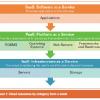
|
An Effective Production Rollout using a Hub-N-Spoke Release Management Process In this article the author discusses the time-tested Hub-N-Spoke Release Management process that ensures a holistic view of the code (new or modified) is considered before releasing it into the production environments. This process was used successfully by data management groups of a large financial company. Subsequently the use of this Release Management process resulted in improvements in the code release process. |
|
| Global Agile Development: How Investing in the Right Team Impacts Long-Term Rewards Many software development organizations are electing to implement Agile development methodologies in order to take advantage of the cost, quality, and time-to-market benefits commonly achieved with this approach. At the same time, these organizations are moving software development offshore to take advantage of greater scalability and quot;round the clockquot; development cycles. However, in combining these two efforts, the highly collaborative nature of Agile is tested as teams are faced with cultural challenges and necessary work habit shifts. If you are considering implementing a Global Agile approach to software development, then it is imperative to focus on an often underappreciated aspect of this initiative: building the right team. This is the most critical step in delivering the benefits of Global Agile development. |
||
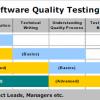
|
Defining Career Milestones In Quality Control Testing This article is about career planning software quality control testing, including defining career milestones within software testing. It is a helpful guide for beginners and others working in the field. |
|
| Increasing Business Value by Adopting Agile MethodsThe prospect of adopting agile software development practices to deliver value to customers faster while reducing feature fatigue has captured the imagination of Product Managers everywhere. But many companies have had difficulties adopting the new agile practices. Some have faced employee or department resistance to change during the transition. Others have failed to demonstrate enough business value to keep the initiatives alive and spread it across the organization. This article outlines the main principles that will help companies choose the right strategy when adopting agile development. | ||
| Scaling Agile Processes: Five Levels of PlanningExperience gathered during large-scale implementations of agile concepts in software development projects teaches us that agile methods, like Scrum, do not scale to program, product and organization levels without change. However, various planning frameworks have, in fact, been used successfully in large-scale agile projects, which can broadly be defined as projects that involve over 50 people and take months or years to complete. | ||
| The Agile Pyramid: Aligning the Corporate Strategy With Agility Agile software engineering and agile project management have become more mainstream in recent years with great success. But the benefits from agility should not have to stop there. Instead of initiating a project and letting the team run with it, progress reporting, planning and estimating should translate through all the channels, back to the corporate strategy. That way, executive management or the PMO can continuously balance the vision of the organization. This article will present these concepts for agile portfolio management. |
||
| The Metaphors of Scrum We claim that by exploring the metaphors of Scrum, many of the common confusions and debates surrounding Scrum are easier to understand. It has been our experience that people often reach different conclusions with the same words because they are using different metaphors. Additionally, we have observed that that once people become aware of the differences in their applied metaphors they can see each other's point of view more easily. |
||
| Disciplined Approach to Adopting Agile: Adoption FrameworkOver the past few years organizations have asked the agile community "Why should we adopt agile practices?" Today, however, they are turning to the agile community, with a different question: "How do we proceed with adopting agile practices?"; Unfortunately, there is no structured approach (at least that is published in the public domain) for agile adoption. The absence of guidance and assistance to organizations pursuing agility is the main problem addressed by this article. | ||
| Longacre Deployment Management for Enterprise Configuration ManagementLongacre Deployment Management (LDM ) is an enterprise-level CM technique that provides robust, accurate CM functions in broadly diverse development environments. LDM solves many of the problems associated with database systems; and with organizations composed of teams using different technologies, in different places, or formed from different organizations. It is an existing technique-LDM has already been deployed in a complex development environment. This article is not a case study: it provides the technical details of the LDM technique. If you are not a CM specialist, your eyes are going to glaze over. | ||
| Managing Change: Churn and ComplexityThis article takes a look at how change is more complex within SOA environments, especially when the architecture must deal with the modernization of legacy applications. Then, the author discusses the ways good release management practices help organizations deal with the constant change churn, complexity, and change volume. | ||
| Agile Tooling: A Point, Counter-Point DiscussionIt has been six years since the authoring of the Agile Manifesto, and the technology and tooling landscape has changed since then. This conversation between Ron Jeffriesand Ryan Martens debates the merits and weaknesses of tooling agile. | ||
| Agile in the Enterprise: How Tools and Processes Enable InteractionsAgile development approaches are moving into the mainstream. They are no longer relegated to small co-located teams. Large application development organizations in and outside of IT are betting their businesses on globally distributed teams using agile methods to create and maintain their products. In these organizations, the Agile Manifesto's principal to value individuals and interactions over process and tools is impossible to realize. The complexity created by scale cannot be managed without judicious use of both process and tools. | ||
| High Performance Agile Teams: An Overview of CollaborationAny team benefits from being highly collaborative. This is especially true in agile development, where the techniques for rapidly building quality software rely on communication and relationships over documentation and process formality. Yet the agile community doesn't have a common definition for what “collaboration” is | ||
| The Renaissance of Paper for Agile Software Development Fast cars, flat-screen television, high definition gaming consoles, and dual core processor equipped laptops: the amenities of modern technology rule us. Computers are an integral part of our lifestyle and work-life, and many people define themselves by their choice of tools to complete tasks. Those interested in implementing agile frameworks are no exception, often voting to use electronic tools before exploring alternatives. This article is meant for the open-minded, ready-to-explorer surrogate who is not afraid of being a low-tech hippie in times of high-tech espresso machines. |
||
| Community Developed Builds for the Agile Developer Agile development is a process methodology where, at its core, is the ability for developers to share and test changes in software as rapidly as possible in an efficient but disciplined approach. The Continuous Build process is based on manual scripting and therefore is highly redundant and non-adaptive. Continuous Builds that rely on redundant scripts become road blocks for agile teams when attempting to move quickly from code to deployment. Agile developers must recognize the problems of manual scripting and begin moving toward a non-redundant Community Developed approach to managing the Continuous Build. |
||
| Breaking the Major Release Habit: Introduction to the Hyper Agile Methodology Getting Started with Agile Development |
||
| Theory of Constraints, Lean, and Agile Software Development Delivering More Business Value Where Needed Within the software development community, one of the biggest movements over the past decade has been Agile Development whereby teams adopt practices and attitudes consistent with the now famous Agile Manifesto. Additionally, there has been much discussion over the past four to five years about applying principles from the Theory of Constraints (ToC) and Lean Product Development (Lean) to software development. This has had a tendency to muddy the surrounding waters as teams question whether they should apply Agile, ToC, or Lean concepts. Are these three approaches mutually exclusive? Is there some hidden magic that can be unlocked by careful application of all three? Isn't it hard enough just trying to be Agile, without also trying to be Lean and ToC-ish? In this article we give an overview of Lean and ToC and show how they can be used in conjunction with Agile practices to focus on an organization's business value. By using elements of Lean, ToC, and Agile together more business value can be delivered with less effort. |
||
| Using Agile Development To Build A Partnership Between IT and Business The most significant hurdle in adopting agile development is often gaining the acceptance of the business leadership. Business leaders either believe that agile requires too much time, or they are generally apathetic towards the effort. But while business leaders may be difficult to get on board at the beginning, they can be the strongest supporters of the agile process once they see and understand it. Getting them to try it is the hardest part. This article addresses the typical barriers to involving the business side of the house in an agile development approach, and outlines the key steps that Digital Focus has found to be successful in overcoming these barriers. |
||
| The use of Baselines in a SOA EnvironmentIn service oriented architectures (SOA), there are three essential components for delivery: published service; long-lived business processes; and short-lived business processes. Baselines are key to successful SOA delivery. They identify the service—and the components making up the service—being delivery to an environment and provide for co-existence of multiple services in the environments at the same time. | ||
| The Benefits and Challenges of Maintaining a QC Work PlanThe work plan described in this article raises visibility to other teams' tasks that impact the QC schedule, shows other dependencies, documents historical data, and is flexible enough to use for different types and sizes of projects, as well as for different audiences. Since business users and project team members may not understand all that occurs during the testing process, it's wise to use a QC work plan to show all tasks, persons accountable, estimated duration, and actual duration for the software project. | ||
| Knowledge Empowerment for the Virtual Development Team Let's face it, nowadays going from version 7.0 to version 8.0 means working with a dispersed team of developers who aren't necessarily located in the same corner of the building - if the same corner of the world. |
||
| Upgradation Testing Upgrade path testing, also called upgradation testing, sounds a bit unusual. But testing upgrades is an important part of the software life cycle, and this article explains how it should be done. |
||
| The Three C's of Distributed Scrum Teams: Communications, Communications, CommunicationsThe 3C's of a great Scrum meeting comes down to communication, communication, and communication. This becomes more pronounced as a team becomes distributed. Distribution can be on the other side of the floor or the other side of the globe. Balance in communications methods is the key | ||
| Transitioning to Agile in Onshore-Offshore Distributed Teams Whether you are concerned that your job is going to be shipped to India or feeling safe that the outsourcing craze is calming down, the reality remains that we live in a global economy and more and more companies are beginning to explore ways to creating software in distributed and multicultural environments. The Web and the open source movement have demonstrated that it is not only possible to create quality software in a highly distributed and decentralized manner, but also that it "makes business sense" to do so. This article presents a pragmatic framework for introducing Agile practices and tools to onshore-offshore distributed teams. |
||
| Case Studies On Bringing Agility to Offshore Software Development In order to stay competitive, IT companies integrate offshoring and outsourcing in their corporate strategies. When these strategies are implemented it is often found that offshoring is full of challenges and much more difficult than expected. This article suggests that the challenges of offshore software development can be met by using agile values, principles, and practices. First the article will present some of the challenges in offshore development, then it will investigate how agile principles and practices have helped offshore development in becoming more competitive by eliminating the challenges usually found in traditional offshore development. However due to the added distance it was found that agile development will run into new challenges. Some challenges, such as time zones, are hard to meet and will impede direct agile communication. |
||
| Test Management Using Multiple Tools In this article, the author shows how a combination of tools (mostly open source) can be used to implement a test management plan. |
||
| Module Baselines within a Service Component ArchitectureThis is an ongoing of series of articles about configuration management using baselines in a service-oriented architecture (SOA) environment. Baselines for the Service Component Architecture (SCA) is one of most difficult areas to understand because SCA uses multi-layer baselines, and also there is also a difficulty of long-lived and short-lived processes. | ||
| Financial Aspects of Configuration Management Many people think that to large companies Configuration Management is seen solely as a technical role and as a cost burden to the company. The following article explains however some of the financial aspects of the role. These are examples that have occurred during my role as Configuration Manager in several companies. In these roles I have been much |
||
| Osmosis: Get Outside Your Configuration Management BubbleWe are on the brink of a massive shift in CM, both philosophically and technologically. Our abilities and our means must undergo a change in how we operate and how we are perceived. The changes are incredibly exciting and offer enormous opportunity for the discipline. We're being backed against the wall in many organizations but we can be climbing on top of the wall like Berliner's at Check Point Charlie when the wall fell, moving our CM nation to a much better place. | ||
| A Sensible Approach to Access Control in Configuration ManagementAccess control in software development is part of the gate keeping function. Who should and should not have access to the project information and repository? In this article, Rich Bianchi discusses four factors to consider when setting up the access rights and access control rules for a project. | ||
| Agile EVM: Earned Value Management the Agile Way Agile Earned Value Management (AgileEVM) offers a simple, lightweight method for integrating the benefits of traditional EVM metrics into your agile software development process without causing "drag" on team productivity. AgileEVM metrics can provide added value for project stakeholders, product and project managers, and Agile team members. In particular, AgileEVM adds a cost reporting component to the Agile toolkit that supports project decision making. |
||
| Daylight Saving Time Strategy Test PlanThe way that the United States implements daylight saving time is changing this year. This document provides overall guidance and a strategy to test your applications to make sure it can handle the change. Even if your application is not suspect, you should still consider the due diligence of validation testing to assure that problems will not arise from some unforeseen third party or supporting applications. | ||
| SOX Testing for IT This article acts as a handbook for the newly emerging breed of SOX testers for IT application controls. The article briefs on the basic responsibilities of a SOX consultant, the qualities required and demarcation of tasks between the IT and SOX consultants in an organization. Also the article highlights about setting the expectations right with the IT and SOX teams to enable frictionless working environment. |
||
| Blending Agility With Finely-Grained TrackingAgile methodologies enable teams and organizations to support the dynamic nature of business. Short, focused iterations are ideal for accommodating changing requirements and environments. Planning and tracking is low overhead using units like features, stories, or tasks providing high-level visibility into status. While this visibility is better than nothing, there are certainly limits in the depth and breadth of insights this provides. This article will investigate techniques for blending more finely-grained tracking with conventional agile techniques. | ||
| Testing the Hidden Data Testing hidden data is a necessary and important part of the software verification and validation process. The quality of an application must not only be proven through the visible data in the user Interface, but must include the data as it travels through the system. With a few database skills and using the 4-step method described in this report, these tests can be accomplished by the Quality Assurance team. |
||
| White Paper: Setting Up an Integration Test Lab One of the challenges testing teams face is in organizing and making available an integration test lab infrastructure so that the System Integration Testing (SIT) takes place smoothly. This article provides simple guidelines intended to give valuable inputs (steps) and tips to establish such a test lab. |
||
| Multiple Views of CMMI Approach: A Case ExperienceSoftware development processes should be optimized to compete with the world market, so companies can effectively deliver quality products on time. CMMI provides a model to help optimize development in every stage. | ||
| vielife Embraces New Technology To Enhance Health Assessment Program Health and well-being (HWB) services provider vielife has taken an agile approach to upgrading its Web-based HWB service and management information tool, with the help of Agile consulting firm Valtech. Due to the nature of the agile process, the team was able to make adjustments to development of the next generation portal along the way, adapting to changing business requirements and ensuring that each phase met expectations. As a result, vielife has been able to increase flexibility of the service, has the capacity to deploy more interactive health behavior change programs, and has gained better overall management of the system. This article discusses the project and how vielife has benefited from using agile processes. |
||
| Getting Beyond "It Depends!" for Adopting Agile PracticesAs more and more people move towards adoption of agile practices, they are looking for guidance and advice on how to adopt Agile successfully. In this article the author presents a way to share knowledge that is more specific than full methodologies and processes, more general than war stories, and will help new agile adopters get beyond "It Depends!" | ||
| Making Agile Mainstream–Crossing the ChasmFor agile adoption to continue, we need to address development issues that large organizations deal with, including large-scale development projects, geographically distributed development, and compliance. Let's take a look at what promising work is happening in each of these areas. | ||
| SCM Design Patterns: Version Control & Multiple StatesThe Version Control design pattern is seen when you only want to capture iterations (versions) of static items such as documents, simple applications, and project baselines. Other features of simple version control are that you want to capture and control items while guarding against the loss of any item, maintain an audit trail of each item, and allow for roll back of items to an earlier version. The next design pattern is Multiple States, where you need to track unique collection of items that represent the application at a certain point in the lifecycle of the development process | ||
| Buffer Overflow In this article, Tapas Kumar Sahoo explains buffer overflows and how to prevent them. |
||
| Configuration Management in an SOA Environment I am the Programme Configuration Manager for the SOA programme for a large UK financial company, which have adopted an SOA approach for creating new services to replace existing |
||
| Configuration Management and Simplicity - The Five "T" Approach to Keeping it Simple Let's face it, software configuration management can be downright overwhelming, and its |
||
| Agile Coaching in British Telecom Over the last two years BT Exact, British Telecom#39;s IT organization, has been going through a radical organizational transformation. A central plank of this transformation has been BT Exact adoption of an Agile approach for systems delivery. When BT began to look at how you transform an organization of approximately 14,000 people to become an Agile organization, the size and complexity of BT seemed to be an issue. One challenge faced was how to support this size of a transformation from a coaching perspective. That is, how do you leverage a relatively small finite coaching resource so that it can be effective? This article will chart ongoing journey to address the need for Agile coaches and how "jam" proved to be inspiration along the way! |
||
| Simulation in Host-target Testing This article describes the necessity of simulation in host-target testing and provides strategies for host-target testing throughout its various phases. |
||
| Relating PMBOK Practices to Agile Practices--Part 4 of 4The Project Management Body of Knowledge (PMBOK) outlines the specific actions required for proper quality management. In the conclusion of Michele Sliger's four-part column, she determines how compliance with the PMBOK practices correspond to activities that an agile team might perform. | ||
| Where the Rubber Meets the Road: Infrastructure Management Keeps Reliable Applications in the Race Development teams in companies spend considerable amounts of time, resources and effort to design reliability into the applications they build to support business processes. Ask anyone responsible for delivering products or services about building quality and reliability into their offerings and they'll all tell you the same thing: it's a lot less expensive to build quality and reliability into processes upfront versus fixing problems in the field. |
||
| Measure what Matters The old adage goes "you cannot manage what you cannot measure". True enough, but where do you start in implementing a measurement program? What information is really important? And, how do you decide what to measure and what will matter to others? |
||
| Test Metrics: A Practical Approach to Tracking & Interpretation You can improve the overall quality of a software project through the use of test metrics. Test metrics can be used to track and measure the efficiency, effectiveness, and the success or shortcomings of various activities of a software development project. |
||
| How Agile Changes the Role of Project Managers, Business Analysts, and TestersOn a recent engagement, my company walked into an organization that was struggling to adopt agile software development practices. There was clearly energy and willingness on the part of the development team to try new practices. However, the confusion around new responsibilities of the project manager (PM), business analyst (BA), and quality assurance tester (QA) was preventing progress. | ||
| Managing Process Facilitators The term "Process Facilitator" refers to the people in your organization whose primary responsibility lies in improving the effectiveness of the work that the teams are doing. This responsibility is mainly around the process the teams are using, but also encompasses less tangible aspects of work such as team development, organizational culture change, administrative and technical tools, and working with other Process Facilitators both inside and outside of your organization. Since the role of the Process Facilitator is so broad, it can be difficult to understand and effectively support Process Facilitators who report to you. This article helps you with this challenging task. |
||
| Agile Offshore Development: 10 Ways to Make it Work for Your Organization Successful extended global development teams have adapted Agile methodologies such as XP, Scrum and DSDM to further improve response to customer needs and time to market. At the same time, they gain rapid knowledge transfer, training, transition planning, goal setting, governance, as well as the comprehensive operational reviews required to achieve results. There can certainly be challenges employing Agile development methodologies in a multi-shore environment. |
||
| Most Software Development Metrics Are Misleading And CounterproductiveThe software development industry has a poor track record for developing and employing useful software metrics. This is because most of the metrics selected are tangential to the true goal of software development—delivering business value—and instead focus on software attributes and accounting measures. Metrics such as lines of code per developer week, function points created, hours worked, or budget consumed appear important measures, but they have dangerous and counterproductive implications. | ||
| White Paper: A New Approach to System Verification System verification approaches for high-tech equipment have not scaled in step with increasing technical complexity. While software developers now enjoy numerous tools that offload mundane tasks, QA teams still spend much of their time performing repetitive manual tasks like configuring testbeds, and documenting existing test cases. This paper suggests a new approach to system verification derived from the successes of other industries facing comparable challenges. |
||
| CASE STUDY: Band XI Distributing Agile Development Software development organizations have evolved to meet the challenges put forth by ever increasing complexity in both the problem spaces and the technologies applied. Unfortunately, the right people for a project may not all be located in the same city or at the same time. |
||
| Combining Agile Processes in Offshore Software DevelopmentIn modern software development there are two trends that allow people to get more for less: agile development and offshore outsourcing. Agile processes are traditionally implemented in one site, where customers and developers can meet face-to-face and communicate easily. Offshore development projects, on the other hand, are traditionally implemented as fixed-bid consulting agreements, executed either using waterfall processes or at best in iterative way. However, it is possible to use agile software development process when working with offshore teams. Our successful projects have employed a mix of agile techniques and organizational models. | ||
| Enterprise Agile Adoption: The Role of AuditsOrganization-wide continuous improvement programs that notably include an agile adoption and It compliance function can play a vital role in driving the levels of collaboration and reuse necessary to achieving scale. Audits can directly contribute to collaboration and knowledge reuse among agile teams. | ||
| Test and Defect Management (template) This template includes team management, test cases, and test and defect status reporting. It can also be used to track a test log, defect log, schedule and effort variance, testing metrics, and traceability matrices. It can accommodate test cases for one hundred modules to a total of 5000 test cases. It also can have test cases for twelve cycles of testing. The test results can be seen in numbers and in graphical formats. |
||
|
Relating PMBOK Practices to Agile Practices--Part 3 of 4 The PMBOK outlines the specific actions required for proper risk management. In this third installment of Michele Sliger's four-part column series, she looks at this risk management process and determines how compliance with the PMBOK practices correspond to activities that an agile team might do. |
|
| Improving Application Quality by Controlling Application Infrastructure Today, applications are undeniably the proxies for key business processes. So, improving application quality drives directly to improving overall business performance. It's no wonder then that improving application quality and uptime is a top of mind issue for IT managers and executives. |
||
| Using CM to Enhance the Testing Process One of the simplest ways to enhance QA's ability to manage the test process is to put the QA group's Test Cases under CM control. Besides being an industry best practice, putting Test Cases under CM control will also help to qualify your organization for CMM Level 2. Depending on the features and functions of your firm's CM tool, putting Test Cases under CM control can provide the following benefits: |
||
| Migrating to SubversionIn this article, we will look into the process of migrating from other version control systems to Subversion. Development teams decide to switch to Subversion for a wide variety of reasons. For many, SVN delivers new and desirable features which were lacking in their former system - usually because that system's design was much older than Subversion's. Such is the case with CVS, and for some commercial systems as well. | ||
| SOA and Agile Development: Continuous Integration And TestingIT organizations view the adoption of agile development methods as a way of bringing an "integrated team" approach to the product development lifecycle where everyone is focused on early, frequent demonstrated results. The second shared goal is service-oriented architecture (SOA). SOA is an approach to deliver integrated component-based ecosystems that are assembled to efficiently execute critical business processes. The goal of SOA is to be flexible and adaptive to the constantly changing business climate. These two productive approaches, when applied concurrently, are setting the stage for the next evolution in the deployment of technology to enhance business performance and results. | ||
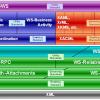
|
A Pony in the Pile - A Curmudgeon's View of SOA Adoption I have been in and around Web Services and Service Oriented Architecture (SOA) for a long time. I have built distributed systems for fifteen or more years. I have scars from the Great Web Service Euphoria of '99 to '01. I have gray hair from dealing with the security and management problems of building real services in real networks. I have followed the standards as they have matured. I have observed and worked with clients as they considered and confronted SOA. Here is my conclusion: real SOA is so complex and organizations are so far from ready for it, that the only sound SOA adoption strategy demands agile program management techniques. Nothing less will suffice to guide and sustain an organization through the SOA evolution. |
|
| Agile Services In An (SO)Architected World Because one of the core stated objectives of Service Oriented Architecture (SOA) is to increase business and IT alignment and IT's flexibility in meeting changing business needs, on the surface it would seem that SOA and agile methods are a natural fit. And within the SOA model of service production, distribution and consumption, use of agile development methods clearly has great opportunity for effectiveness on the consumption side of the equation. However, the approach by which a suite of generally reusable services within an SOA are defined and produced requires a cross-project perspective that could be viewed as running counter to a typical agile development approach. Some amount of up-front architectural thought must go into initial service definition to prevent those services being developed from becoming solely project-centric. |
||
| Improve Service-Oriented Architecture Development with Agile QA Testing PracticesService-oriented architectures (SOA) promise to address many technical challenges by allowing developers to incrementally deliver new business capability while leveraging existing assets. By using agile practices during QA testing, SOA development teams can turn potential roadblocks into opportunities. | ||
| Back to CM Basics: Change Control This topic has in all likelihood been discussed and hammered more than any other CM-related subject. But it's a good idea to revisit it now and then, especially from another prospective and point-of-view, just to keep it fresh. |
||
| Determine Your Team's SCM Needs Before Automating!At many organizations, configuration management (CM) activities are chaotic. Then at some point and perhaps out of utter frustration, some genius gets the bright idea to "automate"—thinking that this is going to solve their dilemma, so the organization focuses on automating their chaos. | ||
| Implementation Methodologies This month's theme, "Implementation Methodologies", focuses on many different opinions and viewpoints. During the initial discussions among the Crossroads News writers and our editor, Patrick Egan, there was both confusion and clarification. The confusion was largely semantic, and the clarifications, well they came from many authors' perspectives. In the end, our editor said he wanted to see papers that, "...differentiate between our SCM implementation at the organization level, application level, and project level -(aka, the "Target Level/Audience Method"), and implementation approach." He also indicated that he was interested in subjects that ranged in variety from analysis, to tool selection, to design, to installation, to testing, to training and deployment". I liked that primarily because this directive gives rise to a wide range of perspectives of what implementation methodology means to the practitioners of the software engineering community. Therefore, here is my own viewpoint of what Implementation Methodologies mean to me. |
||
| SCM Best Practices: Determining Which Practices Are Best for YouWhat's Best? What are industry best practices for Software Configuration Management (SCM)? Which best practices are best for your project and for your organization? How should these best practices be applied or implemented to solve your SCM problem domain? Is your project or organization prepared to use SCM best practices? Let's examine a collection of SCM best practices. | ||
| White Paper: Unlocking the Benefits of IV&V Independent Verification and Validation (IV&V) is fast being recognized as an important step in the software development process to improve quality when building a software system and ensure the delivered product satisfies business user's operational needs. The IV&V assessment and associated recommendations provide management and the project team with actionable advice based on industry standards and best practices. This article details the benefits achieved with IV&V. |
||
| Reasons Why Software Configuration Management is Backed Against the WallQuite often software configuration management is backed against the wall because following the process is going to cause someone a delay, or worse yet, inconvenience. Using a bit of bit humor, we’ll look at some common complaints and the underlying reasons why we put the rules in effect in the first place. | ||
| Motorcycle CMWhen I learned to ride a motorcycle, I never realized how appropriate the lessons would be in configuration management. Keeping the bike on track, handling emergencies, and monitoring progress are much like improving process in an organization. This month we'll look at some of those principles and see how they match up. | ||
| Best Practices In Global Agile Development For Product Innovation Agile over the wire and how to make it work. In our experience, pure-play Agile development is destined to fail in a global delivery model. The basics of Agile, such as the emphasis on face-to-face communication, close interaction between teams and an adaptive approach to product development, are not possible while engaging an offshore team. However, by injecting process adaptations, Cognizant has successfully enabled some facet of "specially customized" Agile methodologies. In fact, a large percentage of Cognizant's software product innovation services use Agile practices in some form or the other. |
||
| Iteration and Release Retrospectives: The Natural Rhythm for Agile Measurement At regular intervals, the team reflects on how to become more effective, then tunes and adjusts its behavior accordingly. (Agile Manifesto principle 12) A cornerstone of agility is the team's commitment to continued reflection and adaptation. For most teams, there is a natural cadence to this process as iterations occur frequently, typically every one to two weeks apart, and releases occur every two to four months. As such, the iteration boundary represents a frequent opportunity for immediate feedback and quick mid-course correction, primarily focused on the team's ability to simultaneously define, code and test new functionality in a time box. At the release boundary, the measures move to those things that reflect the team and the organizations ability to move that functionality from "inventory" to delivered product or system. In this article, we'll describe a set of iteration and release metrics that have been used to good effect by a number of agile teams. In our experience, teams that are effective in using these iteration and release metrics have the best chance to achieve the maximum benefits of agile. |
||
| 5 C's of Agile ManagementBy focusing on the 5 C's of agile development: Courage, Context, Course, Cadence, and Cost - software will never become "easy" but it will become easier, and better managed. Learn how each of these aspects cannot be ignored to run a successful project. | ||
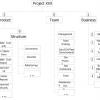
|
Calculating Earned Business Value For An Agile Project It is apparent that agility works, whatever that may mean. However, many software projects remain artifact-driven and waterfallish. Why is this? The most common excuses are that agility is too developer-centric, that it is too lightweight, and that feedback to business is hard to understand. In particular, many managers in larger companies miss their metrics. In this paper we address this last problem by defining a new metric, Earned Business Value (EBV), that replaces standard Earned Value Analysis (EVA) metrics, and can be calculated in an agile project. Using EBV, teams can gain better understanding of a project's progress and determine when and where to reallocate resources or change course. |
|
| Rhythms as Agile Diagnostics A healthy agile project has several typical rhythms such as releases, iterations, stand-up meetings, builds kicked off by continuous integration, and the red-green-red test cycle of a developer. These rhythms have healthy ranges (such as a stand up meeting lasting less than 15 minutes) and characteristics (such as that same stand up meeting not containing design discussions). When they fall out of these ranges or do not display the appropriate characteristics, they indicate that something is wrong with the agile process. |
||
| File Merge: How did we get ourselves into this mess There are several reasons why we may need to merge two modified versions of a file:
|
||
| A Guided Tour of Subversion (SVN)Assuming the reader has already installed Subversion (SVN) and created a repository, the article offers a guided tour through the most important and frequent Subversion usage scenarios. | ||
| Setting up Subversion EnvironmentThis article describes the SVN installation on both server and client sides. Depending on the setup required, SVN installation could be anything from trivial to a nightmare. | ||
| Version Control vs. Configuration Management The terms version control and configuration management are often used interchangeably, while some view them as separate disciplines. In fact, version control capabilities are a part of a well-defined configuration management process. We will explore these related disciplines and show how they can be applied successfully to problems facing IT professionals today attempting to manage their application infrastructure. |
||
| Deciding on Software Defect Standards (template) This template will help you determine defect standards for your next project. It includes examples of defiect severity level and fix prioritiy level with proposed definitions for each of the levels. |
||
| Are Low-Level Testing and Unit Testing the Same? There is a widespread opinion and popular belief that both low-level testing and unit testing are one in the same. In this article, Kuppuswami Muralidharan Iyer puts forward his views on the subject as to why they are quite different. |
||
| Supercharge Your Application Development Open Source Strategy with an Architecture-centric Approach Application Development Open Source Strategy with an Architecture-centric Approach Today's software developer, like never before, is blessed with a plethora of sophisticated open source tools and technologies to aid his craft in producing market-worthy applications. Leveraging these resources together with the developer's business domain knowledge and agile best practices can quickly yield some truly amazing results To sustain these successes, an application developer must apply an architectural-centric approach in order to realize longevity, flexibility and independence in his application. |
||
| Managing Dispersed Development Teams for Productivity The traditional approach to managing productivity is that employees punch a clock – in at 8, out at 5 – and employers must assume work is being done during the intervening hours. However, the current reality for many, if not most, businesses, is that the traditional approach no longer works. It has become unclear whether or not work is being accomplished regardless of hours logged at the office. With the increase in outsourced and offshore teams, many developers are scattered across different states or even different continents and throughout a variety of time zones. As a result, it’s not possible for a manager to ‘swing by’ a developer’s cube to get a status update on a project or even just to do a quick check that a team member is present and productive. |
||
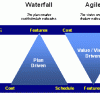
|
Relating PMBOK Practices to Agile Practices - Part 2 of 4 Michele Sliger understands the turmoil project management practitioners go through in the transition from plan-driven approaches to agile methodologies. Michelle continues her four-part series relating Project Management Institute (PMI) best practices--as identified in the PMBOK--to agile practices. |
|
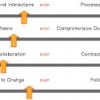
|
Achieving Agility in Globally Distributed Software Development In today's business climate there exists an ever-increasing demand to achieve more from less. More return from less investment, faster time to market from shrinking resources, higher quality from collapsing timelines. The impact of these pressures on the software development industry has meant that organizations have had to look for new avenues such as offshore development to reduce costs yet still satisfy these increasing demands. Simply incorporating an offshore development strategy to realize lower costs is not a solution. Leveraging the lower cost and resource scalability that an offshore development strategy provides must also include the facilities to enable that capability to produce better results faster. |
|
| Agile at Scale: 7+7 Practices for Enterprise Agility Part II of II - Seven Additional Practices For Enterprise Agility |
||
| 5 Keys to Automating Configuration Management for Application Infrastructure One of the trends being discussed in business, among vendors and in the analyst community is the importance of automating the functions performed by IT. Growing demands by the business, tight budgets and compliance pressures together accentuate the need for IT to be more agile, efficient and responsive to business stakeholders. |
||
| Introduction to Subversion This is the first of a four part series on Subversion (SVN for short). It covers Subversion history and basic overview of most important SVN features. (Part 2 will cover Subversion installation and look at the most popular clients. Part 3 will give you the guided tour of the most frequent Subversion use cases. Finally, Part 4 and will give some hints for the process of migration from other RCSs to Subversion.) |
||
| White Paper: Implementing an Automated Testing Program This white paper looks at the prerequisites, stages, and potential return on investment of an automated testing program. |
||
| Seven Agile Team Practices That Scale The benefits of agile software methods, including faster time to market, better responsiveness to changing customer requirements and higher application quality are undeniable to those who have mastered these practices. Agile practices, however, have been defined and recommended primarily to small team environments where co-location, ready access to interactive customers and small team size are the defining rule. Are the benefits of agility to be denied to those larger software enterprises who don't share these simple paradigms? Or can the industry learn from these practices and apply some of the core principles to large scale development of applications that require 100, 200 or even 1,000 distributed team members to achieve? |
||
| Test Automation: The Promise Versus The Reality Test automation has emerged within the software quality assurance (QA) and testing process as a way to save time and provide significant return on investment. However, many organizations are finding that a productive test automation environment is often fraught with challenges. This article compares the challenges against the expectations of what test automation should bring to a project. |
||
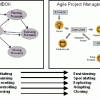
|
Relating PMBOK Practices to Agile Practices - Part 1 of 4 Michele Sliger understands the difficulties traditional project management practitioners go through as they transition from plan-driven approaches to newer agile methodologies. In this column, the first in a four-part series, Michele discusses the initial key area of PMBOK: integration management. |
|
| Addressing Concerns Of Performance Of Integration Builds High performance of integration builds is one of the keys to risk-free software development. This article discusses simple and advanced approaches towards addressing concerns of performance of integration builds. |
||
| Accelerate Software Testing with Orthogonal Thinking Can you reduce a test cycle by testing an application using the best set of test data? And uncover the unknown bugs throughout the application homogeneously with minimal risk? Yes, by using the orthogonal array based testing technique. This article explores its importance to software testing, and how it can help you release high quality products. |
||
| SCM Design Patterns: Parallel Development and Content ManagementThis author is not a storng proponent of the Parallel Development design pattern. I feel that it has some fundamental flaws that make managing the quality and consistency of your CIs very difficult. The last design pattern, Content Management can be viewed as a less structured forms of SCM. | ||
| Improving Software Security There are many published papers, books, and articles that address the need for software security. They explain how we can fight "intruders" from forcing their way into our systems. In this article Harinath Pudipeddi points out a few basic, yet important considerations that an organization must keep in mind while developing applications from a security perspective. |
||
| Simulation: The New Standard For Start-up Software Firms Telling a story with words is one thing--but visualizing a story with pictures is extremely powerful. Smart start-up firms are beginning to develop robust simulations of their software application idea as a way to gain an advantage in this competitive arena–before they start coding. Simulations serve to paint a vivid picture of an idea, bridge communication gaps and enable ideas to get to market faster. How can simulation help you as a start-up company? In this article, the author explains how a robust simulation of a software application idea can help a start-up company in many different ways. |
||
| Future of CM: Standards Is A Key To Transparent Change Current software engineering processes face a growing need for a transparent view into change. A transparent view into change is a view that allows accessing essential information about change throughout the application lifecycle, from capturing requirements to building and deploying production binaries. Such transparency is dictated by both natural and administrative needs and helps answer the question of who, why, when, where and how in detail. |
||
| Build Management Critical to Application Development The key to successful build management is a foundational commitment to consistency, repeatability, and portability. This is true for small, homogeneous development environments using in-house, scripted build systems, as it is for large, complex environments, where a new class of non-scripted, distributed build-management tool is now available. Build administrators who plan ahead can optimize the process of manual build scripting that will enable significantly more flexible and manageable development environments regardless of platform diversity. |
||
| The Software Quality Life Cycle - Venturing Beyond the QA Prerogative We live in an online, wired world. The digital and physical worlds are so intertwined that almost nothing can happen unless the relevant applications are up and running. You would think that as software applications become indispensable, they would likewise become more and more dependable. Instead, the rising tide of systems complexity and interdependency are making enterprise application problems inevitable, intractable, and more elusive. |
||
| SCM Design Patterns: Build and DeploymentA Build is defined as the process of compiling and executing any needed activity that makes up the process of creating your run-time Application. A Deployment is the task of packaging up and copying your run-time application to an environment in which the SCM stakeholders and ultimately the customer can access and run the application. | ||
| Perverting Communication When the United States landed a man on the moon, my wife and I use to engage our friends in fun debates on whether Neil Armstrong really stepped onto the surface of the moon or did he descend onto a huge sound stage just north of Phoenix, AZ. As farfetched as that argument is, in many cases, upper management in many software development organizations are being led to believe that their Eagle has landed at Tranquillity Base when it fact their project is “Lost in Space.” Much of that information is coming from the Configuration Management System (CMS). |
||
| Release Management The first thing that comes to mind about release management is how frequently releases are made and their levels, i.e. full release or patches. A common understanding of Release Management is that it is the management of introducing controlled items into a production (live) environment. But in reality release management is much more than this. “Release management is the process of planning, building, testing and deploying hardware and software, the version control and storage of software.” (British Educational Communications and Technology Agency, release management, Retrieved from http://www.becta.org.uk/tsas/index.cfm?refsect=ntss&bcsect=default§=release&id=tt5281 ) release management is not just what goes into production but also how something goes into production. It is the complete management of your production environment. |
||
| App. Infrastructure Configuration Management Keeps Good Apps from Going Bad For any good developer, applications are like children. You spend countless hours nurturing them and preparing them for the real world. Sometimes they frustrate you, other times they give you tremendous pleasure. And in the end, you’re just downright proud. |
||
| Source Control Checkins This month, I will explore the various situations wherein a repository is modified, starting with the simplest case of a single developer making a change to a single file. |
||
| Why SCM Should be an Independent Entity Why a Configuration Management (CM) department should be independent from Development, Test, and Production. When deciding where to organize an SCM team within a development organization it is helpful to keep in mind that the three most important characteristics of the SCM role are objectivity, skill set, and focus. This document will show that an independent SCM department is the only group with the right mix of these characteristics to successfully implement and support a full range of SCM services. |
||
| Source Control HOWTO: Repositories Cars and Clocks |
||
| History: Confronting your Past You may now be tired of hearing me say it, but I will say it again: Your repository contains every version of everything which has ever been checked in to the repository. This is a Good Thing. We sleep better at night because we know that our efforts are always additive, never subtractive. Nothing is ever lost. As the team regularly checks in more stuff, the complete historical record is preserved, just in case we ever need it. But this feature is also a Bad Thing. It turns out that keeping absolutely everything isn't all that useful if you can't find anything later. |
||
| What Are Branches in Software Development?What is a Branch in software development? A branch is what happens when your development team needs to work on two distinct copies of a project at the same time. This is best explained by citing a common example. | ||
| Fixing the Fix - How Much Does it Really Cost? I think everyone in our industry has heard at one time or another "It costs 3x more to fix software after deployment to production than it does fixing it right the first time." My question is; How do we prove that statement? |
||
| GNU Make Gotcha: ifndef and ?= This month's article is about a little GNU Make Gotcha: an easy way to get tripped up by two pieces of GNU Make syntax that do similar things, yet one has a deceptive name. ifndef isn't really ifndef at all, it would better if it were called ifempty, while ?= does make its decision based on whether the variable is defined or not. |
||
| Merge BranchesWhat is "Merge Branches?" Many people find the word "merge" to be confusing, since it seems to imply that we start out with two things and end up with only one. I'm not going to start trying to invent new vocabulary. Instead, let's just try to be clear about what we mean we speak about merging branches. | ||
| Going Over the Fence Software, we know, can be outsourced like sneakers, rubber balls, and helpdesks. That will put a damper on us in the career field of software configuration management. In the immortal words of the governor in Blazing Saddles, “We need to save our phony baloney jobs!” But what if we weren’t just managing software? What if we could apply the same principles to other products? Could we evolve into something more? Something bigger? Dare I say profitable? |
||
| White Paper: Defining and Designing an Effective Beta Test Learn how to define and design an effective beta test with this hands-on guide to the best practices. Beta testing is an elusive aspect of product development. Often, it exists within varied organizations and produces mixed results. Through the integration of a dynamic Web-based information system and effective communication, beta testing can become a valuable part of the product development process. |
||
| You have to have a plan, Man Hey CM’ers! Welcome to another fun filled, fact free edition of From the Trenches, the column where we get down in the mud to talk about the basics of Configuration Management and try to avoid any incoming shells. This month we will talk about Software Configuration Management Plans (SCMP’s). What are they? Why do you need one? How do you write one? How can you delegate this task to someone else, anyone else? |
||
| The Benefits of Software Configuration Management Tool Integration What’s the ultimate goal of every software development project? Unless you just inherited a fat sum of dough from your late Uncle Milton, it’s probably to make money. The faster you can turn your project into a quality product in the marketplace, the more money you will make. Using a Software Configuration Management (SCM) tool will help you achieve that goal, and integrating that tool with other development tools can help get you there even faster. |
||
| Avoiding Continuous Integration Build Breakage Patterns Continuous integration is an automatic re-building of project code base that is triggered by new changes to ensure that new changes integrate well into the existing code base. Continuous integration gains popularity among software organizations for its ability to provide quick feedback on quality of new changes. This feedback is used to deliver timely fixes if the changes don’t integrate well and break the project code base. |
||
| Planning Projects for Enterprise CM Effectively planning and setting realistic expectations before you start your CM project can mean the difference between actual and perceived success and failure. Here are some great tips to help you sell the success of your project and avoid costly pitfalls. |
||
| Security As A Distributed Platforms SCM Change Control Mechanism Ineffective operating system level security can jeopardize your entire SCM operations and the hundreds of millions of dollars of software assets you are trying to control. It is important to match SCM to your company’s security model and use OS security to exercise control over application runtime environments, which CCM tools typically do not control. Here are some important guidelines for using operating system security to provide robust SCM for Windows and *NIX platforms. |
||
| Capacity Planning For Software Build Management Servers A software build management server is an integral part of the Application Lifecycle Management (ALM) infrastructure. A typical ALM infrastructure consists of a version control system, a bug or an issue tracking system, and a build server. Software build processes such as Continuous Integration and daily builds are highly IO, memory and computationally intensive. Dedicating adequate resources to the build management server ensures efficient software development. |
||
| Process Based - Better than Agile for Enterprise I’ve never been hired to convert a strongly process driven software shop into an Agile-based one. I usually bring Process into a shop where the de facto methods are very similar to what is described as Agile, but without the effectiveness that Agile development strives for. On the other hand, I never choke a software shop with Process either. I’m also well aware of how effective Agile-type development can be. Throughout this article, I will compare and contrast a process-based software production, “Process,” with Agile-based production, “Agile.” I am primarily concerned with the declaration in the Agile Manifesto that Agile favors “Individuals and Interactions over Processes and Tools.” |
||
| Making SCM AgileWhen the notion of implementing software configuration management (SCM) on a project is considered, the first thing that usually comes to mind is a methodology that uses a generous amount of process and documentation. | ||
| CM Problems in a Complex Technology Environment A number of issues that not only affected the SCM group, but the entire software development group arose while I was working at a company as the Director of Process Management. My primary focus was to develop a methodology (or set of methodologies) that would (1) reduce software build time and (2) make the overall software development lifecycle more cost-effective. The job at hand was to automate the company’s many manual business processes using a new application development system for automating e-business change. |
||
| White Paper: The Case for Code Quality Management For managers who are overseeing Java development teams, maintaining consistent coding standards and practices is a monumental challenge. Missed deadlines, reports of problems in the field and constant bug fixes are all symptoms of poor coding standards and practices. Fortunately, comprehensive code quality management applications are emerging that bring proven process standards to the development cycle, enabling managers to enforce code quality and track issues back to specific developers. By enforcing quality standards, problems can be proactively identified before applications are released, dramatically simplifying the development manager's job. This paper will examine the challenges faced by development managers and introduce how code quality management solutions that employ code Precision Team ManagementSM bring needed order to Java development teams. |
||
| SCM Design Patterns: Paper FormsThis important concept of CM is that it manages components, their state and characteristics over time, as well as their relationship to other elements in the entire configuration. In the world of Software Configuration Management (SCM) we see analogous concepts to those in the physical world; we have to bring together many software components to form a software product, we need to understand the interrelationships of those components, their state over the course of a software project, and characteristics over time. Forms are a basic way to manage software configurations. | ||
| The Impact of Relocating a Data Center and Server on Networked Application Performance The author provides a seven-step strategy for data center relocation/consolidation and identifies four specific pitfalls to avoid during such projects. He also addresses the critical impact of physical distance to a project, and how the distance can affect the end-users. |
||
| Process Dynamism–Number 1 Best Seller An organization's success in implementing and maintaining a process-oriented approach depends on two factors: process architecture and people management. This article focuses on ways to ensure the established processes are in tune with changing business needs. |
||
| The Impact of Data Center and Server Relocation on Networked Application Performance Shunra provides a seven-step strategy for data center relocation and consolidation success. Four specific pitfalls to avoid during such projects are also identified. Lesser addresses the critical importance of considering the impact of physical distance to end users when planning these projects. |
||
| Analyzing the Specifics for a Business Rules Engine-based Project This paper provides a review of the projects that use business rules engine (BRE) implementation. The article emphasizes the importance of the rules taxonomy definition and concludes with a discussion about the estimate approach for this type of project. |
||
| Communication Tools and Skills for Software Testers on Agile Teams With the unique processes and priorities of working in an Agile development environment come new opportunites and challenges for testers on the project. Tim Van Tongeren will examine communication tools and skills for software testers on an Agile development team. While the emphasis will be on Agile teams, the tools and skills are helpful for other development methodologies as well. |
||
| Issue Tracking (template) This Excel template provides a simple and effective method of tracking issues and bugs. |
||
| Exploring the Outer Limits In today's world, customers expect to see software projects delivered in increasingly shorter cycles. The maximum time most IT customers seem willing to wait is about one year. In this fast-paced environment, the question becomes: just how much software can a typical IT shop create in twelve months? QSM's Doug Putnam logistically answers the question using production statistics from the QSM Industry database and the challenges he expects a team could face. |
||
| The Path to Successful Defect Tracking One of the challenges all software development organizations face is how to handle the defect-tracking process. Little thought is put into designing and implementing such a system. This white paper describes why a solid defect-tracking system is necessary. |
||
| White Paper: Taking the Pulse of Project Management White Paper: Overview of initial findings from a one year on-going survey conducted by PCI Global, an international Project Management training and consulting company. |
||
| White Paper: UML based Model-Driven Development for CThis white paper discusses using model-driven development with UML for C and C++ projects, especially for embedded systems. | ||
| A Checklist for Managing Offshore Projects More and more companies are sending software development work offshore. While this practice allows companies to leverage an incredible talent pool at a lower cost, it poses significant challenges in managing projects. IT managers are struggling to perfect the process yet there is no proven way of managing offshore projects. In this article, Avi Verma presents a set of general guidelines for project and business managers to effectively manage offshore projects. |
||
| White Paper: Customer Oriented Software Development (COSD): A New Paradigm for Software Development This White Paper considers the state of contemporary software development processes by analyzing their major problems and the core reasons for them. It explores how modern methods such as CMMI and Agile Development attempt to solve these problems and why they are failing to do so. The paper also provides an in-depth theoretical foundation for the necessity of a major paradigm shift in software development. A fundamentally new approach–Customer Oriented Software Development (COSD) is proposed. |
||
| White Paper: Issue Tracking and Project Management with BUGtrack This paper presented by SkyeyTech, Inc. explains how your company could benefit from utilizing BUGtrack for issue-tracking and project management needs. |
||

|
Open Checklist Checklists play an important role in testing software. But these are the most under-used tools. Using checklists effectively can save time, cost, and make testing simpler. Checklists can be accommodated in traditional test methods and in the currently popular exploratory test methods. |
|
| DoDAF Architectures in UML White Paper: The DODAF standard defines a number of work products, some of which are identified as requirements for a system to be compliant, others are identified as supporting products that are recommended but not required. This paper discusses each product required by the DODAF and shows how standard UML views and semantics can be used to represent them. Clearly, the unifying nature of the UML meets the needs of the DODAF very well, now and into the future. |
||
| A Hammer and A Nail: The right tool for the right job at the right time Automation is a great thing properly applied, but most companies lose sight of the value good manual testing brings. This paper uses a simple analogy to try and stress the importance of good basic skills and the tools to support them. |
||
| Achieving CMMI Compliance White Paper: Implementing and maintaining a CMMI compliant organization is key to the success of delivering on-time and quality products. Using CMMI provides the organization a framework for developing and maintaining good practices throughout the development and delivery of the product. The 5 levels of CMMI give organizations a roadmap and set of progressive goals to manage and improve their processes over time via the Process Areas. The benefits are clear, an ROI of 5:1. The challenge is in implementation. The need for an infrastructure to support and maintain this effort is key. |
||
| Fit for Automation Zelger outlines what developers can do for test automators in order to succeed with GUI Test Automation. Learn how to introduce unique identifiers that enable test tools to easily identify controls and abandon coordinate- and/or index-based recording. |
||
| What the Customer Really Wants In the demanding, 'net-speed, pressurized world of software development, software professionals would do well to reflect on some truths about their customers, their industry, and themselves. Following a few tips will help you achieve what is ultimately the most important issue - satisfying the customer. |
||
| A Strategy for Risk-Based Testing The fact that you test an application extensively does not itself render the application more stable. However, NOT testing an application increases the risk that the software may not comply with the requirements and won't necessarily provide the expected business value. Here is a method for approaching risk-based testing. |
||
| Practical Metrics and Models for Return on Investment ROI is a widely used approach for measuring the value of a new and improved process or product technology. ROI is also used for measuring the economic value of popular approaches to software process improvement or SPI. This article explains the ROI of SPI, and introduces practical metrics and models for the ROI of SPI. Additionally, this article includes practical examples for estimating the ROI of Inspections, PSPsm, TSPsm, SW-CMM®, ISO 9001, and CMMI®. |
||
| White Paper: Why Load Emulation in the QA Lab Isn't Enough Rigorous performance testing and optimization is a critical factor in the successful delivery of any business application. Yet frequently the performance of deployed applications doesn't live up to business requirements or end-user expectations. Shunra Software Ltd. describes their approach. |
||
| Requirement Analysis This article details the importance of requirements and reviewing requirements. Including what testers should look for in acceptable requirements for the development of test cases. |
||
| Softwre Quality Assurance Guidelines (template) This software quality assurance (SQA) Guidelines template provides a comprehensive, high-level definition of the activities and procedures used to perform quality assurance in a software development and support organization. |
||
| Quality Assurance: The Customer's Advocate in Product Companies Customer choice is the virtue of product quality that can make or break the success and survival of every business enterprise. Business objectives are not defined by just the bottom-line, as many would have us believe. They are based on creating and retaining satisfied customers by providing products and services that meet and exceed customer needs. In all these dynamics, QUALITY is the primary protagonist, the vital ingredient, and differentiator. This article examines quality assurance as an advocate for customers during product development. |
||
| Usability Testing: Recipe for Success In this case study from a major retailer, Antonet Bekker describes how to evaluate a system's usability in step-by-step approach. Often, recommended improvements to the software's usability design before (or after) the software goes live will result in dramatic increases in efficiency and effectiveness. |
||
| Survival Skills for Today's Test Managers and Test Teams William Ginn shares his success at strengthening his QA team in a chaotic and changing development environment. Use Ginn's experiences to help build and maintain a strong QA/testing team that is valued by upper management while successfully competing for limited IT budgets. Learn to implement new, agile development methodologies while continuing to create and demonstrate value. |
||
| Test Automation with Open Source Tools in an Agile ProcessTest automation, open source tools, and agile methods are three important trends in software development. This paper presents a case study of a project where the project team integrated these three methods to build and deliver a critical application. | ||
| Bug Taxonomies: Use Them to Generate Better Tests This article discusses how to use bug taxonomies to help generate better tests. The author explains that a test team's goal should be to create a useful taxonomy that can be used as a framework to brainstorm for possible risks to the application. |
||
| Efficient Configuration Test Automation Using Virtual Machines According to the Sky I.T. Group, in today's latest web development environments, there are over 7000 possible configurations of Operating Systems, Browsers, Screen Resolutions, and other unique characteristics. |
||
| The Only Winning Move Organizations that don't expect and encourage about 20 percent of their projects to be stopped may either be wasting resources or implementing only the safest bets. Denying reality or playing it safe may be the riskiest strategy of all according to industry authority David Gelperin. |
||
| Sarbanes-Oxley Testing Matrix (template) This Sarbanes-Oxley Compliance Matrix is an Excel template that includes guidance on how technology and software applications can meet the SOX financial criteria. |
||
| White Paper: Avoiding Performance Downtime and System Outages Through Goals-based TestingThis paper examines goals-based testing as a new approach to performance testing of enterprise systems. It highlights the challenges facing today’s businesses and demonstrates how a goals- based approach to performance testing helps. In addition, it presents a goals-based performance testing solution available from Embarcadero Technologies. | ||
| Testing of Acquired Products Most of the books and articles on testing are written with the view of a new project or a product. Due to a large number of mergers and acquisitions, IT departments are seldom afforded the luxury of purchasing new products. Managers must get the job done with the current systems already owned by their companies. This article looks into the problems faced by the QA team and explores the possible solutions to get a quality product out of the door. |
||
| Gaining the Respect of the Programming Team As the layer between the business sponsor and the end user, and as the one who is ultimately responsible for the success of a project, project managers occupy a challenging role. Often, we find ourselves playing the role of leader, diplomat, counselor, and dare I say it, salesperson. To achieve success, it is crucial to build a solid foundation of teamwork and respect among those involved in the project. In this article, Patrick Graves explains how this can be accomplished. |
||
| Strategic Testing in the Web World How does your company measure the value of testing their Web applications? Do they only notice when an application fails or when a business partner or end user calls with a complaint? What if tests could provide management and marketing with information to directly affect the bottom line? QA would then become a different kind of hero. This article offers ways you can promote the value of testing and QA in your organization. |
||
| Testing Error CodeThere are two types of code that developers write-functional code, and error code. This column is about understanding the unique challenge presented in testing error code. We'll begin by discussing error code from a developer's perspective. Then we'll explore the best ways to attack this challenge as testers. | ||
| Software Testing and the Capability Maturity Model In this presentation, Jim Hart explains how software testing relates to the CMM and how you can measure the maturity of your testing processes. |
||
| Now Let's Review Software benefits tremendously from code review. Establishing an effective review process requires management commitment and follow-through, but it is well worth the effort. In this article, Ed Hartnett suggests some best practices to follow in your code review process. This article originally appeared in the Tech Support section of Volume 3, Issue 3 of Projects@Work. |
||
| Automated Testing Approaches Automated testing is recognized as a cost-efficient way to increase application reliability, while reducing the time and cost of software quality programs. Some of the common reasons for automating are reducing testing time, reducing testing costs, replicating testing across different platforms, repeatability and control, and application coverage and results reporting. This article helps beginners adopt the automated testing approach. An example of simple architecture adopted in a client server project is also included. |
||
| Automated Testing The case for automating the Software Testing Process has been made repeatedly and convincingly by numerous testing professionals. Most people involved in the testing of software will agree that the automation of the testing process is not only desirable, but in fact is a necessity given the demands of the current market. The purpose of this document is to provide the reader with a clear understanding of what is actually required to successfully implement cost-effective automated testing using automated test tools. |
||
| A Practical Strategy for Testing Pair-Wise Coverage of Network InterfacesThis paper presents on combinatorial test design offers a guide to the theory and practical application of the method of orthogonal arrays to generate system test configurations that achieve pair-wise parameter coverage. | ||
| An Investigation of the Applicability of Design of Experiments to Software TestingApproaches to software testing based on methods from the field of design of experiments are a means of providing high coverage at relatively low cost. In this paper, the author investigates error reports from two large open-source software projects, a browser and web server. | ||
| Failure Modes in Medical Device SoftwareThis paper presents an analysis of software-related failures of medical devices that caused no death or injury but led to recalls by the manufacturers. The analysis categorizes the failures by their symptoms and faults, and discusses methods of preventing and detecting faults in each category. The nature of the faults provides lessons about the value of generally accepted quality practices for prevention and detection methods applied prior to system release. It also provides some insight into the need for formal requirements specification and for improved testing of complex hardware-software systems. | ||
| Improved Web Testing Web site quality is critical to success. Organizational Web teams are facing demanding environments characterized by budget cutbacks and sprawling Web sites created by legions of content authors. In this article, Al Caughey discusses the advantages of using an automated Web quality management solution to improve coverage, reliability, and return on investment. |
||
| What Can Be Done about Software Reliability? When an error is found in an application during development, the automated error prevention method helps you correlate that error to a specific point in the development process, and allows you to modify your processes to remove it, and more important, to prevent it from happening again. Preventing errors, rather than chasing them, dramatically improves software reliability. This way, you can stay competitive and not risk your valuable reputation on unforeseen bugs. |
||
| White Paper: The Classification Tree Method Testing is a compulsory step in the software development process. The Classification Tree Method offers a systematic procedure to create test case specifications based on problem definition. |
||
| Command and Control Automated TestingCommand and Control Automated Testing is a relatively new program at Eglin Air Force Base. Testers use automated tools to perform developmental, operational, regression, performance, and 24/7 monitoring of computerized command and control systems (information systems). This paper describes the methodology and tools testers use to perform this mission. Our testers do not endorse using any specific test tool vendor's products. | ||
| Building Performance into Internet Applications Web applications are based on client-server, request-response mechanisms. Performance of any moderate- to high-functional Web application is directly proportional to the architectural decisions and the technologies chosen to support it. Performance also depends on the architectural awareness of a programmer and his ability to address it from the inception phase of any Web-based application. This paper also discusses various ways to enhance the performance of Web-based applications. |
||
| Design Patterns in Real-Life Object-Oriented SoftwareIn the initial stage of project development, design patterns play an important role. After capturing all the requirements, it is crucial to decide which design pattern will be the most suitable. This is important to achieve code optimization, performance, and maintainability. Design patterns also allow the reuse of code and architecture. | ||
| White Paper: Automated In-Target Testing as a Means to Achieve Software Quality Although nobody denies the need for dynamic software testing, until now there has been virtually no tool support for this important task in the software development process. Therefore, dynamic software testing is mostly performed interactively. Tessy is a commercially available tool that facilitates the automatic dynamic testing of software for embedded systems. |
||
| White Paper: Impact Analysis: An Essential Part of Software Configuration Management Are too many bugs making it into your software releases? Are quality issues causing project delays, and escalating development costs? |
||
| White Paper: STATE Software Tool for Automated Test Environment STATE (Software Tool for Automated Test Environment) is a testing framework that can be used for testing any protocol/stack implementation. This paper explains STATE features in detail with the objective of helping reader understand what STATE is and how it can help to simplify and automate the testing process. |
||
| White Paper: Automated Testing–Challenges and Solutions Automated testing is essential for performing thorough and fast testing. Given the need to accelerate software development and reduce the time to market in the fast changing business environment, automated testing could prove to be the vital link to success for many companies. |
||
| End-to-End Performance in Web Applications Performance in a Web application is of utmost importance. This paper discusses the various types of testing that should be performed while measuring the performance of a Web application, the different workload models, and the ways of measuring response times using automated tools. A good performance tool aids the testing process and can be the smartest way of measuring performance in a project. End-to-end performance is the last stage of the project in a typical Web development iteration cycle. This paper also talks about some crucial design factors that improve the performance of a system. |
||
| Strike Three - Time for a New Batter In the past few decades, three "big hitters" have stepped up to the plate of building better software-formal methods, tools, and process improvement initiatives. Unfortunately, they have all struck out, according to James Whittaker in this week's column. Read on for his critique of these supposed cure-alls and for his call for a new kind of player on the field. |
||
| Software Risk Management Practices KLCI Research Group presents the results from the Software Risk Management Study performed in the second quarter of 2001 with more than 260 participants worldwide. |
||
| Inspection Process This paper describes inspections, including advantages of inspections, the people involved, and roles and responsiblities of the team. It includes templates for a preparation log, defect log, planning, and followup. |
||
| Software Testing Dos and Don'ts In software testing, one has to go beyond the boundaries to explore the existence of not yet discovered errors. This article will discuss testing dos and don'ts and give a few tips for successful testing. |
||
| Preventing Web Service Security Breaches with Unit Testing As Web services increase in complexity and connectivity, security is growing as a major concern. Many security breaches have been the result of poorly tested software that allows unexpected inputs to pass and weaken security measures. Such inputs can create conditions in which intruders can obtain access to parts of the system that would otherwise be secure. One effective way for development teams to prevent unexpected inputs is to perform thorough white-box testing at the unit level. Unlike specification testing (which tests that code behaves as it was intended), white-box testing checks for the conditions and inputs that are not expected, thereby enabling developers to more thoroughly test for what they cannot foresee. By performing such testing at the unit level, developers can quickly and easily identify and correct any weaknesses before security breaches have the opportunity to occur. |
||
| Quality Software Requirements This article describes how to write quality software requirements using case study examples to support the contentions presented. The study is based on observations (and documentation) made of a successful software development project and the process used to produce the project software requirements. The article also exposes the difference in quality as it applies to the conceptual software requirement and quality of the SRS document. |
||
| Traceability Matrix This paper provides an overview, in a nutshell, of the concept of Traceability Matrix, the importance of it, the areas where it can be used and the means of creating it. |
||
| Keyword Testing at the Object Level This paper shows you how to effectively place your focus not on the action or process to be completed, but rather on the object type that's to be manipulated. This redirected focus lets you avoid the pitfalls and resource requirements encountered when you move to test another application. Here is a demonstration of how this modified approach can be integrated into the manual test case creation as a way to tremendously improve efficiency. |
||
| A World-Class Infrastructure for Performance TestingIn 1998, the IBM Global Testing Organization established a Performance Test infrastructure solely responsible for certifying the performance of all IBM enterprise Lotus Notes and Web applications before their worldwide deployment to IBM end-users. This infrastructure was designed and implemented in the spring of 1998, and is today a software testing best practice and a Standard requirement in the IBM Global Web Architecture and IBM Global Notes Architecture. This paper documents how this infrastructure for performance testing was created, established, and became an IBM best practice. | ||
| Making a Difference with Test AssessmentsTest assessments are a powerful way to understand the current status of your testing. They also highlight what your team needs to do to reach its testing goals. From her experiences performing test assessments, Sigrid Eldh covers all aspects of her assessment approach including processes, management issues, automation, and test deliverables. | ||
| Software Quality Improvement in Financial Services after the Merger This paper provides senior IT managers and executives in financial organizations with insights into implementing quality and best practice initiatives, particularly when coping with the aftermath of mergers or acquisitions. It will help managers and executives to: understand some common issues created when IT-dependent organizations merge; effectively assess the role of large-scale quality and benchmarking initiatives, such as Six Sigma, TQM, and CMM in the changing organization; and consider some simple ways of implementing quality initiatives at a pragmatic level, which may provide a faster return on investment. |
||
|
Defect Migration Testing science states that it is impossible to achieve 100 percent test coverage in testing software. Based on the risks in a project, the desired amount of test coverage is arrived at and established. It is impossible to uncover all the defects early in the software development life cycle. For example, performance defects remain uncovered until the software is integrated and moved to the performance testing lab. This article puts forth a metric that depicts the status of defect migration. |
|
| Data Modeling for Data Warehouses This paper talks about the best tool for designing the star as well as the snowflake schemas. It discusses how to analyze the business and develop the requirements to the implementation of a data warehouse. |
||
| Functional Reliability in Rapid Application Development This paper describes the adaptation of Functional Reliability to the rapid application development environment. Every third week since January 2000 we have cut, tested and evaluated for release a new version of our software products. Solutions to anticipated and unanticipated challenges involved in the modeling of reliability for this process are described with an emphasis on evaluation of risk pre-release and how field results are fed back into release decision process. |
||
| Managing Distributed Software Development Distributed development teams are becoming the norm for today's software projects. In lieu of close physical interaction, distributed teams are faced with the challenge of keeping software projects on track and keeping remote developers involved. This article provides some suggestions for keeping distributed software teams in touch and on target. |
||
| Benchmarks on Automated Software Production Automated Software Production and Test (ASaP) is a coherent approach to improve software development by full automation. An engineer delivers system information and gets an automatically generated, correct system and textual and graphical reports on the system's properties without any human intervention after some "ten minutes." ASaP generates an equivalent of some man-years within one hour on a PC or workstation free of bugs. |
||
| Not Getting What You Want? The project plan is clear and the specifications are detailed. So why is the final product so different from what you expected? In this week's column, Nicole Auger brings a product manager's perspective on how features get changed or added during the development process. And she gives tips on how to get what you ordered, instead of a substitute. |
||
| A Closer Look at Estimating the Testing Process While the process of estimating testing in the software industry may be different for each project, all share the common thread of Requirements. This article has attempted to introduce guidelines to simplify this process. |
||
| Maybe We Shouldn't "Write" Requirements In this column, David Gelperin presents a problem familiar to many of us—what is the best way to record requirements? Given the limitations of static templates, how can we best manage high-volume, multidimentional requirements information? Read on and then share your experiences. |
||
| White Paper: Requirements Management Practices for DevelopersThe goal of this paper is to illustrate the important requirements management role developers play on successful software project teams. Additionally, the paper will provide requirements management implementation tips that developers can apply to make their teams more successful in delivering the right solution to their customers. | ||
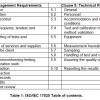
|
Test Accreditation - Minimizing Risk and Adding Value The testing of software is critical to the attainment of software quality. Reliable, meaningful |
|
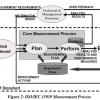
|
Software Measurement Process This article provides the background for understanding and applying the measurement process described in ISO/IEC 15939. |
|
| Functional Integration Test Planning This case study uses the example of an ATM machine to serve as a tutorial for writing test cases for functional integration testing. |
||
| How to Hire a QA Person This article provides a guide for hiring a Software Quality Assurance (SQA) specialist. It provides tips on what questions to ask and what problems to avoid in order to hire the right person. |
||
| Going Beyond QA: Total Product Readiness In this paper, we'll discuss how testing can be expanded to cover all aspects of Total Product Readiness (TPR). You'll be able to verify that each of these vital components has been properly planned and prepared for during the product development cycle. |
||
| Rational Purify In a previous article, we discussed about the use of Rational Purify to detect the memory leaks in one of the applications that was developed using J2EE technology. We have also discussed briefly about the analysis procedure and given some suggestions to avoid memory leaks. In this paper (on the basis of the feedback received in my teaching session on Purify), we are discussing a hands-on exercise (MemoryLeaksAfter.java) to give a close insight to understand memory leaks and their prevention. The program was tested using Purify and the results obtained from such a study are discussed here. |
||
| Web Application Development - Bridging the Gap between QA and Development Quality assurance (QA) professionals often are squeezed into the Web application development process too late in the game, and thus have no chance for success. Common QA frustrations include lack of planning and processes, unrealistic schedules, and lean staffing and financial resources allotted for the QA and testing phase of a project. RadView's Michal Blumenstyk offers guidelines to ensure QA can deliver what it promised. |
||
| Managing the Testing Process Treating testing as a black box at the end of the project schedule invites failure. Testing and test preparation need to be open, managed, and manageable processes that everyone on the project team can understand and work with. Having insight into all testing requirements and desired outcomes is an absolute must for effectively managing a successful testing effort. |
||
| Process-Use Case Matrix for Test Effort Estimation (template) This matrix can help you estimate test effort. It's based on use cases and test point analysis and is highly customizable. |
||
| eXtreme Spreadsheet Engineering Extreme Programming (XP) was created in response to problem domains whose requirements change. Spreadsheet development is often done in conditions of intense time pressure, for example in merger and acquisition analysis. The spreadsheet development itself is often used to develop an understanding of what is being modelled, and therefore change is constant. |
||
| The W Model: Strengthening the Bond Between Development and Test Based on the Vmodel, this paper describes a model that shows how the tasks for testing relate to the tasks in the development model. This testing model-the W-model-further clarifies the priority of the tasks and the dependence between the development and testing activities. |
||
| Positioning of Test Automation Services in an Organization This paper focuses on establishing test automation as a service in the software development organization at the outset, with the importance being given especially to the testing group. Test automation should direct its efforts to increase the efficiency and effectiveness of the manual testing process by providing 'Quality' Test Automation services. Test Automation should always aim at supplementing the manual testing to quickly assess the quality of the application under test through the execution of quality test automation suites. The building blocks of test automation services are discussed thoroughly to successfully finish test automation projects. |
||
| Testing Large Mission-Critical Software ChangesThis paper is based on an experience implementing and testing a large new software capability in a maintenance organization which had not dealt with a large change in some time. The capability was called GPC Payload Command Filter (GPCF). | ||
| White Paper: Step Towards Software Excellence: SCM This article develops a Software Configuration Management (SCM) Reference Model. This model is intended to be a concise and practical guide which brings together in an outline fashion the framework and methodology necessary for planning, customizing, and implementing an SCM approach, independent of specific SCM tool technologies or system platforms. |
||
| White Paper: Just Enough SCM This paper explores the relationship between SCM and the modern development models, provides an explanation of how to provide SCM in a quick, concise way, and describes how to adapt the "Just Enough SCM" philosophy to the most demanding standard. |
||
|
The Test Estimation Process Estimation is not an easy task. Estimating testing projects is harder. If there are no tools or methodology to support it, the estimation process is a nightmare for those responsible for it. This essay describes a real experience in the estimation process. It also shows some rules, metrics, tools, and tips that guide a testing team through the estimation process. |
|
| Why Is Error Prevention Important? The software industry historically has been plagued with an inability to release products that are adequately tested. Examples of poor quality in the software consumer market abound. From applications that can only be considered fully functional after a half-dozen "upgrades," to the frequent reports of damaging software viruses that reflect poorly on software security and stability, the software industry is consistently indicted for quality lapses. Put bluntly, much of the software in the consumer market isn't worth the cost of shrink-wrapping. This article serves as a rallying cry to bridge the gap between software quality efforts and other industry quality efforts. |
||
| Meeting Service Level Agreements Using Web Infrastructure Stressing Appliances This application brief describes how the unique and powerful technologies employed in the WebAvalanche and WebReflector will help IT service providers attain the highest levels of application-level quality of service from their network infrastructure. |
||
| Software Test Script (template) This Software Test Script template designed to keep track of automation status and revision history. It includes places to record issues, pre-conditions, and test steps. |
||
| Testing Applications for Pocket PC Testing applications on Pocket PCs requires a special strategy and plan. It's different from testing normal client/server or Web-based application. Testing applications for Pocket PCs is like a mixture of strategies applied for testing client/server and Web-based applications. The test strategies applied for testing client/server applications like compatibility on different platforms, different hardware and software considerations, user interface and the strategies adopted for testing web applications like compatibility on different browsers (if it's a Web application for Pocket PC or PDA), security (authentication, authorization, data confidentiality) should be taken into consideration. Apart from the above, there are few more issues that we need to address while testing applications for Pocket PCs. |
||
| White Paper: Multi-Site Software Development (MKS Product Whitepaper) There are unique challenges associated with enabling teams in multiple geographic locations to collaborate on the same software projects. A common myth is that replication is the answer. To this end, MKS introduces a new and innovative solution called the Federated Server Architecture (FSA). The FSA, developed by MKS, uses advanced and reliable caching technology while building on the widespread advancements in network availability and reliability. The result is a solution that has numerous advantages over the outdated replication paradigm, including lower total cost of ownership, reduced administrative burden, and access to real-time project information. Read this paper to learn more about the FSA and how MKS supports multi-site development. |
||
| The ABCs of XP, RAD, and PSP In this article, Adam Kolawa provides a quick overview of RAD, XP, and PSP, covers the main pros and cons of each process, then explores how these processes might be combined in a complementary manner to suit different development needs. |
||
| Iterative Software Development: from Theory to Practice This paper describes how iterative software development process has been adopted in RAFAEL, based on the Unified Software Development Process (USDP) introduced by Rational Inc. The paper identifies the core differences between iterative and waterfall software development, addresses the possible difficulties in applying the iterative process and details the elements of an iterative software development process tailored to RAFAEL. |
||
| Partners in Testing Manual software testing can never catch all errors–so can automation help? David Norfolk looks at the pros and cons of automated testing and offers advice–and warnings–on its use. |
||
| Becoming a Better Estimator We can all learn to be better estimators, and our projects will be safer and stronger for the effort. In Tom DeMarco's book Controlling Software Projects, he presents a simple method for tracking and scoring the accuracy of your estimates. Here, Tim Lister walks through the process. |
||
| Good Writing Leads to Good Testing Writing isn't easy--let me just make that perfectly clear. Anyone who tells you that writing is easy is either lying to you or doesn't understand what quality writing entails. Writing requires careful thought, a great deal of planning, constant review of your work-in-progress, and a great deal of skill, which can only be gained through experience and practice. Sounds a lot like a description of software testing, doesn't it? The truth is that there are a number of similarities between quality writing and quality software testing, and skills in one discipline can help you a great deal in the other, both directly and indirectly. While written documents may or may not be required within your test team, the process of writing can be extremely beneficial in itself. |
||
| Treat Development as Maintenance Development is treated as being different from maintenance, somehow more special and elite. Maintenance programmers, however, have solved problems that developers tend to keep reinventing. |
||
| Comparing Detection Methods for Software Requirements InspectionsSoftware requirements specifications are often validated manually. One such process is inspection, in which several reviewers independently analyze all or part of the specification and search for faults. These faults are then collected at a meeting of the reviewers and author(s). Usually, reviewers use ad hoc or checklist methods to uncover faults. We hypothesize that a Scenario-based method, in which each reviewer uses different, systematic techniques to search for different, specific classes of faults, will have a significantly higher success rate. | ||
| White Paper: Stress Testing Technologies for Citrix MetaFrame Scapa Technologies has developed a unique n-Tier Resonance technology that resolves the synchronization problems of stress testing in tiered architectures like Citrix ICA. Stress that is introduced at one tier in the architecture is made to resonate accurately through other tiers of the architecture so that it becomes possible for server loading patterns and client-end timings to reflect the effects of communications latency. The resonance is achieved by binding together tiers of the architecture using low-level synchronization logic. |
||
| Challenges in a Product Testing EnvironmentThis paper presents some experiences of Novell Bangalore in dealing with test engineering challenges as part of their product engineering delivery responsibilities for key Novell products. The paper identifies major challenges that were faced, some strategies that were used to overcome these challenges, experiences and results. A survey of test engineers done through an in-house designed questionnaire gave valuable inputs on people perspectives as well as insights into many of the management processes that are critical for success. | ||
| Software Test Template - Plan and Cases Combined (template) Use this template to write a softwre test plan with the required test cases. I recommend using this template for smaller projects that do not require a full-blown test plan plan. |
||
| "Tweak" Your RAD Process for Positive Results As with many new concepts, Rapid Application Development, or RAD, can seem to take on qualities of magic. One can sit with users and construct an application in front of their eyes to directly meet their needs. Seems too good to be true, and it is. Building good software applications requires discipline and tedious hard work. Visual programming tools are making software development efforts less tedious, but they are not a substitute for the hard work and discipline required to build high quality software. |
||
| Branch Coverage for Arbitrary Languages Made Easy Branch coverage is an important measure of the thoroughness of testing. One can get coverage tools for mainstream languages (C, Ada) on mainstream platforms (Solaris, UNIX), but not for unusual languages (JavaScript) or running on nonstandard platforms (C in embedded systems). This paper shows how program transformation systems can install test probes in software systems easily. This means test coverage is possible for all kinds of software in all kinds of execution environments. |
||
| Using Bug-Tracking Systems as Idea Repositories When unnecessary information is entered into bug-tracking systems, they are not as effective as they could be. In this article, Adam Kolawa outlines what type of information should be entered into a bug-tracking system during development and after code freeze, and how to use the information when designing future product versions. |
||

|
Validating Mission Critical Server Software for Reliability This paper talks about testing for reliability of server software, and highlights the challenges in planning, automation, execution, collection, and interpretation of the data for determining reliability as well as some practical challenges/difficulties faced. It also talks about the relationship of reliability testing to other areas of testing such as performance and functionality. |
|
| White Paper: Superfast Design & Prototyping for the iSeries 400 Few development projects deliver as promised - exceeding budget, missing objectives or failing to satisfy expectations. A consistent feature is that users frequently do not understand the system being developed for them. Too often, the result is dissatisfaction and costly rework. |
||
| Good Money After Bad Many software projects that suffer a lingering death should have been canceled much earlier. Although it is hard to pull the plug on a project with a weak business case, failing to do so does throw good money after bad. Karl Wiegers gives some tips on decision making that can help you avoid this outcome. Karl also shows how to use decision points to keep a good project moving along. |
||
| The Practical Organization of Automated Software TestingThe purpose of this paper is to take a practical approach to automated software testing and explain requirements for its success | ||
| Introducting Automated Test to a Project In an attempt to do more with less, organizations want to test their software adequately, but as quickly as possible. Faced with this reality, software managers and developers have little choice but to introduce automated testing to their projects....The introduction of automated test tools helps to replace archaic and mundane manual test processes with a more professional and repeatable automated test environment, that promotes test engineer retention and improves test engineer morale. |
||
| White Paper: Scalable Process for Enterprise Software Development Making the decision to standardize on a single SCM and change management solution across the enterprise, along with common processes and development methodologies, has important benefits for the organization as a whole, but also for individual software development teams within the organization. This white paper will make the case for standardization and then provide recommended solutions for minimizing the pain that comes with changing software development tools and associated processes midstream. |
||
| Enjoying the Perks of Model-Based Testing Model-based testing offers advantages like automating test generation and providing a basis for statistically estimating product quality. These perks can be enjoyed provided the right models are used, the proper resources acquired, and adequate training undergone. Model-based testing is not without difficulties, and knowing what they are and whether they can be avoided and how is k |
||
| Which Development Method Is Right for Your Project? We can debate the pros and cons of one development process over another until we're blue in the face, but the simple fact is that we will never declare a true winner. There simply is no silver bullet development process that will help every development team deliver every product on time and on budget. This article provides a brief overview of three development processes and when they are most appropriate. |
||
| The Properties of "Why" "That's just the way it is." Does that sound familiar? It's the answer we often get when asking the reason behind the way things are done on a project. How much better it would be if everyone on a project knew the "whys"-the purpose of the project, the reason behind the delivery schedule, the significance of the project to the organization, etc. This article describes the benefits of an environment in which people know why, and it explains how to create and maintain that environment. |
||
| Digital System Software Requirements Guidelines This document identifies guidelines that review high-integrity software requirements documents in nuclear power plants. The topic areas are conformance with the SRP, accuracy, functionality, reliability, robustness, maintainability, security, timing, and human-computer interaction. A checklist for the requirements and their ordering for a Software Requirements Specification in accordance with IEEE Std-830 is discussed. |
||
| Automated Software Testing This article discusses the road blocks I have encountered while attempting to acquire consulting engagements for myself and others. They are a result of the management misconception that all you have to do to automate software testing is to write test scripts. The immediate effect being that QA and testing functions are being staffed with test script coders at the expense of test designers. It all reminds me of a cartoon from the golden age of computer programming where the manager says to the programmer, "You start coding and I'll go find out what the system is supposed to do." The software testing corollary would be "you start testing and I'll go find out what we are supposed to test." |
||
| Designing Reusable Test Automation QA automated test development is a software development process although it is seldom treated that way. Following software development practices can make the difference between the success and failure of an automated testing project. One of the most important aspects of any automated test design is the ability to share and reuse code. A well thought out design promotes code reuse, speeds development, and reduces the maintenance of automated tests. Most software tests are made up of combinations of simpler operations. This paper introduces the Sequencer design that facilitates the creation and execution of reusable operations. The idea behind the Sequencer is to carve the product under test into sets of functional operations. A test case data file describes the operations to be executed including their order and required data. The Sequencer's test driver executes the test by loading the test case and sequencing the operations. |
||
| Establishing an Infrastructure for Immediate Servlet Testing If you establish an appropriate infrastructure, you can perform client-side testing on a servlet immediately after you compile it and perform unit testing. Of course, testing early doesn't eliminate the need for later application-wide testing. However, it does improve the overall efficiency of your development process and make the later phases of testing decidedly less painful. |
||
| Our Individual Role in Raising the Quality Status Quo In the busy world of quality assurance and testing, we often as individual testers/quality assurance professionals dig in and do the daily work we need to do and sometimes leave the overall quality measures to those in management positions. As individuals we need to realize that each of us makes an impact on quality, whether we are proactively and consciously doing so or not. |
||
| Managing for Value with Agile Software Development Agile development increases business value for the customer, with the customer controlling the variables at each iteration. Ken Schwaber, co-creator of the Scrum agile approach, explains the basic notion behind agile development. A number of useful links appear at the end of the article. |
||
| Managing and Controlling Workspaces This article gives a solution for workspace management by implementing a simple process. |
||
| A Handbook for Load Testing Load testing is evolving as a discipline and it has discovered most of its business in the Internet economy. This paper examines various types of load testing and provides a detailed discussion on the load testing process. All load testing tools simulate realistic volumes of users to measure, define, validate, and maintain optimal application performance. There are many tools available on the market that can help in load testing, but this paper presents a brief overview of Web Application Stress Tool (WAST) that can serve the purpose. |
||
| Space Shuttle GPCF This paper is based on a recent experience implementing and testing a large new software capability in a maintenance organization which had not dealt with a large change in some time. The capability was called GPC Payload Command Filter (GPCF). |
||
| Enterprise Test Engine Suite Technology (E-TEST) This paper is a guide on how to create Table Driven Test automation with off-the-shelf utilities and commercially available GUI testing tools. It demonstrates the benefits of using a table driven approach and presents various engines, utilities and documents that enhance or support this third generation testing architecture, which I call Enterprise Test Engine Suite Technology (E-TEST). |
||
| Quality Time Creating effective management control instead of bureaucratic procedural "hoops" saves time and cuts development costs. But well-defined procedures are necessary to keep documentation in sync with the rest of the pieces of the project. In this article, Gill discusses specific documentation-process elements that will help improve the overall development lifecycle. |
||
| Challenging Conventional Wisdom in Software Testing The earth is flat. Mankind will never fly. Reasonable people believed these "facts" for thousands of years, but advances in knowledge and technology proved them wrong. Does the software testing industry have any such "facts"? In this paper, I will explore common testing beliefs. Using experiences from SAS, I will attempt to confirm or refute these pieces of conventional wisdom. |
||
| Software Inpection with CodeSurferDespite the widespread adoption and success of software inspection, many software products continue to be released with large numbers of flaws. This can partly be attributed to the inherent complexity of software systems. The complexity of the software thwarts manual attempts to comprehend it. We believe that tools that allow reasoning about the deep structure of the code at a high level of detail will be extremely useful for doing software inspections. In this paper we describe how our own system - CodeSurfer - provides access to and queries on the system-dependence graph representation of a program for the purposes of helping with software inspections. |
||
| The War Is Never Easy The paper describes how an organization plans and executes training to ensure the best possible use of resources to meet organizational objectives. There is a discussion of common problems, and measures to avoid or correct those problems. While the focus of the paper is achieving compliance with the CMM Training KPA, its content is relevant to any organization engaged in training technical personnel. |
||
| Software Innovation to Benefit the Business Software measurement specialists are part of a long tradition of economic theorists, even if many don't recognize their ancestors. Notions of efficiency and how to model economic change are implicit in measurement strategies pursued. Software measurement is difficult because it requires a sophisticated understanding of how innovation can be fostered. Economic theorists have known for a long time that the short-run models do not capture the innovation that drives growth. Dr. Fado is a professional now involved in a software development metrics program, interested in making software measurement work for business benefit. |
||
| White Paper: Test Smarter Testing smarter means delivering quality applications. However, some development organizations are not focused on planning and managing the testing process within the application life cycle. Testing is often considered a lower priority relative to development when, in fact, designing a comprehensive testing strategy can be as challenging as designing the application. |
||
| Software Measurement: What's in It for Me? The biggest obstacle to implementing a successful software measurement program is getting the software professionals, the ones in the trenches designing, coding, documenting and testing the software, to measure their work. |
||
| Revisiting the Definition of Software Quality In this column, Bob Glass returns to a topic that stimulated a lot of discussion on this Web site in his previous column--the definition of software quality. Here, he responds to your comments, which totaled more than double the usual number. Bob stands his ground (with some clarifications) on what quality is…and isn't. |
||
|
Web Content Management with Perforce Perforce is recognized as the fast, low-overhead, high-throughput solution in software configuration management (SCM). What's not as obvious is how Perforce solves the problem of Web content management (WCM). Perforce is used in a wide range of WCM applications by: organizations using an intranet for internal documentation; companies whose product is Web content, not software; and individuals, companies, and organizations with external Web sites. This paper surveys the Perforce deployment models currently in use for web content management, and identifies the features that make Perforce a suitable WCM solution. |
|
| Practical Approach to Test Object-Oriented Classes This paper explains about testing the object-oriented classes at unit level for their functionality. A new approach has been developed to test the functionality of the object-oriented classes at unit level. |
||
| Testing in the Bazaar Open source development projects typically include a testing phase, just like their commercial counterparts. But how do open source projects manage the testing process? What tools and resources do these projects use? This article discusses the ways that open source projects accomplish testing goals, and how open source testing compares to testing in a commercial project environment. |
||
| Software Testing at a Silicon Valley High-Tech Software CompanyThis paper describes a methodology for allocating priority levels and resources to software testing and other quality activities to achieve "customer satisfaction." | ||
| Usability Testing and Risk Management in a Multi-Developer Context Driving usability improvement in a company with over 100 different remotely-located software development organizations, each using independent development processes, presents specific Software Quality challenges. This paper describes the usability acceptance testing and usability risk assessment approaches that one organization instituted within this complex development environment, from the ground up. |
||
| Performance Evaluation and Measurement of Enterprise Applications Packaged applications are being widely adopted at mid- and large-size companies to automate both internal and business-to-business processes. E-Business/ERP implementations are usually part of a broader enterprise computing effort involving the integration of Web, server, and host-based applications. |
||
| Web Site Testing The instant worldwide audience of a Web site make its quality and reliability crucial factors in its success. Correspondingly, the nature of the WWW and Web sites pose unique software testing challenges. Webmasters, WWW applications developers, and WebSite quality assurance managers need tools and methods that meet their specific needs. Mechanized testing via special purpose WWW testing software offers the potential to meet these challenges. Our technical approach, based on existing WWW browsers, offers a clear solution to most of the technical needs for assuring Web site quality. |
||
| Documentation Metrics "It is inevitable that sooner or later, someone higher up the food chain is going to ask you for documentation metrics." In this article, Donald Le Vie distinguishes between "mechanical metrics" that don't really measure your productivity, and "quality metrics," which are more difficult to use, but much more accurate. Le Vie provides excellent examples of these, and analyzes the value of various types of metrics. This article reprinted with permission from INTERCOM, the magazine of the Society for Technical Communication (STC). |
||
| What's Wrong with Software Reuse? In this column, Bob Glass skewers one of the "old wives' tales" of the software field, the theory-based prediction that software reuse will lead to unbounded improvements in both development productivity and software quality. "It ain't so," he says here. But he certainly wishes that it were. |
||
| Will Tighter Deadlines Improve Software Quality? It may sound counterintuitive at first, but making tighter deadlines may improve software quality. When deadlines are strictly adhered to, the panic and rush as the deadline approaches can undermine quality of product. Heller discusses how a looser, but earlier deadline can encourage a healthier environment, and higher quality. |
||
| Untangling Windows 2000 Permissions An important component of any security system, its multi-layered access and encryption permissions provides a powerful combination, when configured properly. However, time and time again I find myself in front of a Windows 2000 Server, where a failed permissions configuration succeeded in creating a tangled mesh, denying access to everyone. At this point, without a documented roadmap, it becomes difficult to unravel the conflicts, but I hope to shed some light on what to do and avoid form personal experience. |
||
| Risk-Based Testing and MetricsRisk-based testing is reviewed and presented as a case study using it on a system test for a retail banking application with complex test requirements. Test documentation produced prior to test execution was kept to a minimum with responsibility passed to the individual tester. To support this approach, progress tracking metrics were used to track actual progress made and to calculate the resources required to complete the test activities. | ||
| Three Numbers to Measure Project PerformanceThe authors present a method which produces at any time during the execution of a big software development project a reliable prediction of the total duration and of the total cost to expect at project completion. The basic idea presented is to correlate cumulative cost consumed to current completion reached and to learn from this about the future of the project. | ||
| Making Software Measurement Really Work When it comes to measurement, the IT industry acts strangely. Even when it recognizes the merits of software measurement, the expectations for it are often unrealistic. Software practitioners want a silver-bullet metric that can answer any development question and do it to several-decimal-point accuracy. This article addresses the mistaken notion of measurement or a particular metric being a silver bullet - a notion that left untapped can impede your organization from ever getting started with measurement. |
||
| Team Based Development for a Small Organization This article is aimed at providing team-based development for a small organization. It provides a solution to effectively utilize the resources present in small organizations and suggestions to overcome the shortcomings in terms of sophistication of tools and processes. It explains how small organizations can come up with a better and more efficient configuration management system by taking advantage of the current situations and resources. This article also explains how by effective communication and simple process definitions and implementations the magic term 'managed and controlled' can be achieved. This is a more simplistic approach towards Software Configuration Management. |
||
| Software Risk Management Makes Good Business Sense As software technologies continue to grow in power and complexity and microprocessors continue to shrink, we are witnessing the rapid expansion of software into virtually all areas of our business and private lives. Today, it is found in cars, traffic lights, household appliances, communications and transportation systems, hospitals, airplanes, medical devices, next-generation payment cards, business supply chains, and enterprise management systems. Software is truly becoming ubiquitous. This article illustrates the consequences of software failure, the dynamic process of risk analysis, and the importance of the right business decision. |
||
| The Common Sense Approach to Gathering Requirements The rapid development of applications nowadays does not always leave a project time to perform lengthy assessment of requirements and time to test; as in most cases, time is of the essence. Identifying a simple process for gathering and assessing Requirements makes the testing of applications easier and lessens the risk of delivering inadequately tested software. This paper provides the steps necessary to implement the process. |
||
| The Secrets of Highly Successful Measurement Programs Can measurement be the system development savior of the 21st century, or is it a passing fad? The truth lies somewhere in between. The secrets of highly successful measurement programs extend well beyond the technical correctness of the chosen metrics and collecting of data. This article explores these secrets and identifies characteristics critical to measurement program success. The secrets of highly successful measurement programs extend well beyond the technical correctness of the chosen metrics and collecting of data. This article explores these secrets and identifies characteristics critical to measurement program success. |
||
| Why Not Exploratory Testing? Most of the Test Managers say, "Testing without test plans is a crime." The testers should know what is being built and should analyze the way to proceed. He/she will have to prepare the test plans based upon that to proceed with testing the application. Good knowledge of Exploratory Testing is necessary for reading this article. For those who don't have much idea about Exploratory Testing, a small intro is given here. |
||
| Targeted Software Fault Insertion This paper presents data on the effectiveness of software fault insertion, discusses the advantages and risks of fault insertion, provides tips on gaining cultural acceptance for fault insertion and suggests high payback areas for fault insertion which have proven themselves over multiple products. In a typical software development cycle, defect detection starts to trail off once the mainline code stabilizes. With software fault insertion, it was found that the defect detection rate does not level off and the hardest task becomes not one of finding defects but one of prioritizing the stream of defects. |
||
| Standards for Test Automation The Mocrosoft Windows team has transitioned from having no standards to having a strict set of guidelines to follow when writing new automated tests.
|
||
| An Installation Saga Have you ever run an installation program that wreaked more havoc than the installed application was worth? We often talk about user headaches from faulty software, but sometimes the pain begins with the installation process itself. Just for fun, here's a humorist's fictional account of a nightmare installation he (barely) endured. |
||
| Why Is Software Measurement Hard? The presentation will explore and illustrate: the evidence of a problem establishing software measurement programs; the history of measurement, including the emergence and description of the Pantometric paradigm; the importance of different modeling Software Engineering Dynamics--systemic, empirical & metaphorical. Some techniques for modeling Software Engineering Dynamics. A new focus for software measurement. |
||
| Earning Function Points in Software Projects Measuring the progress of a software project requires a metric of the value the project creates. Progress implies a plan against which to measure. The concept of earned value provides a clear metric of project progress relative to a plan. For this purpose, the usual cost metrics for earned value are less interesting in a software project than other measures of value. In particular, function points provide a measure of value that earned value metrics can easily use to compare what you've created to what you plan to create. |
||
| Using Defect Patterns to Uncover Opportunities This paper outlines how Efficient Defect Analyzer has been successfully applied, potential pitfalls, and some possible future directions. |
||
| Process Metamorphosis in IBM's Storage Systems Division The Systems Storage Development - Systems Storage Division (SSD-SSD) of IBM has used a method for process change that has seen some quantifiable results toward product quality, even though the program is still in its infancy. This methodology, called Orthogonal Defect Classification, results in defect reduction and preventive actions that are quantifiable. |
||
| Testing Strategy for a Web SiteThe Quality Management System (QMS) aims at automating the Quality Processes in a Software Industry. The system is built having Adaptive Quality System (AQS) as its reference. | ||
| What's So Great About Inspections?!? Lots of things in the software field have been labeled as "breakthroughs." Invariably, they are not! Inspections, on the other hand, have never been labeled as breakthroughs. But the reality is, they nearly are! Here are some surprising thoughts on what inspections are, and how to perform them effectively. |
||
| Simplified Unit/Integration Test Plan (template) This is a template for a simpified unit or integration test plan. |
||
| Testing Justification Checklist (Template) This checklist summarizes the steps for securing an investment in testing. The process is neither sequential, nor automatic. That's part of the point. This is essentially a mechanism for securing investment (resources and commitment) to produce some value for the organization. |
||
| A Case Study in Extreme Quality Assurance (XQA) Extreme Programming (XP) is all the buzz these days. Business' motivation is to decrease time-to-market, maximizing revenue opportunities. Without quality practices that keep pace, new releases deliver defects just as quickly! Quality testing also often fails to provide complete identification of the launch risk, making enterprises vulnerable upon launch. Often there's no time to test, and automation doesn't seem to shorten time-to-market. Jim explains how he escaped this dilemma at Egreetings.com, a top 50 website. |
||
| Softening Iterations - Setting up for success You have an approved project that is about to begin - the project team is in place, the product owner has been identified - the stakeholders are eagerly waiting to see results of this agile approach that they have all heard good things about ... Here's your dilemma ... the stakeholders are expecting to see tangible progress at the end of the first iteration in two or three weeks - having been through presentations of Agile processes. But you know that it's really not feasible to deliver anything remotely useful in that short a period. Agile processes warrant early delivery of business value, stressing on working code. Release planning and iteration planning are all based around user stories completed to the extent of being ready to deploy. But the reality is often different. |
||
| White Paper: Evaluating Data Networks for Voice ReadinessThis paper describes practical steps for building an assessment of whether a data network is ready for VoIP. NetIQ's software, Chariot, is designed so that personnel with little training and no additional VoIP equipment can quickly make useful VoIP-readiness assessments. | ||
| Load Testing in the Dinosaur Age So how did they test the capacity of the computer dinosaurs of yore? Randy Hayes was there, and he gives us a taste of what it was like. Even with automation, a simplistic approach can be very tedious. Randy also demonstrates that simple automated load tests don't necessarily test what you think they do, and they don't necessarily give accurate results until you've taken steps to ensure that they exercise the system the way real users would. |
||
| Measuring Requirements Management Effective requirements management includes selective requirements measurement. You can make sure your project is staying on track by counting the number of requirements you plan to implement and tracking their status during construction. You can stay focused on meeting delivery targets by monitoring requirements change requests. You can even estimate future projects better by tracking the time you spend on requirements engineering and correlating requirements definitions with development effort. Or alternatively, you could just ship the product when it "feels" done. It's your choice. |
||
| e-Talk Radio: Paul Hopkins, November 2000Given the enormous costs of IT projects, Management rightly wants to know not only how much money is being spent, but also what the business is going to get out of it. Ms. Dekkers and Mr. Hopkins talk about how measurements can help demonstrate the value of IT projects, and can help prioritize them. | ||
| The Need for Speed: Filling the Empty Chair This paper provides an analysis of challenges that engineering and human resources managers face when attempting to recruit new staff. Successful staffing of a software engineering organization in an intensely competitive market is described in terms of the key elements of the staffing process and proven strategies that help to stay ahead of the competition. |
||
| e-Talk Radio: Daughtrey, Taz, 31 October 2000 In this e-Talk Radio show, Ms. Dekkers and her guest, Taz Daughtrey, editor of the Software Quality Professional journal, talk about urban legends surrounding software. They also address the topic of professional certification for software developers and testers. |
||
| e-Talk Radio: Pressman, Roger, 14 November 2000 In this show that aired one week after the U.S. Presidential election in November 2000, Ms. Dekkers and Mr. Pressman talk about system failure and the importance of ergonomics in designing human interfaces. |
||
| e-Talk Radio: Magee, Stan, and Peter Voldner, 22 March 2001 About the Show: Ms. Dekkers, Mr. Magee, and Mr. Voldner give an overview of ISO standards and talk about how to implement standards in your company, regardless of its size. |
||
| The World Wild Web: A New Paradigm of Responsiveness & Reliability for Designing and Deploying Web Sites Computer-related business, organizations, and institutions have universally recognized the need for visibility on the World Wide Web. But what used to be a simple tool for educational institutions to share information has turned into a new venue for marketing, selling, and gathering information. This effort requires a design and deployment plan that is fundamentally different from all other software products or projects ever conceived because of the extremely wide accessibility and expectations from target audiences. This means that software organizations face a paradigm shift in order to adequately address the radically new needs represented in the World Wild Web. |
||
| Buffers and Risk Critical Chain Project management uses statistical process control to more clearly define the relationships between tasks and the project end date by using buffers to represent process variation in project tasks. This paper shows how integrating effective statistical process control with the use of function points and standard processes can dramatically improve your ability to plan and control projects. Using examples based on real-life experience, it provides a simple method for controlling variation and risk. |
||
| Predicting Software Errors and Defects Phase Containment Effectiveness (PCE) measures the ability of software development phases to detect faults. A weakness of this measure is that it determines how effective the phase was. This paper presents a fault prediction model that uses the PCE and related process measures to statistically predict the number of Faults, Errors, and Defects. |
||
| e-Talk Radio: Winward, Heather, 19 September 2000 About the Show: Ms. Dekkers and Ms. Winward talk about improving relationships within teams through handwriting analysis. |
||
| e-Talk Radio: Lister, Tim, 10 October 2000 Why do some teams "catch fire" and excel, while others never seem to gel? Ms. Dekkers and Mr. Lister talk about this, as well as other topics from Mr. Lister's book, PeopleWare. |
||
| e-Talk Radio: Mazzucco, Frank, 3 October 2000 The quality of the software you produce, the productivity of the people who produce the software, and the cost to produce that software is directly influenced by the quality of the process that's used to develop that software. |
||
| e-Talk Radio: Rubin, Howard, 12 September 2000Traditional measures of a nation's strength, such as GDP and GNP, are inadequate in the Cyber Age. Dr. Howard Rubin and Carol Dekkers talk about cybergeography, the global economy, the digital divide, and the rise of developing nations on the Cyber landscape. | ||
| e-Talk Radio: Davis, Alan, 8 March 2001 In this discussion, Dr. Alan Davis advises software developers to "make sure you write your requirements down, make sure you learn what your customer's needs are, and make sure you pick the right set of requirements that enable you to actually meet your schedules and your budgets." |
||
| Near Zero Undiscovered Defects and Shorter Time-to-Market! Traditional intuitive requirements decomposition fails to ensure complete test coverage. Only test analysts with extensive domain knowledge and lots of testing experience usually succeed this way. Quality testing often fails to provide complete identification of the launch risk, making the enterprise vulnerable upon launch. In manual testing efforts, often there's no time to test. Automation usually occurs too late to shorten time-to-market. Jim explains how he escaped this dilemma at Egreetings.com, a top 50 website. |
||
| The Software Productivity Crisis This article is intended for Sr. Management or those involved with driving change within their organizations. The paper provides insights on why companies should be concerned about managing software risks and presents a foundational set of recommendations in getting started with addressing what the author views as a "Productivity Crisis in Software." |
||
| e-Talk Radio: Zubrow, David, 1 March 2001 Ms. Dekkers and Dr. Zubrow talk about the global perspective on high-level maturity organizations. |
||
| e-Talk Radio: DeMarco, Tom, 22 February 2001 Staff turnover, mis-sizing a project, inflation of size during the project, failure to specify, and variation in delivery rates are the top risks common to all IT projects. Listen as Ms. Dekkers and Mr. DeMarco talk about coming face to face with risks in software development projects. |
||
| Change Management Processes for Software Development versus Content Development This article explores the differences between software and content development and suggests tools that can aid development, through the automation of processes. |
||
| e-Talk Radio: Rubin, Howard, 18 January 2001 In major companies, one out of every four expense dollars is spent on information technology. As IT becomes more important to business, it has to be run as a business--be market competitive, be market ready, offer the customers options, manage itself with a strong fiscal accountability, treat the money it's responsible for as an investment. The notion of running IT as a business really means making IT competitive through the regular market pressures of the business that houses it, and more and more companies are understanding this. |
||
| From Software Quality Control to Quality Assurance A two-stage approach to transforming quality control to quality assurance: Quality Assessment (Stage 1) provides objective quantitative evaluation of quality while identifying and fixing software defects early in the development cycle, before they get to the customer and even before testing; Quality Assurance (Stage 2) helps prevent defects from entering the code base by enforcing coding standards during, and by preventing new defects from occurring during times of change through accurate impact analysis. |
||
| Project Post Mortem is Not the Time for Criticism Those who talk about software development process seldom forget to mention the importance of a project post mortem. All books on process management that I have read and all company Web sites that I have visited have something to read about project post mortems. And my concern here is, do we realize the importance just because everyone else is talking about it or are we committed to use it because the concept sounds relevant? And if we are committed, then how do we take the best out of it? |
||
| Strategies to Maximize the Value of Your Updates Updates are costly and disruptive. Plan to make certain that your updates are successful. |
||
| e-Talk Radio: Yourdon, Ed, 21 November 2000 About the Show: Ms. Dekkers and Mr. Yourdon discuss bottom-up quality, CMM, and eXtreme Programming. |
||
| Software Quality Management Every once in a while someone will ask me what I do for a living. When I tell them I am a software quality management consultant, I usually get a blank stare and something like "Oh, that's nice." Politeness keeps them from asking what SQM is. |
||
| From a team to A-Team The challenge was to introduce agility (Scrum) across the AOL Publishing organization. If we subtract the editorial staff, the agile transformation affected roughly 3,000 employees one way or the other. The agile consultant and coach tried to tackle several issues under one “reward and recognition program” umbrella. For example, “How do we know that the 50-70 project teams, who were working in parallel at any given moment, were really doing agile?” |
||
| A Day in the Life of a Test Engineer Testers and developers require unique skills, which are very complementary in nature. Both the test teams and development teams should understand this to be more productive and to reach our common goal of producing quality products. By demonstrating the value of the test teams and development teams to each other, we gain mutual respect for each other. As we are seeing now, testing is being recognized as a profession by itself. It continues to grow stronger and finally reaches a stage where it is inseparable from development. |
||
| Building a Responsive Testing Team This paper discusses issues that have proven to successfully assemble responsive testing teams. If done properly, the team becomes a value added extension to the quality process. The issues discussed are not all the issues by any means. Nor are the proposed methods of dealing with these issues the only way to do so. |
||
| Quality Still Counts on the Web Internet time. Sometimes you feel like a mouse running ever faster through the maze, toward elusive cheese that frustratingly moves from place to place. "Naturally," says the head mouse, "we have to take some shortcuts to get to the cheese on time." So maybe you don't have time to talk to users, or have a human-factors specialist design the user interface, or execute a rigorous test suite. But that's okay, you'll beat the competition to the marketplace and that's all that counts, right? No. Quality still counts, too. |
||
| White Paper: Issue-Based Change Management for eBusiness Rapidly changing application code and Web content can be a challenge for any eBusiness to manage. Requests from partners, customers, suppliers, and development teams must be tracked and implemented in an orderly way, with strong auditability. At stake is the quality of eBusiness applications, the accuracy of Web content and the ability to deliver both in a timely manner. This paper talks about how to manage the entire development lifecycle. |
||
| Short vs. Long—Size Does Make a Difference In this paper we describe an investigation of a part of testing folklore: that long tests are more likely to find bugs than short ones. |
||
| Test Metrics Without Tears To survive, the Test Manager has to demonstrate the effectiveness of the Testing Process. The evidence to show this is required to be more than software defect metrics - how many raised, how many outstanding/fixed by severity and urgency etc. It needs to be comprehensive measurement of the code being tested and of the testing service provided to test it. |
||
| Has Web Development Changed the Meaning of Testing? Web development may be distinguished from traditional software development by descriptive terms such as "slam it and jam it," "FAD--Frantic Application Development," or "Wild Web Developer." These phrases from Glass' column help us understand the new challenges faced by test and QA people who are assigned to Web projects. In this column, Glass identifies many of the new aspects of testing that come with the advent of Web software. |
||
| Graybox Software Testing in the Real World in Real-Time The Graybox Testing Methodology is a software testing method used to test embedded systems. The methodology is platform and language independent. The current implementation of the Graybox methodology is heavily dependent on the use of a host platform debugger to execute and validate the software under test. |
||
| Testing Java Virtual Machines In this paper, the authors describe their experience with automatically testing Java virtual machines and describe two specific techniques for generating test cases. |
||
| Process Enhancement Request Form and Procedures (template) The PERF (Process Enhancement Request Form) template was created to promote continuous process improvement. Anyone in the organization can submit a PERF to add, change, or remove anything having to do with processes. |
||
| Use Your Mainframe to Test As testers we typically receive software from a development group at the end of the build cycle and then install this software into a given test system. We then run a set of pre-written test cases that exercise the software in a way that tests the software in a simulated environment. These tests generally take one of 3 forms. 1) We examine manually or programmatically the UI screens that the software produces. 2) We test the objects and methods of those objects in the program by exercising test code that interacts with the product code. 3) We do a "System Test" or black box test that places the product in a simulated user environment and then we do the operations that an end user would and verify the results. |
||
| Creating a Test Plan Database for Standardized Tests Across Multiple Nodes This paper accompanies a STAR presentation that takes the participant on a journey through the long-term effort to transform a manual test-tracking approach to a database-drive approach. |
||
| Better Test Cases Through Improved Testability This paper defines testability and discusses its importance for software applications. We take a look at why it gets left out of most software components and why it needs to be there right at the design stage of the software development life cycle. It also examines common software controls from a testability point of view and suggests improvements that should be made to ensure better testability. |
||
| Testing Initiatives at the New York Stock Exchange Three years ago, the NYSE and SIAC established an initiative to improve the productivity and quality of testing. This paper discusses the key architecture and infrastructure elements of that initiative including: The suite of tools needed to test and control 20 major software systems that are written in many different computer languages, operate on heterogeneous hardware platforms and operating systems, and are in a constant state of change; |
||
| Model-Based Testing for Data Centric Products Data centric products such as language and language-based logic products can pose an overwhelming test problem. Here is an approach to begin defining an omniscient test suite to attack search engine bugs using model-based testing theories in the real world. |
||
| Performance Testing E-Commerce Web Systems By performance testing your Web systems before they are elevated to production, you will know in advance what needs to be beefed up for the "big day." At Vanguard, our biggest day happened over the Y2K weekend when many of our clients logged in to check on their life savings. This presentation will go through how we prepared for this event and how you can do the same. |
||
| A Risk-Based Test Strategy The development of a test strategy is a means of communication with the customer commissioning the test on such matters as the organization of testing and the strategic choices that go with it. The test strategy indicates how testing is to be carried out. In order to make the best possible use of resources and time, it is decided on which parts and aspects of the system the emphasis should fall. The test strategy forms an important basis for a structured approach to testing and makes a major contribution to a manageable test process. |
||
| Equilibrium in Managing Outsourced Testing This paper details some of the lessons I learned in my first assignment managing outsourced testing. It explains how we can find equilibrium between managers and testers and between internal and external people, what we can do to ensure that the product maintains our high standard of quality, and how we can prepare for and respond when things go wrong. |
||
| High Speed Testing Cycles Testing has never been easy, but when it comes to large institutions, things can get terribly complex. Take large banks for example. For years they developed their own solutions, building applications and bringing in all kinds of hardware and software available, in order to provide their customers with better products and services. Most of the times buying decisions were taken on the go, following no architectural model or plan, which, unfortunately, led them to rely on modern Frankensteins (a.k.a. automated beasts ) to take care of their most valued asset: their customers. |
||
| Testing Component-Based Software Today component engineering is gaining substantial interest in the software engineering community. Although a lot of research effort has been devoted to analysis methods and design strategies of component-based software, few papers address the testing of component-based software. The paper identifies and classifies the testing issues of software components and component-based software according to working experience. |
||
| Maximizing the Value of Your Test Environmnt The objective of this paper is to provide insight to the integrated processes, financial and resource requirements, and technical components necessary to achieve a robust end-to-end test environment. A fully integrated environment will enable end-to-end testing, quality improvement and pre-production certification for your suite of applications. The presentation further examines the vision, components, approach and methodology, and business processes that are critical to a successful test environment. |
||
| Cost-Benefit Analysis of Test Automation The purpose of this paper is to provide some practical guidance for understanding and computing cost and benefits from test automation. It describes some financial, organizational, and test effectiveness impacts observed when software test automation is installed. |
||
| Use Case Derived Test Cases Use Cases are used to specify the required functionality of an Object-Oriented system. Test cases that are derived from use cases take advantage of the existing specification to ensure good functional test coverage of the system. |
||
| Automated Test Generation The challenge for testers: reduce the testing interval without reducing quality. One answer: find a new way to approach test design and test generation. This paper will discuss an ongoing Lucent Technologies experiment in automated test generation from a behavioral model of the software product under test. Results indicate that our new approach can increase the effectiveness of our testing while reducing the cost of test design and generation. |
||
| Mutation Testing: A New Approach to Automatic Error-Detection Mutation Testing is a powerful method for finding errors in software programs. This paper will describe the process of mutation testing and how a new approach to this technology benefits the software industry. |
||
| Teamwork Does Work: Testing and Quality in Large Development Projects In 1993, we at USA Group chartered a project to replace its 15-year old student loan guarantee system. The new system was named EAGLE II and recently entered production. USA Group is driven by its software systems. As a consequence, software development is strategic to the company's success. We've had significant experience in creating and maintaining large systems. However, our experience in creating those previous systems left us looking for a better way. |
||
| Who Needs Management?! I have heard testers lament about being managed by non-technical people who cannot tell the difference between a PC and a microwave oven (they both have windows, don't they?)! Managers believe in management, and we technical people believe in subtler, sophisticated, deep technology. The concept is simple. Then I was subjected to a harsh reality! |
||
| How to Plan the Perfect 'T' Party Software professionals have long engaged in debate over software development processes. Much has been written about how to improve those processes-resulting in better-quality, faster-to-market products. Often neglected are the people who implement the processes. Developers and testers frequently seem to have adversarial relationships, although they share the same goal: high-quality software. No matter how good they are, the processes are unlikely to succeed if the participants fail to get along. |
||
| Relentless Application Development Relentless Application Development is our term for continuous, rapid development and deployment of mission critical applications in highly changeable environments. |
||
| Taking the Heat When testers are left with a mess on their hands, what should they do? When this column appeared during StickyMinds' first month, October 2000, it provoked several reader comments. In it, Bret Pettichord asks the question: "Is it the tester's fate to 'work the clean up crew?'" |
||
| Risk Management: A practical toolkit for identifying, analyzing, and coping with project risks Risk management must be fully integrated into all the development and maintenance processes for systems. It involves more than applying risk assessment methods to identify and evaluate system risks. To explain this broad approach to risk management, this paper discusses the way in which Requirements Driven Management (RDM) methods contribute to handling risks.
|
||
| Testing and Quality? Software testing and quality are vitally important topics--but they are also deadly dull, real yawners the way most people talk about them. In this column, the author explains why that is so, and offers some suggestions on how to overcome the problem. Basically, he says, people are trying to make a managerial sow's ear out of a technical silk purse. |
||
| Are Templates Dangerous? When we mindlessly use templates to give easy answers, we're trying to play chess with a checkers mentality. That's David Gelperin's warning in this article. Templates related to context-sensitive issues require a lot of analysis. As he aptly suggests, "Perhaps every test doc template should come with a warning label: 'Not a Substitute for Thinking.'" |
||
| Scalable Test Design Using Ultra-Understandable Decision TablesThis technical paper describes a scalable strategy that integrates multiple techniques into a pragmatic test-design approach that honors budget and schedule constraints. The strategy is most appropriate for large sets of behavior rules and logical interpretations, where exhaustive testing is not feasible. Ultra-understandable decision tables and their supporting entity profiles are used to describe behavior, but the design strategy can be applied to any equivalent information model. The scalable design process comprises five steps. | ||
| Values and Beliefs as Barriers to Team Consensus When people on the project team disagree, it helps to be able to understand assumptions and to sort through the feelings and the facts that influence team dynamics and the decision-making process. In this article Peter Grazier provides useful insights for understanding these influences. |
||
| A State-Based Testing Approach Providing Data Flow Coverage in Object-Oriented Class Testing The object-oriented class testing approach, proposed in this paper, combines functional with structural testing techniques. Based on state-based testing, test cases generated from the MACT (Method for Automatic Class Testing) tool can be used to execute functional testing. |
||
| An Automated Testing Environment to Support Operational Profiles of Software Intensive Systems This paper focuses on the successes and issues associated with developing a statistical testing environment for an industrial software project. The paper will also describe how both statistical testing based on software models and traditional testing based on unit and other functional tests can be combined into an effective approach to testing large software intensive systems. |
||
| Sample of a Software Testing Body of Knowledge What follows is a list comprising a sample body of knowledge for software testing which strives to be inclusive of the many facets of this subject area. |
||
| Benefits and Risks of Tester Certification This is a presentation on the benefits and risks of a tester certification effort. |
||
| The Rapid Deployment of a Defect Analysis ProgramThis paper focuses on the defect analysis aspect of the process improvement task and describes how it was deployed quickly and economically. Note: You may get an error printing/downloading due to the size of this document. If this occurs, please right-click on the link and "save target as." |
||
| An Earned Value Tracking System for Self-Directed Software Teams Several years ago, two process improvement initiatives combined to produce the ACSIS Earned Value Tracking System (EVTS): the development of SDWT's and the attempt to devise a more desciplined way to perform project planning and tracking. The two endeavors became mutually supportive. This presentation describes the ACSIS EVTS development, process, and results. |
||
| E-ffective Testing for E-commerce Testing is crucial to e-commerce because e-commerce sites are both business critical and highly visible to their users; any failure can be immediately expensive in terms of lost revenue and even more expensive in the longer term if disaffected users seek alternative sites. Yet the time pressures in the e-commerce world militate against the thorough testing usually associated with business criticality, so a new approach is needed to enable testing to be integrated into the development process and to ensure that testing does not present a significant time burden. |
||
| Software Development Unit Testing (template) This Unit Testing template has been used for small to mid-sized, HTML-based Web sites. |
||
| Starting a Requirements Management Initiative This paper describes one of HP Division's experiences in starting an initiative that significantly changed the way in which its managers, engineers, and marketing specialists understand and implement product requirements management. |
||
| Tools of the Trade How to Automate a Software Repository This paper describes a case study of the Rockwell Collins approach to repository automation, specific examples of tools implemented, and benefits realized through automation. |
||
| Candidate Interviewing for Fun and Profit This paper describes a pilot project that utilized this process and provided lessons-learned for those who wish to use this process in the future. This paper does not discuss issues related to recruiting, phone interviews, final hiring decision and success criteria set by the human resources (HR) department. |
||
| Internationalization and Localization Issues in Testing This paper is focused on the great need for software testers to ensure the quality of software being prepared in different languages and locations. In a presentation and accompanying paper, Jeff Jewel discusses such issues as GUI differences, special character sets, formats and standards, multiple versions of software, and cultural aspects of testing. |
||
| What Test Designers Want from Software Models Testing is getting harder. To keep up with ever growing complexity of software and the testing task, new approaches to test development must be used. One of these approaches is automated test design based on precise models of software behavior and usage. |
||
| IEEE/EIA 12207 as the Foundation for Enterprise Software Processes Quote from the abstract: "It is widely believed that the adoption of predefined processes aids the productivity and quality of software development. Furthermore, it is widely believed that the adoption of these processes at the enterprise level provides advantages of repeatability and organizational maturity that amplify the benefits. Unfortunately, the existing corpus of software engineering practice standards has been targeted for adoption at the project level rather than the enterprise level. A new standard, IEEE/EIA 12207, Software Life Cycle Processes, addresses this problem--it is intended as an integrating, organizing, strategic standard specifically directed to enterprise adoptio |
||
| Getting Started with Software Risk Management This article is a basic introduction to the concepts of Software Risk Management. It includes discussions of: Identifying the Risks, Analyzing the Risks, Building the Risk Management Plan, Tracking and Controlling to the Plan and Learning from Experiences. |
||
| Transferring Software Development Best Known Methods between Generational Product Lines Launching a new product line is a difficult and time-consuming task under the best circumstances. While working on a new project can be refreshing, difficulties arise in allocating sufficient resources to create and tune the new product development processes. Modifying the processes or Best-Known Methods (BKMs) of the past is one technique employed to allocate time and resources more effectively. Transferring BKMs from an earlier product line into the current one can bring about its own set of challenges which include: defining the BKMs, producing repeatable BKMs to be deployed in varied environments, implementing techniques to log the BKMs, and placing the BKMs in a central location. This paper discusses one approach to transfer software BKMs between generational product lines. The topics addressed include: defining the project's mission and goals; creating definitions and processes to support the BKM transference; encountering and solving issues while implementing the processes. |