Payson Hall

Member for
13 years 8 monthsPayson Hall is a consulting project manager for Catalysis Group, Inc. in Sacramento, California. Payson consults on project management issues and teaches project management. Email Payson at [email protected]. Follow him on Twitter at @paysonhall.
All Articles by Payson Hall
All Stories by Payson Hall

|
Solving the Problem vs Treating the Symptoms Sometimes we disparage people who treat symptoms rather than solve problems, but sometimes treating symptoms can be the correct, or only available response. |

|
Developing and Presenting Estimates/Predictions We call them “estimates” rather than “accurate predictions of the future” because of uncertainty. Failing to convey uncertainty often contributes to misunderstanding. |

|
Ready, Fire, Aim Anti-Pattern If your organization is experiencing disproportionally higher chaos on your larger projects, you might ask if you had sufficient information and time at the beginning to understand the problem being solved before anyone committed to cost or schedule targets. |

|
Evolving Complexity & Hiring Challenges I’ve seen a lot of change during my 45-year career in information technology, some more significant than others. |

|
What if My Steering Committee Won’t Show Up? If the people assigned to give you guidance are AWOL, how might you proceed? |

|
Scheduling a Kickoff When should the team and stakeholders be brought together to assure everyone is on the same page? |

|
Staffing: Checkers or Chess? An IT manager's "chess" metaphor contrasts HR's "checker" mindset: HR seeks homogenous staff, but IT needs diverse specialists. This mismatch creates challenges in hiring, promoting, and compensating IT professionals, often leading to talent loss. |

|
How Is Your Tribe? What are the attributes of an effective team? Can you build or grow one? What would success look like? |

|
10 Tips for Better Writing Many people resist writing and are out of practice, but small improvements can make a big difference. If you would rather go to the dentist than write a one-page report, these tips are for you. |

|
Keeping Your Vendor on Track Because of vendor firm expertise at blame management, clients need to be vigilant and proactive about managing systems integration efforts. |

|
What Do Professional Service Providers Want? If you are aware of your vendor’s motivations it helps you understand their behavior and can be a real asset when you negotiate with them. |

|
Righteous Confusion When a project manager is confused, sometimes the problem is the situation and not the PM. |

|
Lessons from an Elementary School Talent Show Life lessons can be found everywhere if you look for them. |

|
How “Large” Is This Project? When organizations want to step up their project management game and implement more rigorous project management practices, there is always fear that the administrative overhead will exceed the value gained. |

|
A Dozen Commitments for Your Project Sponsor A project’s sponsors are the senior managers who want the project completed and control the project’s budget and schedule. Effective sponsors support the project manager to get the job done. |

|
That’s a Great Idea! Let Me Get Back to You… Being responsive to customer needs and desires is not a bad thing—the decision to accept, reject, or defer a change is something that should be considered in light of the consequences of the delay. |

|
The Cost of Running Late Projects exceed their predicted schedules for many reasons. The cost consequences of some delays are obvious, but some are subtle. Knowing the expected costs of delays is vital to supporting informed decision-making. |

|
Control the Narrative We often talk about the importance of effective communication on a project, but we often omit timing and context. Messages need to be timely if a project manager is going to guide the narrative. |

|
Prevent Disaster by Righting Cultural Dysfunction on Your TeamThe space shuttles Challenger and Columbia were two of NASA's biggest disasters. Investigations into these accidents discovered the engineering issues responsible, but management practices and cultural barriers also were found to be contributing factors. Does your organization have a healthy culture that lets you safely voice concerns? It could help you prevent tragedy. |

|
Are You Ready for Go-Live? 8 Essential QuestionsAs real and daunting as scheduling pressures can be, they have to be balanced with the consequences of a potentially disastrous premature go-live. Don’t let all the reasons a system simply "must" be implemented by a target date overwhelm compelling evidence that it is not ready. Consider these eight questions honestly first. |

|
Lessons from Optimizing Computer Systems Applied to Human Teams Payson Hall learned some lessons from optimizing data system performance that could relate to human team management and leadership. For instance, if a system is overworked, it can't be any more productive beyond a certain point; the same is true for people. Both also can get more done by minimizing multitasking and prioritizing jobs. Read on to learn more from machines. |

|
Communicating Effectively in Agile Development Projects In today’s fast-paced workplace, software developers and project managers are confronted with a painful paradox. They are faced with continual pressure to accelerate the development process, but this “need for speed” can result in communication failures—and the accompanying project and quality problems. |

|
A Primer on Negotiation Skills Negotiation skills are essential for team leads, tech leads, and project managers. As they gain seniority, these folks frequently find themselves thrust into both formal negotiations with vendors and suppliers as well as informal negotiations with management and their own staff, often without benefit of much preparation or training in the art and science of negotiation. |

|
Decision Making and Decision Management Decision management is an overly formal-sounding title for an essential set of skills and processes needed by every project manager on a nontrivial effort. Project managers must be thoughtful about decisions. This doesn’t necessarily require an additional process, but it might involve a more rigorous application of the processes currently in place. |

|
Why You Need a Sense of Urgency to Be an Effective Project Manager If you want to be a stellar performer and a good project manager, don’t treat every assignment as if it were an ultra-high priority, but keep a sense of urgency. Finishing tasks and finishing projects is a sign of a professional. Don’t let yourself get distracted or put off too much. |

|
Helpful Advice for New Project Managers In the same way that math is a learned skill, project management is a learned skill. You can get better with practice, instruction, and mentoring. Avoid being surprised by the new job requirements, acknowledge it is a new role for you, and seek a mentor to help you navigate. |
| An Adult Conversation about Project Risk Management Like quality management a decade ago, project risk management has become such a “check-the-box” exercise in some organizations that vocal critics are clamoring for its elimination as pointless overhead. In this article, Payson Hall suggests that you consider a grown-up conversation with the leaders in your organization about the capabilities and limitations of your risk management efforts. |
|
| Supporting Sound Business Decisions: Separating the Clerks from the Project ManagersPayson Hall writes that we do our profession a disservice when we describe project management as merely the challenging clerical task of defining projects, building schedules, and tracking against them. Managing the interface between the project and the organizational context is absolutely part of a project manager’s job, whether there is a portfolio management team to help or not. | |
| An Obvious and Profound Idea about IT Business Case EvaluationPayson Hall writes that it is dangerous to describe or assess IT investments without context. As an IT professional, you need to work with accounting subject matter experts and take the time to develop more robust business proposals for your IT system that are explicit about costs and assumptions. | |
| Twenty-One Tips to Be an Effective LeaderPayson Hall writes that effective leadership boils down to a few common sense principles. In this article, he assembles twenty-one tips toward becoming (and remaining) an effective leader. Some of the tips include prioritizing, being transparent, and allowing honest mistakes. | |
|
Risk Management in Hindsight: A Simple Tool for Focused Problem Solving in a Project Retrospective Quality improvement initiatives sometimes have trouble getting traction in organizations because of the perceived formality. In this article, Payson proposes a technique for identifying process improvement that is fast, organic, and will fly under the radar of most skeptics until it has demonstrated its value to the team. |
| Seven (Terrible) Reasons Why You Shouldn’t Manage Risks, and Thoughtful Responses to Each of ThemProposing more effective risk management is essentially suggesting a change to the way people do things. Payson Hall explains seven dismissive remarks you might encounter if you propose increased risk-management rigor. | |
| What to Review If You Can’t Review EverythingPayson Hall shares with us a useful list of review criteria via a case study of a troubled software development project. Reviews can be messy. Sometimes it’s hard to know where to start, particularly when you are in triage mode and can only review a small sample. | |
| When the Project Isn’t Going According to ContractWhen large systems projects become troubled, lawyers often get involved. Payson is not a lawyer, but he has consulted on a number of troubled large projects. His observations may help you salvage a vendor relationship if it is salvageable and both you and the vendor are amenable to reworking the contract to continue the project. | |
| A Recipe for Increased ProductivityPayson Hall describes a recipe for productivity success. Some ways that could help you include learning to deal with information overload as well as adding administrative support in order to leverage existing staff by freeing them up to do more of the high-value work they do best. | |
|
Testing Tradeoffs and Project Risk: A Case Study Between extreme opinions of what is testing “overkill” and what is “essential,” there sometimes exists a reasonable middle path. In this field report, Payson identifies an example of risk mitigation and the evolution of the analysis that brought him there. |
| Heard and Valued: Three Short and Useful Bits of Advice for Improving Your Leadership Skills Yogi Berra famously said, “You can observe a lot just by watching.” In this article, Payson shares some of what he’s learned about leadership just by listening. Learn how transparency and iterative improvement can maximize the results of great leadership. |
|
| Who Defines “Success” for Your Project?An otherwise good project management book provokes Payson with definition of “success” that rubs him the wrong way. In this article, he presents his case. | |
| A Maestro’s Inspiration About Change | |
| Project Priorities and Funding: Don't Go Halfway to the Moon Whether you make the funding decisions at your company or support those who do, this article will help you view projects in a larger organizational context. Take a look at some of US President John F. Kennedy’s advice on committing to goals to help you get a sense of “funding sensitivity.” |
|
| Effective Leadership CommunicationIn most workplaces, there’s an institutional hierarchy that may influence how we react in situations that require us to step up. Navigating effective communication means knowing when we should listen quietly to leaders and when we should challenge or question. | |
| Reducing Surprise: Another Feature of Good Project Management The portions of projects that are not yet complete occur in the future. Since the future is an uncertain place, there will always be surprises. Some surprises are so obvious that they should hardly be called surprises at all. This is the kind of surprise that project management helps to avoid. |
|
| Work Product Definitions Are Your Friends When it comes to the conversation between a project management team and a client, many complaints lead back to the same root cause: failure to manage expectations. Here, Payson takes a look at some of those complaints and reminds us that work product definitions aren't the enemy. |
|
| Don't Vaccinate Your Organization Against Success | |
| What Is a Good Project Manager?The definition of a "good project manager" varies depending on what skills you value most of this person. In this week's column, Payson Hall explores the root of the definition, highlighting the key characteristic he believes is the true hallmark of a good project manager. | |
|
A Business Argument Against Multitasking Human Work Most people understand that multitasking human effort is inefficient. This week, Payson explains why this is so in business terms that can be used to appeal to managers and executives, who sometimes request multitasking without knowing the consequences. |
| Wrecking a ProjectI | |
| Project Time ReportingProject time reporting evokes a passionate response from most team members-- the consensus is they hate it. While Payson Hall worries about supporting something so unpopular, he offers benefits of project time reporting and explores some of the common implementation issues that undermine its value. | |
| Lava Lessons in Project Management | |
| Career Development for Computing Nerds | |
| The Heart of the Argument | |

|
Alpha Project Status Design and implement a new call-tracking system. |
| Reducing FrictionT | |
| Preparing for Resource-Constrained TimesThe economy, like the weather, is a complex system that cycles through good times and bad. Dark economic clouds are brewing on the horizon. Predictions of inflation, stagnant growth, crushing debt, tightening credit are in the forecast. Payson Hall tells us how to weather the storm. | |
| Project Negotiations and the Iron TriangleNegotiation skills are useful in life and essential for professional success. This week, Payson Hall provides a short tutorial on project negotiations that includes a technique to help you look for solutions. The use of motivation and the "Iron Triangle" is a good starting point. | |
| Business Case-Driven Decision MakingDecision making should be approached just like a software project: You have to map out what you want and how you're going to get it. Payson Hall tells the story of a team that set out to find the perfect product—without an official plan. Learn how to avoid the mistakes they made. | |
| Sequencing the Software Product Build-OutB | |
| Lost in Translation Some lessons are so important that we get opportunities to learn them again and again. In this week's column, Payson Hall attends a project meeting where he relearns an important communication lesson about the meaning of words. |
|
|
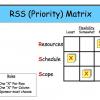
Exploring Project Priorities As a project proceeds, there are always adjustments and tradeoffs from the project's original goals to better match changing realities in both the project and its sponsoring organization. The tradeoffs may be subtle, but there are ALWAYS tradeoffs. In this week's column, Payson Hall describes a tool for discussing and documenting priorities. |
| Modeling Uncertainty | |
| Review Secrets: Asking Better Questions | |
| Communication During a Crisis When a crisis hits a business, you've got to work hard and fast to mitigate the negative consequences--a process which includes communicating with your clients. In this week's column, Payson Hall reminds us that keeping clients in the know is critical to a successful recovery and will stabilize the clients' faith in you, even when all has failed. Drawing from a recent crisis in which he was the client, Payson gives us key points to consider the next time we are overwhelmed by customers who want to know when business will return to normal. |
|
| Done and DONE-done | |
| Unintended Consequences: The Case for a Business CaseSome painful lessons seem to require periodic re-learning. Lessons about unintended consequences come around again and again, like an ugly pony on a carousel. People familiar with the merry-go-round of implementing change without regard to business consequences recognize these lessons as they reappear. For those new to the project carnival, Payson Hall describes a ride on the ugly pony and how you can avoid it. | |

|
Endangered Business Analysts Many good business analysts have evolved into strong software project managers--a natural career move accelerated by the shortage of experienced software project managers. Unfortunately, no one seems to be stepping into the analysts' vacant ecological niche. In this week's column, Payson Hall warns that business analysis is becoming a lost art. And it's the software project team ecology that is suffering the most from this trend. |

|
Before 'Z' -- A Simple Secret for Process Improvement Improving your process plan is as simple as ... well, it's a secret that Payson Hall wants to share with you in this week's column. This bit of advice has helped numerous companies and everyone involved in the process. Find out how Payson, formerly part of the development community, became one of THEM and learned this great secret. |

|
The Eye of the Beholder Home construction metaphors are often helpful for communicating software project management concepts. Listeners don't need an engineering degree to grasp that task sequence is important. Explain how you must schedule an appointment for the "open wall" electrical inspection two weeks in advance. Then, explain how a one-day slip on a wiring task can result in a much longer delay in the start of the sheet rock task, which in turn may delay painting, thus, occupancy by weeks, possibly months -- same as with delays in software projects. In this week's column Payson Hall draws from personal home-ownership experience and defines the resemblance between software project management and managing his home. |
| Avoiding Project Failure If business projects are part of your profession, you know that many projects fail to live up to their potential. Some projects fail to achieve their schedule or budget goals or fail to deliver everything initially promised. Still other projects simply fail altogether. Many of the problems faced by projects can be avoided, or at least contained, by effective project management practices. Using a "Top Ten" list as a framework, this article highlights ten of the most frequent reasons for project failure, and examines some alternatives and remedies for each. |