Paul Gerrard

Member for
24 years 9 monthsAn internationally renowned, award-winning software engineering consultant, author and coach. Host of the UK Test Management Forum and Programme Chair of the 2014 EuroSTAR Testing conference.
Paul likes to work with clients that...
- Want to be agile rather than follow Agile dogma
- Are large SMEs or corporate organisations
- Have a pragmatic approach and are focused on delivery
- Use or want to use Open Source software solutions
- Want a solution that fits, not a badly fitting suit.
He is a consultant, coach/mentor, author, webmaster, programmer, tester, conference speaker, rowing coach and publisher. He has conducted consulting assignments in all aspects of software testing and QA, specialising in test strategy and assurance.
Specialities: Test Assurance, Test Strategy, Open Source Implementation, Test Automation, Shift-Left approaches (Behaviour-Driven Development, Test-Driven Development etc.) and helping testers to become more business-aware and/or more technical.
All Articles by Paul Gerrard
All Stories by Paul Gerrard

|
Redistributed Testing: A Shift to Refine Requirements In short, redistributed testing is a shift in the emphasis and responsibility for testing. Testers are reassigned to work closer to the business with users or business analysts or are embedded in the development team.By being involved in story and scenario writing, the testers help to refine requirements and improve their quality. How could your systems benefit from redistributed testing? |
|
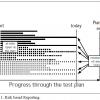
Risk-Based Test Reporting Suppose we have done a risk analysis and all tests for all test stages are related to a risk. We can obviously say at the start of system test execution that none of the test objectives have been met. Because test objectives all relate to a single risk, we can therefore say: At the start of test execution, we presume that all the risks to be addressed by this phase of testing still exist. Keep reading to see why it is important to view a system as "guilty until proven innocent." |
| E-Business Testing: Risks and Test Strategy There are five main risk areas in E-Business (EB) system development. These risks relate to usability, performance, security, availability and functionality. This paper presents an overview of the risks of E-Business and a framework for creating an E-business Test Strategy. |
|
| E-Business Testing: Test Techniques and Tools This paper describes twenty techniques for testing E-Business applications. These techniques were introduced in the companion paper, "Risk-Based E-Business Testing, Part 1, Risks and Test Strategy." The techniques are described under five categories: Static Testing, Test Browsing, Functional Testing, Non-Functional Testing, and Large-Scale Integration Testing. A chapter on Post-Deployment Monitoring is appended. |
|
| Industry Usability Reporting In October 1997, the US National Institute of Standards and Technology (NIST) initiated an effort to increase the visibility of software usability. Cooperating in the IUSR project are prominent suppliers of software and representatives from large consumer organizations. The goals of the initiative are:
This site provides an overview of the project, who is involved and white papers on progress to date. Further, there is a common industry format template and guideline for conduction and reporting on usability assessments. |
|
| TOM - Test Organisation Maturity Questionnaire Systeme Evolutif have developed a Test Organisation Model, TOM™ to address the primary concern that the outcome of the assessment should address the problems being experienced. The assessment process is based on a relatively simple questionnaire that can be completed and a TOM™ score derived without the assistance of a consultant. Completed questionnaires can be returned by mail or on-line and a prioritised list of test improvement suggestions obtained free from Evolutif. |