Jeff Patton

Member for
22 years 3 monthsJeff Patton leads Jeff Patton & Associates, a small consultancy that focuses on creating healthy processes that result in products that customers love. Articles, essays, and blog can be found at www.AgileProductDesign.com. Information about public classes, including Certified Scrum Training, can be found at www.AgileProductDesign.com/training.
All Articles by Jeff Patton
All Stories by Jeff Patton

|
Ready to Ship? On the surface, a Broadway musical, a newspaper, and software may not seem to have much—if anything—in common, but they have one common thread. All are delivered on a fixed schedule. But of the three, software tends to stray the most from the fixed schedule. In this week's column, Jeff Patton says that by focusing on the readiness of the entire product—as done in theatrical performances and when publishing a newspaper—and not just on the completion of the planned bits of work, you can produce software on a fixed schedule that you know is ready to ship. |

|
How Pragmatic Personas Help You Understand Your End-User Knowing who will use your software is important to the software development process. Having the end-user in mind helps you develop features that fit the user's needs. And, figuring out your end-user, as Jeff Patton reveals, is indeed easy. In this column, Jeff details stereotypes to avoid, questions to ask, and how to implement this pragmatic persona in your development process. |
| Performing a Simple Process Health Checkup Does your software development process need tuning? How can you tell if it isn't running as well as it could be? In this week's column, Jeff Patton offers a diagnosis checklist for your team to help assess the vital statistics of your current development process. |
|

|
Beauty Is in the Eye of the Beholder As a user experience design specialist, clients often ask Jeff Patton to make their software "look better," so it can be successful. But when clients focus primarily on aesthetics, they're often addressing the wrong thing. In this column, Jeff takes a look at common user interface (UI) mistakes and the key concerns software development teams should address to build successful UIs. |
|
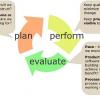
Ending Right Jeff Patton has been building software using the agile approach for a while now. His observations of how others are implementing agile development fall short of complete, but he has noticed is that the adoption breaks down during the evaluation phase. In this column, Jeff goes through the agile development process and offers guidance on the correct way of conducting an agile evaluation during this phase in the software development lifecycle. |

|
Simple Strategies to Keep Quality Visible In most projects, testers are the keepers of quality. Sharing the vision of quality with the entire team helps everyone involved in a project play a more active role in determining the state of quality in a product. In this column, Jeff Patton shares several innovative ideas he's seen in practice lately that have helped an entire team own up to the quality of its software. |
|
How I Stopped Worrying and Learned to Love Prioritization Managing an agile project based on uncensored "Very High," "High," and "Low Priority" user stories or backlog items used to induce stress on Jeff Patton. So he learned to implement a combination of prioritization techniques to get these lists--and the job--under control. In this week's column, find out how Jeff utilizes MoSCoW and business goals to make sense of prioritization. |
| Secrets to Automated Acceptance Tests | |
| An Uncomfortable Truth about Agile TestingOne characteristic of agile development is continuous involvement from testers throughout the process. Testers have a hard and busy job. Jeff has finally starting to understand why testing in agile development is fundamentally different. | |

|
The Neglected Practice of Iteration In this week's column, Jeff Patton sends a reminder that software developers who neglect the practices of "iteration" and "incremental" will get caught either delivering poor quality software or delaying schedules in order to make time to iterate. We kick ourselves, or others, for not "getting [software] right up front" when we all know that the hardest part of software development is figuring out what to build. But there's hope, and it comes in the form of prototypes and frequent iterations. |
| The Forgotten Side of QualityO | |
|
Get Back on Track Jeff Patton will admit that he's easily sidetracked. In a meeting or simply working on a problem with a small group, a cool idea or puzzling problem can send Jeff sideways. His head spins off track, and his mouth goes with it. He's not alone in this behavior; Jeff suspects everyone reading this column has been confined in a meeting called to resolve an important problem while someone—and it may have been you—burned up critical time to take the meeting off on a tangent. While not a completely curable condition, there are a few useful techniques Jeff explains in his column that will help keep a collaborating group on track. |

|
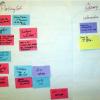
Collaborative Card Play Ever find yourself spinning in a conversation where the discussion of ideas gets stuck in a circuitous route? In the world of software development, where the need to effectively communicate elaborate and complex ideas is most important, such conversations end up being counter-productive. In this week's column, Jeff Patton shares a technique that keeps such conversations on a straight and productive path. Find out how he channels different ideas and categorizes them-all within one very fun and productive meeting. |
| The Whole Product It's easy to split user-experience experts and software architects into different categories and still grant them equal importance; the former deals with the façade of the software while the latter deals with the workings beneath the surface. This separate, but equal attitude changed for Jeff Patton after attending a workshop in which his eyes opened to an epiphany of holism in software development. From this enlightened moment, Jeff realized a way software development could change for the better. |
|
|
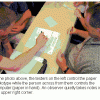
Test Software before You Code Testing doesn't have to begin after the code has been written. In this column, Jeff Patton resurrects the oldest and most overlooked development technique, which can be used to test a product before any piece of it materializes. |
| Write a Blockbuster Using User ScenariosBig projects require many little user stories. But if these scenarios don't add up to one good story, then you're probably missing out on the big picture. In this week's column, Jeff Patton describes how his team weaves many small tales into a single strong report by identifying key characters and themes. | |

|
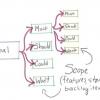
Finish on Time by Managing Scale When deciding how a user's task is to be supported in our software, we often look at possible design solutions and select one that's best for the product and the user. As the project deadline approaches, however, we might choose to dismiss some features outright. In this column, Jeff Patton suggests we try keeping more features by adjusting their scale. |
| Web 2.0: The Next Generation is Starting (2005) The new Web 2.0 has quietly emerged; well, maybe not so quietly for those who were paying attention. But it is already changing the way we design, develop, test, and release Web applications. This change came about from users' new expectations of the Web. Web developers' and programmers' willingness to adopt these new expectations will not only change the way we see the Web, but will also change the way in which we work every day. |
|
| Test-Driven Development Isn't Testing There's a common misconception that test-driven development is a testing technique when in fact it's a design technique. In this column, Jeff Patton explains this and how you might use your unit tests to explicitly guide and describe the design of your software. |
|
|
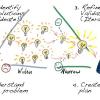
Design Thinking: 4 Steps to Better Software Design thinking points out several missed steps in software development. And, while some may believe ideation and iteration to be wasteful, they're easy to add to the development process at low cost and, in the end, result in substantially more valuable software. In this article, Jeff Patton describes the four basic steps of design thinking. |