Dave Browett

Member for
11 years 4 monthsDave Browett is a Project Manager working for Micro Focus in the UK. He has been working in IT since 1985 and has held various development and project management positions over this time. In approx 2003 a member of his team introduced him to Scrum and he has been an advocate ever since. He’s used his project management experience to refine and evolve his ideas on Agile Project Management and since 2011 has presented these at seminars in the UK including Project Challenge Expo www.projchallenge.com. He has his own blog on Agile Project Management at http://davebrowettagile.wordpress.com/
Any views expressed within this article are Dave Browett's and do not necessarily reflect those of his employer.
.
All Articles by Dave Browett
All Stories by Dave Browett

|
Proactively Planning for Risks to Your Agile Project Being aware of risk is good project management common sense. But to address risk quickly and effectively when you encounter it, the best method is to establish clear, agreed-upon, communicated responses to risk before it even happens. Dave Browett suggests some tactics to mitigate and confront risk you can use with your team. |

|
Would Santa Claus Make a Good Product Owner? The elves working on Project Santa—you know, the big delivery that happens every December 24—have decided to go agile. But Santa, the product owner, is busy and not always available to answer questions or provide guidance. What kind of suggestions and improvements should they address in their retrospective? |
|
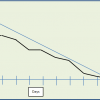
Help Your Team Understand Its Iteration BurndownA good key indicator for measuring how well your agile team is performing is the burndown chart. It’s a simple concept—as time passes, the amount of work to do decreases. Of course, there will be days when progress is not as expected or tasks end up larger than originally estimated. A burndown can help your team reset and keep stakeholders in the loop. |

|
Help Your Team Understand Its Velocity Teams should be working toward a target velocity that is based on historical evidence. There may be times when this figure needs to be adjusted, but teams that understand their velocity know that it is a good indicator of what they are capable of achieving in a sustainable way, and this will increase confidence for the teams and stakeholders. |

|
Planning Feature Velocity by Understanding Team Behavior When planning releases, it’s important to understand where team effort is being spent. By using high and low watermarks, a project manager can determine a suitable approach to take when setting expectations and determining whether it is necessary to alter team behavior to focus more on getting those features into a release. |