Steve Berczuk

Member for
9 years 6 monthsSteve Berczuk is a Principal Software Engineer with experience as a manager, Scrum Master and technical lead in Boston, MA. The author of Software Configuration Management Patterns: Effective Teamwork, Practical Integration, he is a recognized expert in software configuration management and agile software development. Steve is passionate about helping teams work effectively to produce quality software. He has an M.S. in operations research from Stanford University and an S.B. in Electrical Engineering from MIT, and is a Certified ScrumMaster. Contact Steve at [email protected] or visit berczuk.com and follow his blog at blog.berczuk.com.
All Articles by Steve Berczuk
All Stories by Steve Berczuk
|
Book Review: Managing for Happiness: Games, Tools, and Practices to Motivate Any Team Jurgen Appelo’s useful and fun-to-read book Managing for Happiness: Games, Tools, and Practices to Motivate Any Team gives you concrete tools to identify ways to help your team be happier and to create environments where people can thrive and be more productive. Despite the word managing being in the title, the book is a beneficial read for anyone. |
|
Book Review: The Agile Mind-Set: Making Agile Processes Work Gil Broza's book The Agile Mind-Set: Making Agile Processes Work speaks to the challenges faced by people who focus on "doing agile" rather than "being agile." Rote execution of methods can only get you so far, and Broza gives insights into how you move beyond practicing agile by habit into living it. |

|
How Using Agile Can Help with Risk Management Agile methods are one way to use iterations and frequent feedback to manage risk. Getting feedback early so that you can make corrections or change expectations isn’t a new idea, but implementing a process that can give you both this feedback and the tools you need to make corrections is difficult for a number of reasons. |
| Automation: Process Comes First I recently wrote a short article on on StickyMinds.com about automation. After it was published I came across another related post by Jim Coplien which makes the point that automation should come after you have figured out your process. |
|
| Problem Solving: Deadlines and Context One of the more difficult challenges people and teams have in the face of deadline pressure is taking time to consider how to approach a problem rather than just diving in with a solution approach that you know will work. |
|

|
Survival Rules and the Lamp Lighter By understanding the context in which their existing practices were meant to work, teams new to agile can more easily decide which of those practices still make sense and which are simply security blankets. |
| Patterns and The Storytelling AnimalI had the good fortune to be involved in the early days of the Software Patterns. In brief, patterns are about capturing solutions that people have developed organically over time, which have proven to be the best ones for the context at hand. What's interesting about patterns to those who are used to more academic approaches to learning about software, is that a good pattern isn't novel. If you've been working in a domain for a time you are likely to recognize solutions you have used before. | |
| Have the Orders Changed? One of the great things about being a parent is that you have an excuse to re-read some classic books. My five year old and I have been reading The Little Prince |
|
| Paper versus Electronic Dashboards: Goals and Values It's almost a matter of dogma that, for agile teams, low tech project tracking tools and artifacts are superior to electronic ones. The usual reason you might hear for preferring a physical task board to an electronic issue system are are that a physical task board is more visible and encourages communication and collaboration. I appreciate this, and have seen it, but I've also seen teams do well with issue tracking systems. From time to time I see a discussion of this "physical versus electronic tracking" issue and I find myself frustrated by it, but not sure why. |
|
| Book Review: Kanban: Successful Evolutionary Change for Your Technology Business I've worked with Scrum for a while, having gotten my CSM certification in 2005, and I've spent time both before and after that trying to learn what I could about Scrum, agile, and Lean, both in the context of software and out side of it. After absorbing bits of information on Kanban informally, I decided that to was time to read a book on it. I read David Anderson's book Kanban: Successful Evolutionary Change for Your Technology Business |
|
| Software Engineering or Software Craftsmanship: Do We Care?Much like a tenet of agile software development is that "planning is more important than the plan," there are some questions about software development that are useful to explore, even if you can't suggest a good answer. One of these these is whether what we, as software developers do, is (or can be) engineering. Or should we call what we do software craftsmanship? | |
| Agility (and Learning Opportunities) Everywhere People often ask, "Can I apply agile methods to something other than software development?" Since the basic appeal of agile methods is to acknowledge uncertainty by planning in increments, evaluating where you are relative to the plan and other forces, and planning the next increment, it seems like there should be no obstacle to following an agile approach for any project. The lurking question many have is, "Can my type of project really be structured in an incremental way?" |
|
| Questioning before AnsweringThe other day I came across a short video in which a parent is faced with answering a unexpected question posed by her young child. I found this video amusing because, being the parent of a kindergartener, I expect to be faced with many awkward moments like this in the future. I also found it an interesting metaphor for software requirements gathering. | |
| SCM Tool as Collaboration Tool A few weeks ago I had the opportunity to give a virtual talk at a product launch for an SCM Tool vendor. The theme of the talk was basic branching strategies, and preparing for the talk led me to reflect on what Brad and I wrote in the SCM Patterns Book. This post is based on those thoughts. |
|
| Definitions Words and definitions help with communication. And it's hard to come up with an unambiguous word. But try hard to use words as they are defined in your context. That will help you to communicate, set expectations, and maybe even be more agile. |
|
| Agile or Not: How to Get Things Done Agile software development always felt intuitive to me. Developing software incrementally, in close collaboration with the customer is the obvious way to deal with the uncertainty inherent in both software requirements and implementation. The technical practices of automating necessary but time consuming tests, and deploying, early and often are the obvious ways to give an team the ability to evaluate the functionality you have and to to decide if the software works as expected. And it's also important to decide if what you built still makes sense given the current environment. |
|
| More on Being Done Continuing the conversation from last week, Andy Singleton followed up on my post on being done with this post. Which is good as this is one of those questions that sounds simple in theory, but in practice contains some subtlety. |
|
| What Does "Being Done" Really Mean in Software Development? Agile New England (which used to be called the New England Agile Bazaar, and which was started by Ken Schwaber) , has this wonderful activity before the main event each month: they host Agile 101 sessions, where people who know something about agile lead a short (30 minutes) small (about 10 people) class on agile basics for those who want to learn more about some aspect of agile. |
|
| Continuous Learning, Coaching, and Learning from Others There was an article in the Boston Globe recently by Scott Kirshner: Staying Competitive in the Workplace that emphasized the importance of keeping your skills up to date. |
|
| On SCM and Tools Steve Berczuk was recently was interviewed for an article on SCM and Tools. Updating tools and processes key to overcoming SCM challenges is brief and makes some good points about the relative value of tools compared to understanding what you are trying to accomplish with your process. |
|
| Thoughts on The Lean Startup I had the opportunity to get a review copy of The Lean Startup: How Today's Entrepreneurs Use Continuous Innovation to Create Radically Successful Businesses |
|
| Why SCM Patterns Is in Patterns FormatToo often people associate SCM with tools and techniques without considering what techniques work well for the team. SCM Patterns puts the solutions in context with your organization, process, and architecture and (hopefully) provides you with some guidance on the steps to build an environment where people can code together effectively. | |
| Experience and Learning In the past few months I've heard a couple of stories about (in effect) the disadvantages of experience when it comes to innovation and productivity. A Story on WBUR on July 5, 2011 |
|
|
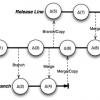
Branching to Distraction Branching can be an effective solution for managing change, enabling parallel development and improved productivity. But, working on a branch is a distraction and can decrease agility, productivity, and code robustness. Learn when the value of working on a branch outweighs the cost. |
| Happiness and Agility Agile development practices at their core, have a common theme of making better use of the time spent developing software. This starts at the project level and continues down to the developer day-to-day-activities. Consider an agile iteration. The team starts the iteration with a clear sense of the priorities for the sprint, and pretty good understanding of the project scope. Having estimated and committed to getting the work done, the team also has a sense that the goal is attainable. The team members then collaborate to get the work done as a team. |
|
| Specialization, Generalization, and Effectiveness in Software Teams: Clinical Metaphors I was thinking about the relative value to a team of a developer with specific skills (say UI development) versus adding someone who was more of an end-to-end developer. Two stories about medical practice that provided some insight into the question. |
|
| Tips, Habits, Customs and Agility
Habits and routines are useful because they free you to focus on the important tasks. Rituals and processes take a somewhat irrelevant decisions out of your hands, and conventions make it easier for others to understand code and other artifacts. And when you are starting a new approach to work, following the rules by rote can help you understand the method. |
|
| Better: More Parallels Between Medicine and Agile Software Development In the book Better: A Surgeon's Notes on Performance, by Atul Gawande, a discussion of how hand washing—a simple technique that is vital to infection control—brought to mind how the challenges teams have being agile often center on the challenges of having teams begin to apply basic practices, without customization. |
|
| Displaying Build Numbers in Grails Apps Being a fan of Continuous Delivery, identifiable builds, and Continuous Integration: I like to deploy web apps with a visible build number, or some other way of identifying the version. For example, having the build number on the login screen for example. |
|
| Mission Possible: ScrumMaster and Technical ContributorTeams trying out Scrum might not be able to justify a full-time ScrumMaster to the organization, so the role is filled by a contributor on the team. This can be a challenge and, if done incorrectly, a problem. Learn some potential issues to be aware of and how to make the hybrid role work. | |
| What Are You Doing?Your issue-tracking and version-management systems are powerful tools that you can use to help you manage change and improve team and individual productivity. This article provides some simple advice on how to use your tracking system to be more productive without introducing excessive overhead. | |
| Recent Writings (Dev Ops and Testing) I recently wrote a couple of articles that might be of interest to those who read this Blogs. |
|
| Agile Teams Care about Dev OpsWhile it’s good that the idea of considering production issues early now has a name (Dev Ops), what matters in the end is delivering software more reliably, reducing waste in the product delivery process, and making stakeholders happy. Since product’s don’t deliver value until they are deployed and working it’s good to take a step back and consider operations and deployment processes and team as first class stakeholders earlier. | |
| The Value of Really Dumb Tests | |
| Book Review: Continuous Delivery If you didn't already know that the key to reliably deploy quality software is to take a cross-functional, full-lifecycle approach, Jez Humble and David Farley's book "Continuous Delivery: Reliable Software Releases through Build, Test, and Deployment Automation" will help you to understand. |
|
| What Agile QA Really Does: Testing Requirements Teams transitioning to agile struggle with understanding the role of QA and testing. Much of what you read about agile focuses developer testing. Every project I've worked on which had good QA people had a much higher velocity, and higher quality. And there are limits to what developer Unit Testing can test. |
|
| Risks of Manual Integration Testing in the Context Rapid Change You have probably come across a situation like this: It's close to a release deadline. The QA team is testing. Developers as testing and fixing problems, and everyone is focused on getting the best product they can out the door on time. During this time, you may notice that someone on the QA team, while working late has found an interesting problem. Unfortunately, your team found and fixed the problem hours before. |
|
| To Scrum, Prepare Agile methods have some sort of daily all-team checkpoint meeting as part of the process. The idea behind the Daily Scrum (Scrum) or Daily Standup (XP) is good: replace status meetings (or someone walking around asking about status) with one short daily meeting where everyone has a chance to communicate about what they are doing and what they need help with. |
|

|
End-of-Release Branching Strategies This two-part article explores branching strategies—development tactics that allow teams to work concurrently on different features and maintain the relationship between them. In part one, Steve Berczuk explains what branches are, common types of them, and the tradeoffs between branching styles. |
| The Checklist as Empowerment tool Checklists help teams make better decisions by making it easier to distribute decision making. A team of empowered cross functional people, working together to decide how to get work done sounds a lot like the model of an agile team. |
|
| Book Review: Lean Architecture Jim Coplien's recent book, Lean Architecture: for Agile Software Development, |
|
| Are You Done Yet? Johanna Rothman recently wrote, commenting on Joshua Kerievsky's proposed definition of done. Both posts are worth a read, if for no other reason than to better understand why we have such a difficult time defining what "done" is, and why defining "done" is one of the major challenges for teams trying to adopt agile practices. |
|
| Book Review: Drive: The Surprising Truth About What Motivates Us x |
|
| Motivation Visibility, and Unit TestingSteve Berczuk has always been interested in organizational patterns and recently found himself thinking about motivation. Agile practices, both technical and organizational, build a framework which makes having the right amount of collaboration and feedback possible. But there's a bootstrapping process: How do you get people to start doing the practices, especially technical ones, such as unit testing? | |
| Measuring Performance for TeamsIf you've ever been in an organization that had performance reviews, you may have found yourself wondering whether the measurement process used to evaluate your (and your team's) performance made sense, and if there was a better way. | |
| Things about Release Management Every Programmer Should KnowI was privileged to contribute to the book 97 Things Every Programmer Should Know: Collective Wisdom from the Experts. Here are link to a some of the posts I found particularly interesting. | |
| Planning is a Gerund One of the things teams adopting agile struggle with is deciding how much to define a plan before you start executing. Have a plan that's too well developed and you end up risking that your team may not be responsive enough to change. Too little of a plan and you may end up changing course excessively, and have no way to measure your progress towards any sort of deliverable. |
|
| Book Review: Modular Java I recently read Craig Walls' book Modular Java: Creating Flexible Applications with Osgi and Spring (Pragmatic Programmers). This book is a very detailed tutorial that walks you through setting up an application using OSGI and Spring with the help of Maven as a build tool. |
|
| Are You Agile Enough? Being agile is a means to an end; your goal is to develop better software more effectively, not to be able to wear a "We are Agile" badge. If you're considering adopting agile, you are probably doing do because your current approach isn't getting you where you need to be so it's worth giving the 'by the book' technique a shot before you try to adapt an agile method to your circumstances. |
|
| The Checklist Manifesto as Agile PrimerAgile software development methods often have very few explicit processes. However, these processes are essential and require discipline to execute well. We're often tempted to skip steps, either because we think that the step doesn't apply in a particular situation or we forget to do it. | |
| Agile Portfolio ManagementI've heard people criticize agile methods as being too reactive and focusing too much on the little picture and ignoring larger goals. This is a misunderstanding of a basic idea of agile. Agile methods are't about thinking small and taking small steps towards a goal, applying programming an management discipline along the way. | |
| Estimation Poker Planning aoker, an estimating method popular with tgile teams can address some of these issues. Briefly, planning poker involves getting the developers on a team together to estimate stories using a deck of cards that have numbers that represent units of work. |
|
| The Indivisible Task One of the things that makes agile work well is a daily sense of progress that can be reflected in, for example, a burn-down chart. For burn-down charts to be meaningful, the estimate of amount of work remaining in a sprint need to be accurate. Re-estimating work remaining in a task is helpful, but the best measure of progress is the binary "done/not done" state of the items in your backlog. |
|
| 97 Things Every Programmer Should Know is DoneThe book 97 Things Every Programmer Should Know: Collective Wisdom from the Experts is finally available, and the title is on the mark. | |
| Tracking what Matters with Burn Down Charts Burn down charts help agile development teams track sprint and release progress. The basic idea of a burn down chart is that the team starts with estimates for all of the tasks in the sprint, and then on daily (or more frequent) basis re-estimates the amount of work remaining. |
|
| Agile SCM January 2007 - Looking Back to Move Forward The previous two January Agile SCM columns made some short-term (and a few longer-term) predictions about the impact of current trends on the practice of Agile development as it pertains to SCM. This January we revisit those predictions to see where we were right, where we were wrong, and recalibrate our ideas of what's in store for Agile SCM in 2007-2008. |
|
| Agile SCM 2005 - Reflecting back on the year in books We thought 2005 was a pretty gosh darn great year for Agile Software Development and Software Configuration Management alike. We wanted to share what we feel are some of the timeless classics that we have most looked to throughout the year, as well as the new books in the last year that we have been most impressed with. |
|
| Private Developer Workspaces: Where the Development Process Meets SCM ProcessSoftware configuration management supports the delivery of application code in a reliable, repeatable manner. Having a CM process in place does nothing for the success of your organization unless you have mechanisms in place to develop application code reliably. Proper private workspace are a key element linking your SCM and your Development processes. In this article we discuss why they are important and how you can set up private code workspaces to help your team to be more effective. | |
| Agile SCM January 2006: Looking AheadThis month, in common with our fellow columnists, we are looking ahead at things related to SCM (and particularly the Agile flavour) that we either think will happen in 2006 or that we hope for progress during the new year. | |
| Evolving beyond Version Control for Agile DevelopmentThis article looks at satisfying the principles of Configuration Management with varying degrees of tool support, which we classify from Version Control at one end, to true CM tools (and beyond!). Many agile developers restrict themselves to tools that are more on the version control end, so we aim to highlight the differences, and particularly point out certain features which can make your life a lot easier. | |
| Balancing Individual versus Collective Code OwnershipThe subject of individual -vs- collective code ownership is often the bane of many heated discussions about code change authorization/access and concurrent -vs- serial development. Opponents of collective ownership often claim that it results in "no ownership" of the code and that individual code ownership is better for managing attempts at concurrent changes. Oppenents of individual ownership often counter by saying individual ownership inhibits refactoring and goes against the team ethic of XP and other Agile methods. | |
| The Unchangeable Rules of Software Change The authors examine the fundamental truths about project and requirements changes: What can we control? What is beyond our control? What are some of the common perils and pitfalls of change-control and iterative development? We discuss how to avoid many of these common pitfalls without creating new ones along the way, and provide a wealth of resources for first-timers to iterative development. |
|
| Building For SuccessThis article addresses detailed scenarios and the associated problems with the build process. We look at the usually activities and work patterns of a developer and relate those to build practices. | |
| The Illusion of Control in Software Configuration ManagementWe explore why it is important to understand the context of agile techniques when you are trying to build a more agile software configuration environment and how people can fool themselves into thinking that their non-agile environment has more control. | |
| The Future of Agile Configuration Management: 2006 and Beyond We have been indulging in a mixture of wishful thinking and crystal ball gazing to consider what the future holds for Agile CM. To misquote Malvolio, "Some things are born great, some things achieve greatness, and some have greatness thrust upon them." Rather than try to make grand predictions for 5 or 10 years down the road, we're mostly limiting ourselves to the next 1-3 years (except where noted of course). |
|
| The Importance of Software Builds: Building EarnestlyBuilding your application is key to a successful, repeatable, development process. A reproducible build that works at all levels allows you to proceed with confidence and be more agile. Yet many organizations (agile and not) leave the build process to chance, even though all can benefit, regardless of their method. | |
| The Trouble with Tracing: Traceability Dissected Traceability! Some crave it. others cringe at the very mention of it. For hardcore configuration managers and requirements and systems engineers, it is a fundamental commandment of “responsible” software development. For many hardcore agilists and other developers, the very word evokes a strong “gag” reflex, along with feelings of pain and frustration. Traceability requires work and discipline! So how does traceability add value to our business and how can we make it easier? |
|
| Requirements-Based Development: A Software Configuration Management ViewIt seems so obvious that we should develop systems based on requirements, and yet it turns out to be rather hard to do and thus many organizations are doing it very badly. From a software configuration management standpoint, we could perhaps leave the whole process of requirements engineering to one side and focus on the management of requirements and thus the aspects of change control and traceability. That would perhaps be unduly ducking the issue, and, of course, we can’t resist giving an opinion anyway! | |
| An Agile Perspective on Branching and MergingThis article focuses on branching and merging. We present some background for branching and merging, and consider some of the implications for agile development in particular. We also hope to reduce some of the suspicion that many agile developers have of branching. The article assumes some overall branching knowledge and yet revisits some particular details that often seem to confuse people. This is a fertile area which we will continue to expand on in future articles. | |
| Agile Codeline ManagementSoftware developers often view version management tools and techniques as a necessary evil. This is particularly true of developers practicing agile techniques. However, version management, can be an aid to agility rather than something that gets in the way. |
 , and the story of the Lamp Lighter reminded of a common problem teams have with organizational inertia when trying to transition to agile software development.
 .
. by Eric Ries.
 explains how agile principles and architecture are complimentary, and how, with everyone working collaboratively, a good, lightweight architectural framework can help enable agility, rather than being a barrier to it. With his usual iconoclastic style, Coplien dispels the myth that agile doesn't need architecture.