Allan Kelly

Member for
13 years 2 monthsAllan Kelly inspires digital teams to effectively deliver better products through Agile technologies. These approaches shorten lead times, improve predictability, increase value, improve quality and reduce risk. Most of his work is with innovative teams, smaller companies - including scale-ups; he specialises in and product development and engineering. He uses a mix of experiential training and ongoing consulting.
He is the originator of Retrospective Dialogue Sheets, Value Poker and Time-Value Profiles. Allan is the author of the perennial essay: "Dear Customer, the truth about IT" and several books including: "Xanpan - team centric Agile Software Development" and "Business Patterns for Software Developers". He is currently completing "Continuous Digital" the #NoProjects book. On twitter he is @allankellynet and his website is at www.allankellyassociates.co.uk.
All Articles by Allan Kelly
All Stories by Allan Kelly

|
Continuous Digital: A New Mindset for New WorkLarge companies traditionally have run software development projects so that after delivery, the project finished and the team dissolved. In the digital age, one might think the experience of running and delivering projects would be an advantage, but the legacy mindset and practices of corporate IT projects are actually a hindrance. Digital work needs to be ongoing, which requires a different management approach. |

|
The Future of Agile Is DigitalAgile software development is no longer about a better way to develop software. Agile is about changing the way digital technologies, products, and services are created to take advantage of enhanced CPU power and the tools that power has made possible. Here's how digitalization is reshaping agile teams, projects, and the very definition of success. |

|
To Kick-Start Your Agile Project, Begin with a Minimum Viable TeamYou've heard of a minimum viable product, which has only enough features to create a working model and provide feedback for further development. If you want to get started on a new project quickly, Allan Kelly suggests assembling a minimum viable team—only a few people, with only the necessary skills. They begin work right away, with a small budget and tight feedback loops, driving down risk. |

|
Project Teams Need to Overcome Their Fear of CodingMany organizations appear to suffer anxiety at the thought of programming. They want to get everyone but the programmers in a room to discuss a project down to the minute and the dollar, without a full understanding of the coding required. But a few hours of code experimentation generates far more understanding than days of debate by architects and analysts. Don't be scared of programming. |

|
Build One before Building Many: Learning from Agile FeedbackWhen you're working on a project and are presented with a big story or requirement, resist the urge to treat it as a single piece of work. One of the principles of the Agile Manifesto is to deliver working software frequently. This allows you to learn from what you built and make adjustments. See if you can break down the request and find a small piece of work within the big. |

|
Estimating Cost of Delay in Agile Projects with Time-Value ProfilesThe cost of delay for releasing a product can be due to many factors, but that value loss can seem like an abstract concept. Attaching hard numbers to a release timeline in the form of a time-value profile helps the development team and business stakeholders have a conversation about how long they have to build a product and when it would be best to enter a market. |

|
A Prescription for Your Team’s Agile TransitionWhen teams are transitioning to agile, making so many changes all at once can be hard. But just like with your health, in order to see progress, you have to commit, and when something starts working, you have to keep it up. Following this prescription should cure a team's agile ills and get its program on the road to recovery. |

|
How Being Agile Can Maximize Your Return on Investment There is more to calculating ROI than a simple equation. It can be affected by risk, time, and other factors—including whether your team is agile. Releasing software immediately after coding and testing accelerates feedback cycles, minimizes the cost of delay, and increases return on investment. Allan Kelly tells you how. |

|
The Effect of Time on Value in Your Agile Projects Using effort estimates as the only criteria for deciding whether work is undertaken could be leaving money on the table. Considering value—in particular, the effect of time on value, as in whether there is a cost of delay—makes for more intelligent conversations and better decisions. |

|
Estimating Business Value in the Shark Tank You can use analytical methods to assign business value to a user story, of course, but another way is simple estimation. Allan Kelly describes an estimation exercise that combines the Scrum tool of planning poker with a TV show format to add some fun. You end up with enlightening conversation and revealed requirements. |

|
When Prioritizing Stories, Don’t Forget the Stakeholders Instead of choosing what to develop based solely on a cold, hard dollar amount, you might try approaching the person who originally requested a story—or who will be most affected by it—and asking, “What benefit will this bring you?” Armed with a list of stakeholders and interests, you can find out the real difference a story will make. |

|
Assessing the Business Value of Agile User Stories Allan Kelly says that ideally, companies should put a dollar amount on each planned business decision. But pinning down financial value can be hard, and besides, there are many other factors to consider, such as sustainability and customer service. He looks at various ways to assess the business value of user stories. |

|
Working with Nonfunctional RequirementsNonfunctional requirements describe aspects of the system that do not map onto a single piece of functionality. Essentially, they're constraints you need to operate within. Allan Kelly details how running performance tests regularly can be the key to nonfunctional requirements, as well as how much value these constraints produce. |

|
How Agile Teams Should Use the Definition of DoneThe definition of done is an informal checklist that the team agrees applies to all pieces of work. But how does the definition compare to acceptance criteria? And should it apply to every task, or every story? How often should you review or change your definition? Allan Kelly helps you navigate your team's definition of done. |

|
Acceptance Criteria, Specifications, and TestsOne of the benefits of agile is how it helps specify requirements. Instead of trying to predict the future with your requests, you can wait an iteration and see if more criteria are needed. This article gets into how executable specifications, specification by example, and test automation can help further improve your requirements management. |

|
Defining Acceptance Criteria for Agile RequirementsAcceptance criteria can be helpful in expanding on user stories in order to capture requirements for agile projects. However, acceptance criteria should not be a route back to long, detailed documents, and they are not a substitute for a conversation. This article tells you how and when acceptance criteria should be written and employed. |
|
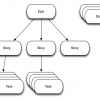
Stories, Epics, and Tasks: Organizing Agile RequirementsSome teams only work with stories, but it can be difficult for a team new to agile to write stories that are easy to understand and provide value every time. An alternative is to add epics and tasks. Understanding the differences between each level and knowing what size story to use for each situation will improve the accuracy of your sprint planning. |

|
Know Your Customers: They Can Help You Write Better User StoriesToo many user stories begin, "As a user …" Who is your user? Or, more accurately, who are they? Improving your understanding of the types of customers who use your software lets you see multiple products where previously, there was only one—and identifying dedicated products will help you prioritize and accelerate delivery. |

|
Relieving Agile Tension: How to Write Small Stories That Still Have ValueThere are two practical goals for user stories: Each story should be beneficial to the business, and each story should represent a small piece of work. However, there is tension between these rules, and they often push in opposite directions. This article discusses how to keep stories small and tasks manageable, while ensuring they retain business value. |

|
User Story Heuristics: Understanding Agile RequirementsAgile emphasizes just-in-time requirements rather than upfront preparation. The requirements person—be it the product owner, business analyst, product manager, or someone else—embodies the understanding of what is needed, and the user story represents the work that needs doing. This article details what user stories are (and what they are not). |

|
Does Agile Work outside Software? People will ask, “Can you use agile outside software development? In real business, not just in software teams?” Most experienced agile practitioners will instinctively want to shout, “Yes! Of course!” But intuition apart, where is the evidence? Allan Kelly found some examples and shares how agile works in environments outside software. |

|
Why Dialogue Sheet Retrospectives Are Important We all know we need to do retrospectives. And sometimes, it feels as if we go through the motions. Maybe with dialogue sheet retrospectives, we don’t have to. Here, Allan Kelly shares his perspective on dialogue sheet retrospectives. |
| Top Twelve Myths of Agile DevelopmentWhen it comes to agile development, Allan Kelly has noticed a lot of misinformation is being passed off as fact. In this article, Allan takes a closer look at twelve of the most common agile myths he has encountered while training new agile teams. | |

|
Dear Customer: The Truth about IT Projects In this personal and direct letter to customers, Allan Kelly pulls no punches and explains why IT projects don't always pan out for all of the parties involved. |
| The Role of the Agile CoachOne of the new roles introduced by agile software development is that of the team coach. Until agile came along, coaches were confined to the executive suite or the sports field. As with any new role, it will take awhile before it is fully understood and scoped. Agile teams can—and do—exist without the coach role, but such teams do not necessarily achieve peak performance. | |
| Dissecting the Product Owner Role Like "coach" and "ScrumMaster," "product owner" is a new term for a new role. While coach and ScrumMaster are completely new roles added by agile methods, the product owner is an extension of an existing role—or rather, it is an extension to two existing roles. Whatever the role is called, it is concerned with deciding what should be in the next iteration, prioritizing work, providing guidance on what is being built, and ensuring value is created. |
|
| A Second Look at "Requirements Come Second"My article, "Requirements Come Second," in a recent issue of Agile Journal caused something of a fuss. The piece was picked up by several more sites and was widely commented on - both on websites and in my inbox. I'm not entirely surprised by this reaction, I've been discussing this research for a year or so now and often find it surprises people. Given this level of interest it is worth looking at how people responded. It is also worth restating the key message: Requirements are an essential part of maximizing business value, but when an organization is struggling with effectiveness it is best to start change by improving delivery. | |
| Agile in the Downturn The current economic downturn is a new test for Agile, until now Agile has been promoted in a growing economy. Proponents of Agile have emphasized how it improve competitive advantage and helps a company out-compete its rivals. Now companies are concerned with simple survival. Today's managers are concerned with cutting costs, improving cashflow and managing without credit. Organizational change and process improvement are not top of the agenda. Promoting Agile in this environment is something new. |
|
| Requirements Come Second Despite our best efforts we need to know what we are going to code before we write the code. And as much as we might like to test before we write the code we can't really run tests until we have some code. Agile overlaps requirements discovery and implementation so coding can start with minimal or outline requirements but there is still a sequence. |
|
| The New Challenge in Agile Adoption The good news is: Agile is going mainstream; it is not some fad nor is it just for unwashed coders. Managers get it. The not so good news is: this means the approach to introducing Agile needs to change. Agile Software Development started at the code face. Kent Beck's original Extreme Programming had little - if anything - to say about the wider organization and the role of management. Developers could - and did - just adopt practices like test driven development and stand-up meetings. |
|
| The Trouble With Retrospectives Within the Agile community retrospectives are widely seen as the mechanism for promoting learning and change. But many teams fail to hold retrospectives, or fail to act on the findings, thus they fail to learn and improve. If we are going to fix this we need to change our approach to retrospectives, and find new ways to learn and create change. |